


When you are renovating your home or designing a new interior space, choosing the right flooring can feel like a balancing act. You want a floor that looks beautiful, fits your budget, and stands up to daily life—whether that means splashy bath times, muddy paws, heavy foot traffic, or scraping dining chairs.
Different rooms serve completely different purposes, meaning a single flooring material rarely fits every space. Here is a breakdown of the most popular flooring options for each room, along with their pros and cons based on room function, so you can make the smartest choice for your home.
1. Bathrooms: Water-Drenched & Moisture-Heavy Zones
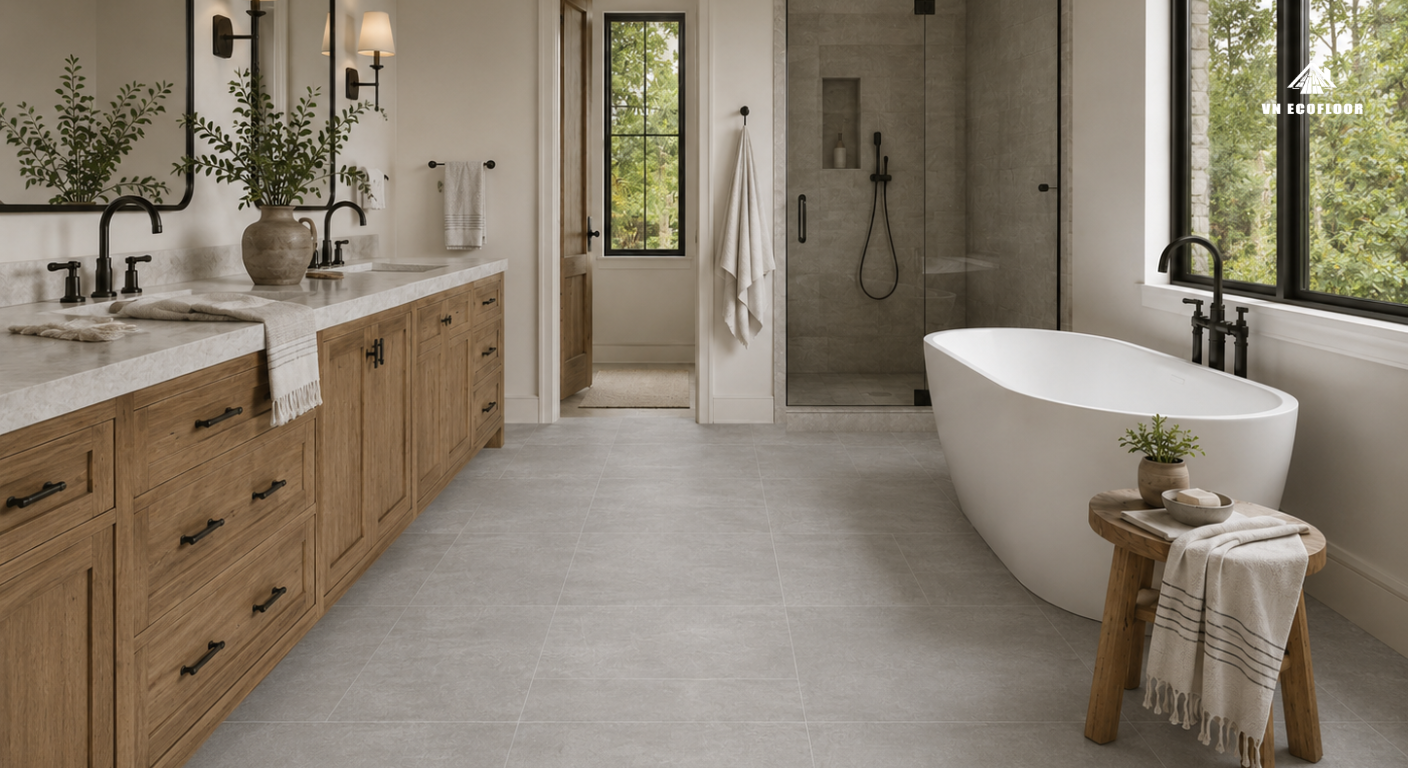
Bathrooms face constant standing water, high humidity, and steam. Here, wet-slip safety and 100% moisture protection are paramount.
Option 1: SPC/LVT Vinyl Tile (Top Recommendation)
- Pros: Vinyl Tile (Stone & Tile Look) is the ultimate solution for bathrooms. It gives you the clean, luxurious look of natural marble, slate, or stone without the cold, hard feel of real ceramic. It is 100% waterproof, warm underfoot, and features textured micro-bevels that provide superior anti-slip traction when wet.
- Cons: Requires a flat, smooth subfloor for proper installation.
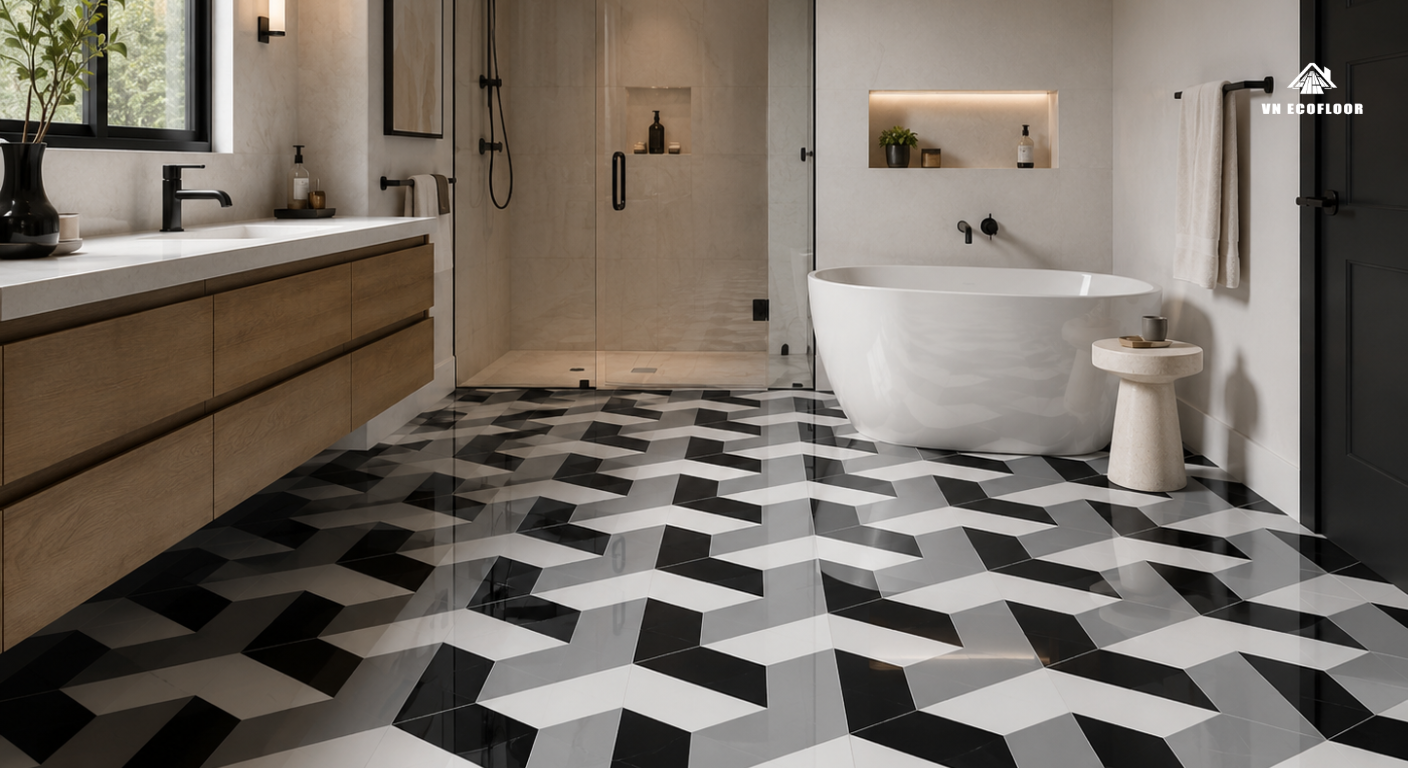
Option 2: Ceramic or Porcelain Tile
- Pros: Completely waterproof and highly durable.
- Cons: Cold, hard, and dangerously slippery when wet. Grout lines readily absorb soap scum and grime, requiring tedious scrubbing to keep clean.
2. Kitchens: High-Spill, Grease & High-Traffic Hubs
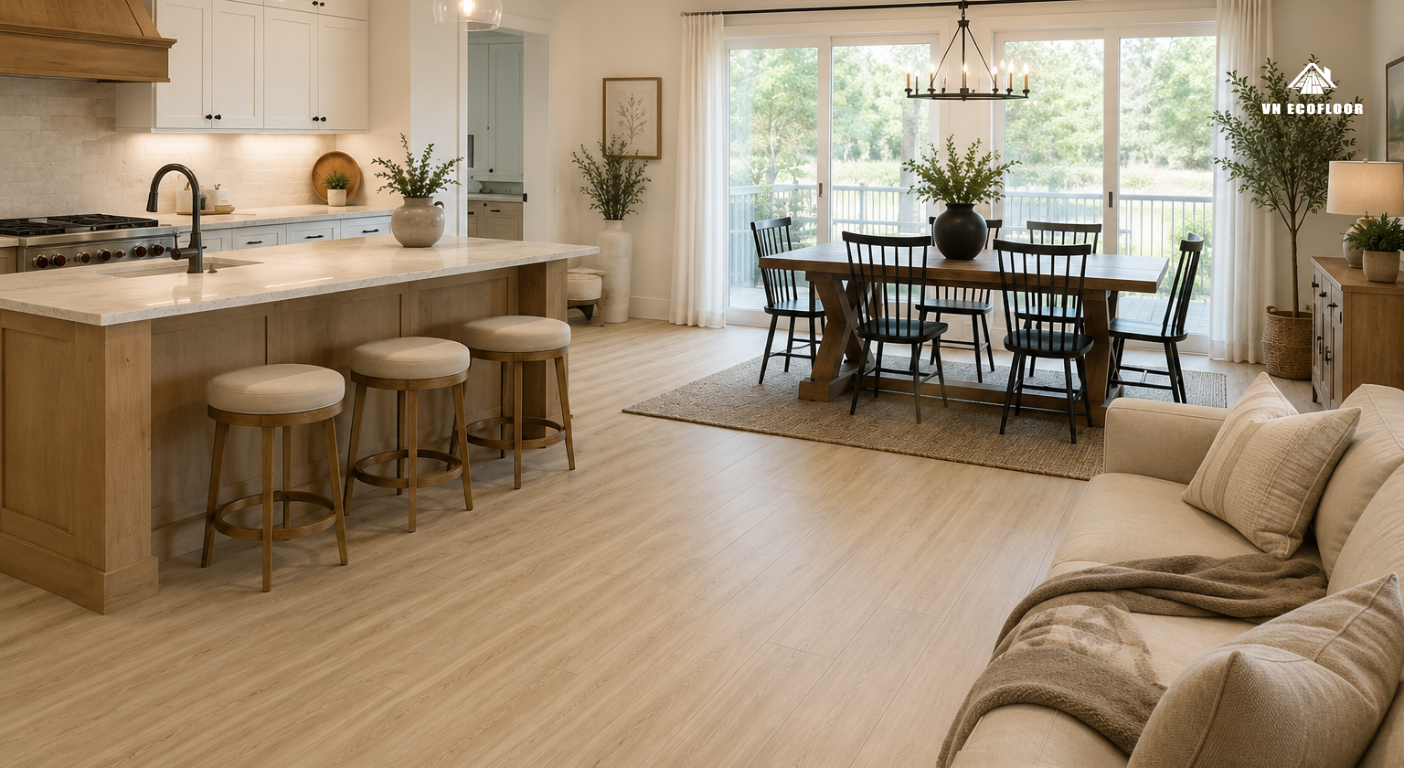
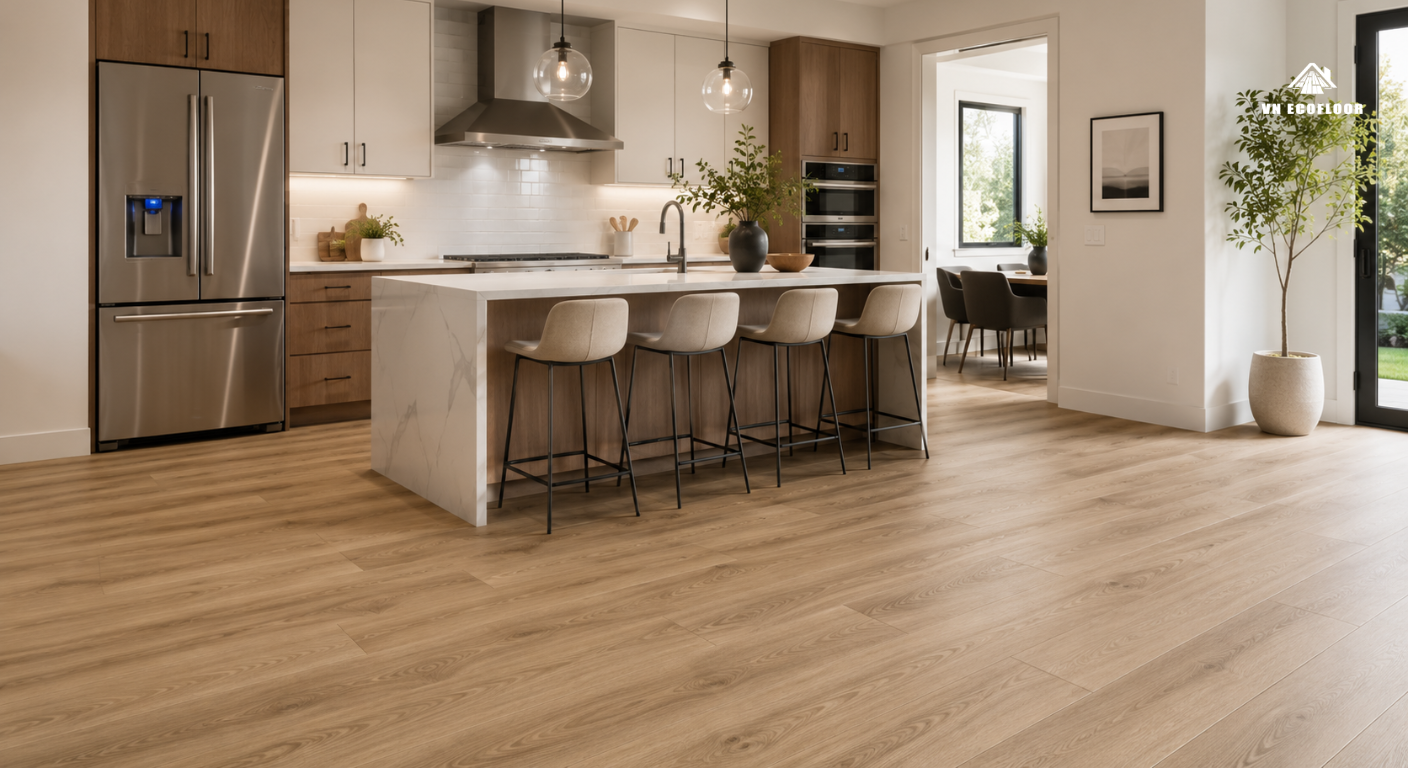
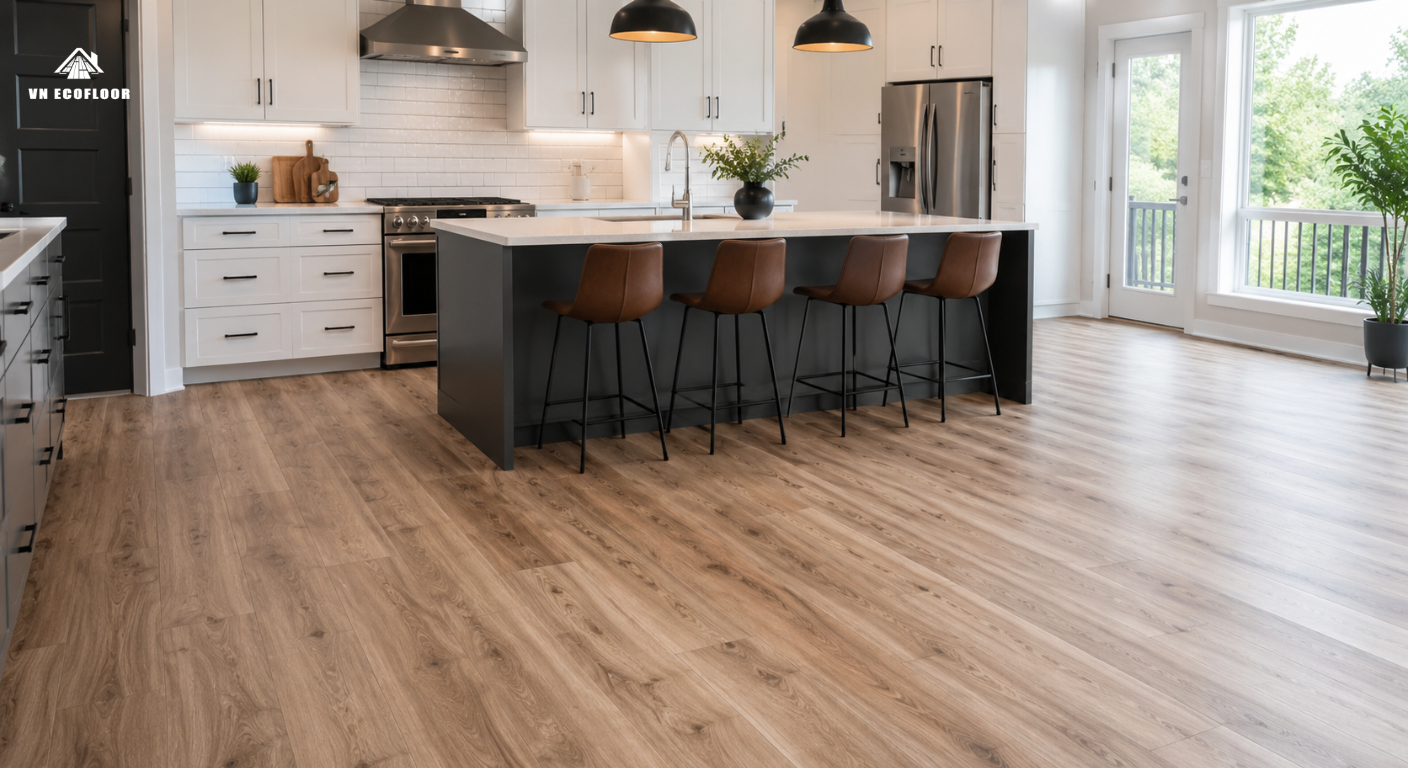
The kitchen is the heart of the home, but it is also ground zero for dropped pots, heavy foot traffic, and stubborn grease or food spills. Kitchens often flow directly into open-plan living areas, making visual continuity key.
Option 1: SPC Vinyl Plank with Stain-Resistant UV Coating (Top Recommendation)
- Pros: Using Vinyl Planks (Wood Look) allows you to run the same warm wood design seamlessly from your living room straight into your kitchen. Best of all, premium SPC planks are sealed with an advanced UV topcoat, which acts as an impenetrable barrier against harsh cooking oil, coffee, wine, and dried-on food stains—allowing even long-neglected, stubborn spots to wipe away effortlessly without staining the floor.
- Cons: Feels firmer underfoot than flexible cushion vinyl.
Option 2: WPC (Wood Plastic Composite) Vinyl
- Pros: 100% waterproof like SPC, but features a thicker, foamed core that offers superior cushioning and warmth underfoot when standing for long hours while cooking.
- Cons: Heavy weight and high cost.
Option 3: Standard Laminate
- Pros: Budget-friendly and highly resistant to surface scratches from dropped items.
- Cons: Cooking grease can settle into the seams, and standing water from plumbing leaks under the sink can cause edge swelling.
3. Living Rooms & Bedrooms
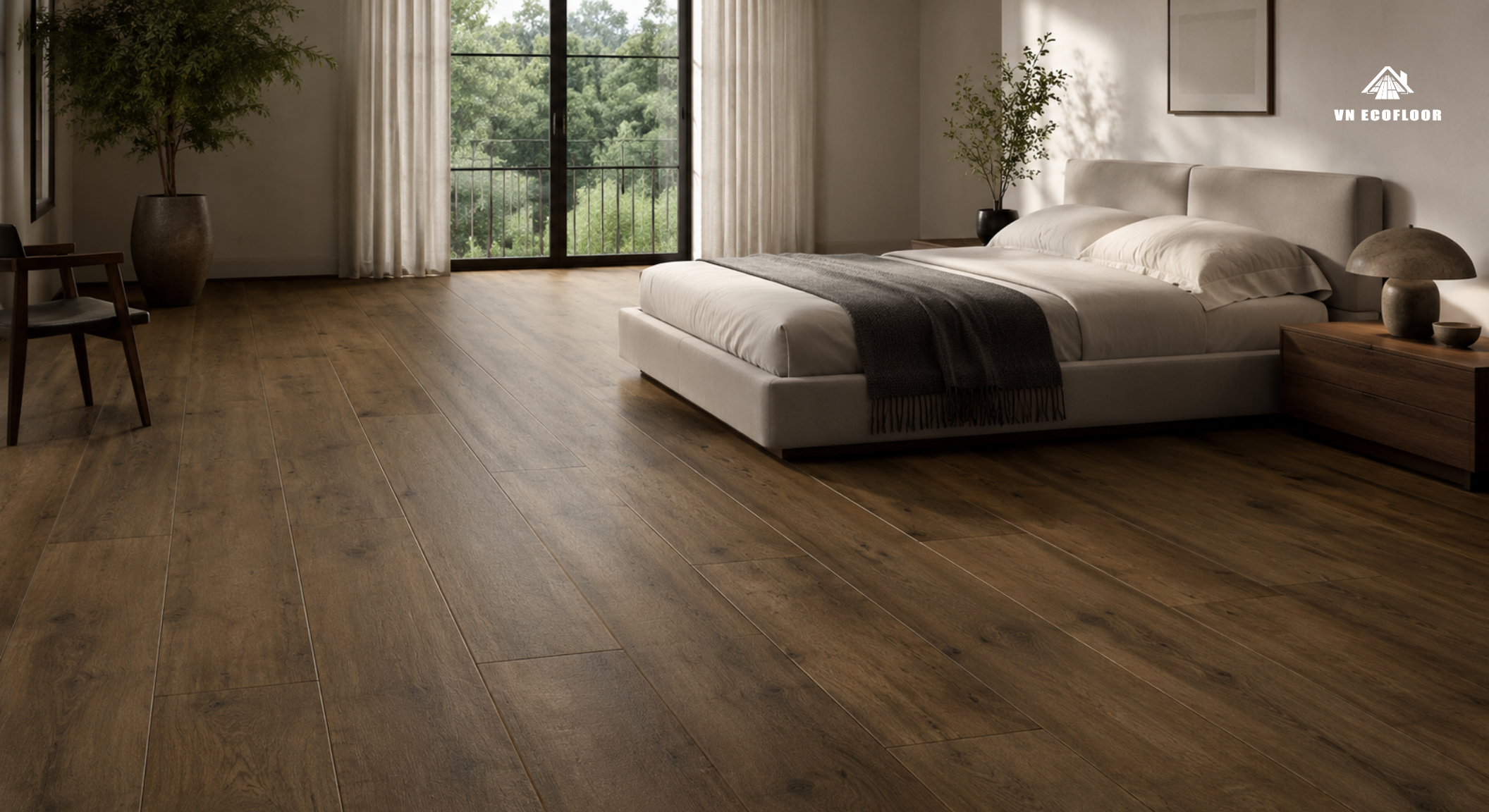
Your living spaces are built for relaxation. Here, underfoot comfort, cozy style, and acoustic dampening (reducing footstep noise) matter most.
Option 1: WPC & SPC Vinyl Planks (with Acoustic Padding)
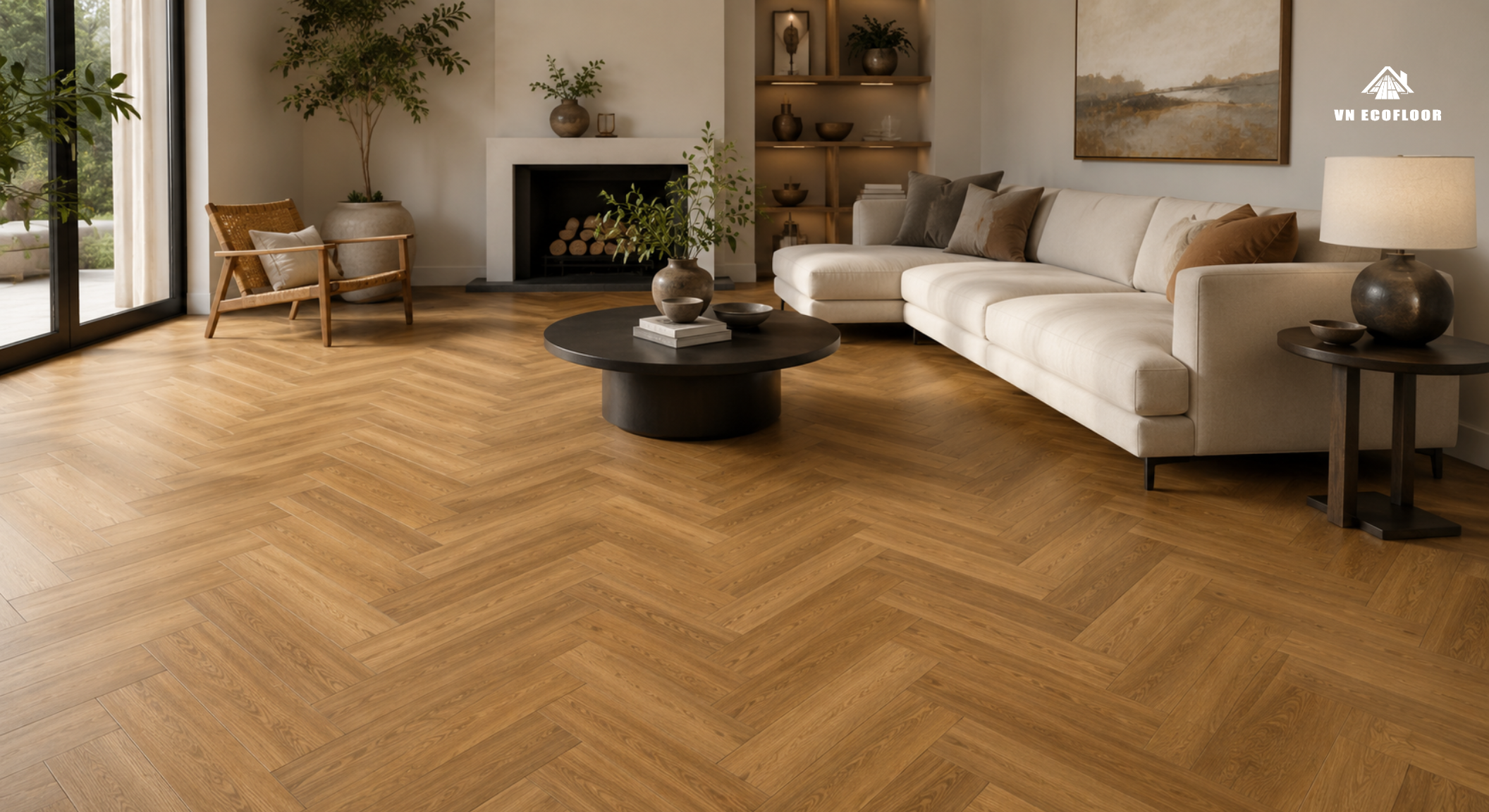
- Pros: Both WPC and SPC deliver the authentic look and feel of real hardwood thanks to advanced EIR (Embossed-in-Register) wood grain textures. WPC offers maximum footbed cushioning, while SPC paired with an acoustic backing pad (like IXPE) absorbs footstep echoes and holds up effortlessly against pets and heavy furniture without scratching.
- Cons: WPC has a high cost, heavy weight and takes time to install.
Option 2: Premium Laminate
- Pros: Excellent scratch resistance against pet claws and furniture movement, offering a very convincing wood look at an attractive price point.
- Cons: Can produce a hollow “clicking” sound when walked on with hard shoes if installed without a high-grade acoustic underlayment.
Option 3: Solid Hardwood
- Pros: Adds timeless elegance, boosts home resale value, and can be sanded and refinished multiple times over its lifespan.
- Cons: Expensive to purchase and install. Hardwood scratches easily under pet claws, is not waterproof, and expands or contracts when household humidity fluctuates.
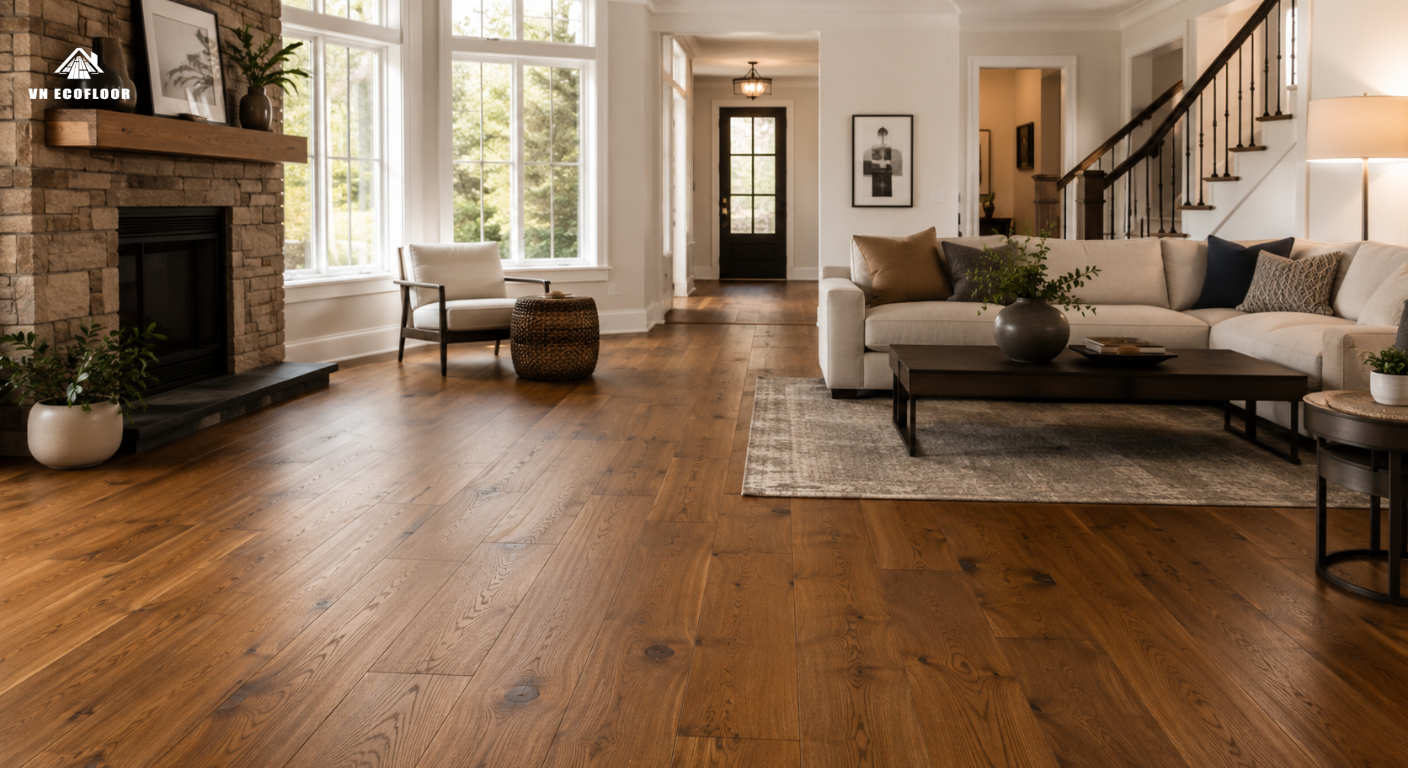
4. Basements & Ground-Level Rooms: Dampness & Temperature Swings
Basements are notoriously tricky environments because moisture can seep up through concrete slabs, and temperatures fluctuate wildly between seasons.
Option 1: 100% Virgin Resin SPC Vinyl Flooring (Top Recommendation)
- Pros: High-quality SPC vinyl is 100% waterproof and dimensionally stable, meaning it expands and contracts predictably without buckling or popping at the locking joints when basement temperatures drop. With an attached foam pad, it acts as a built-in vapor barrier against damp concrete.
- Cons: Requires a reasonably level concrete subfloor before installation.
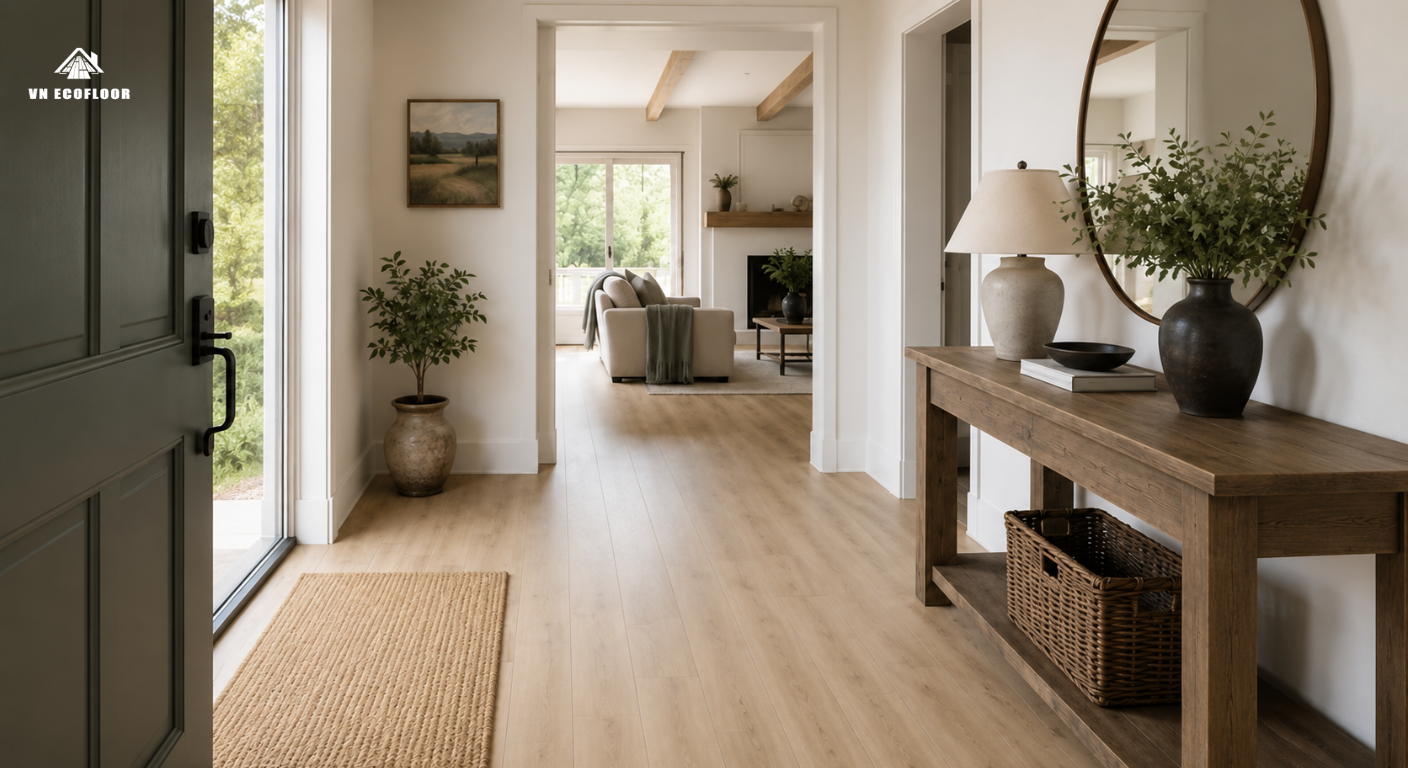
Option 2: WPC Vinyl
- Pros: 100% waterproof and provides great thermal insulation against cold concrete slabs.
- Cons: Slightly more expensive than SPC and can trap moisture underneath if installed over a slab without a proper vapor barrier membrane.
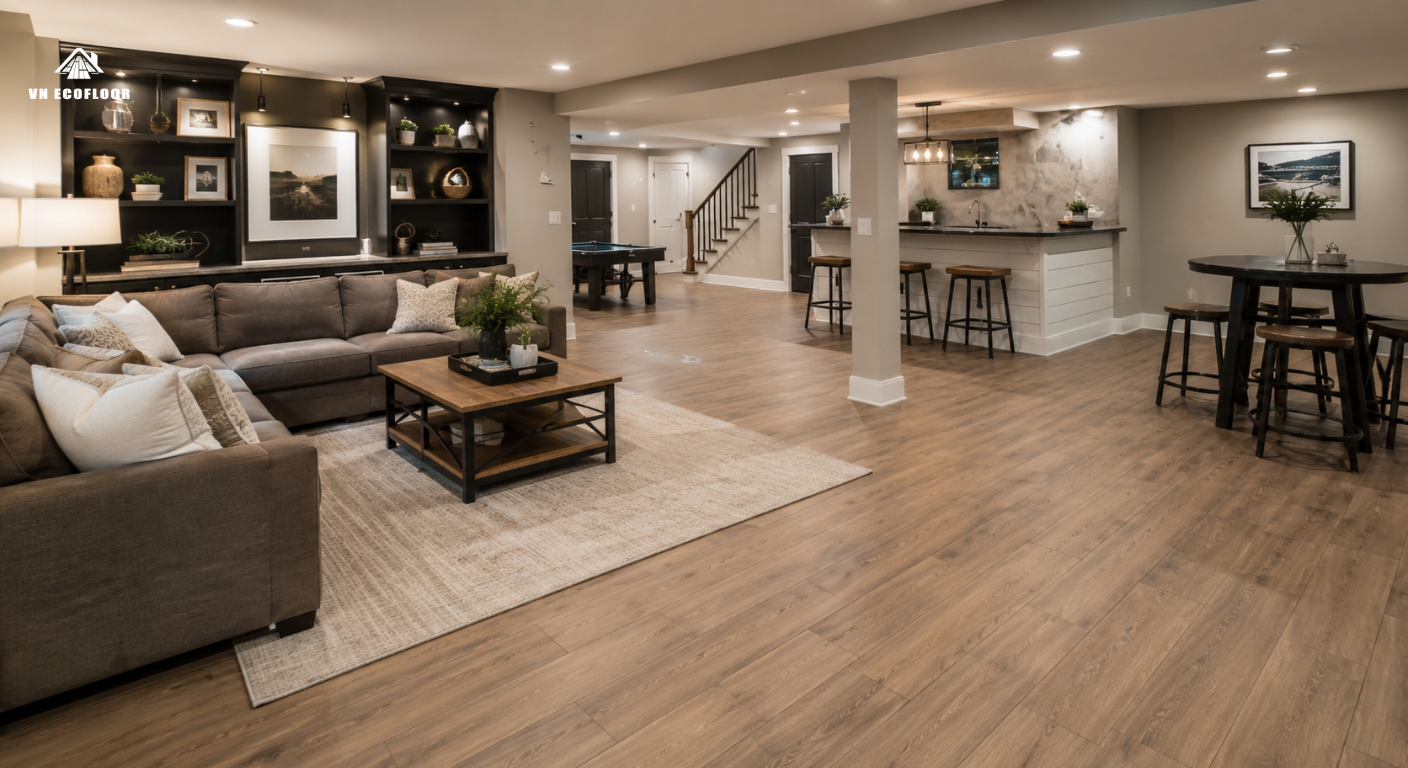
Option 3: Laminate Flooring
- Pros: Affordable way to cover a large basement floor.
- Cons: High failure rate in basements. Moisture vapor migrating through the concrete slab easily absorbs into laminate’s HDF (high-density fiberboard) core, causing mold growth underneath and severe warping on top.
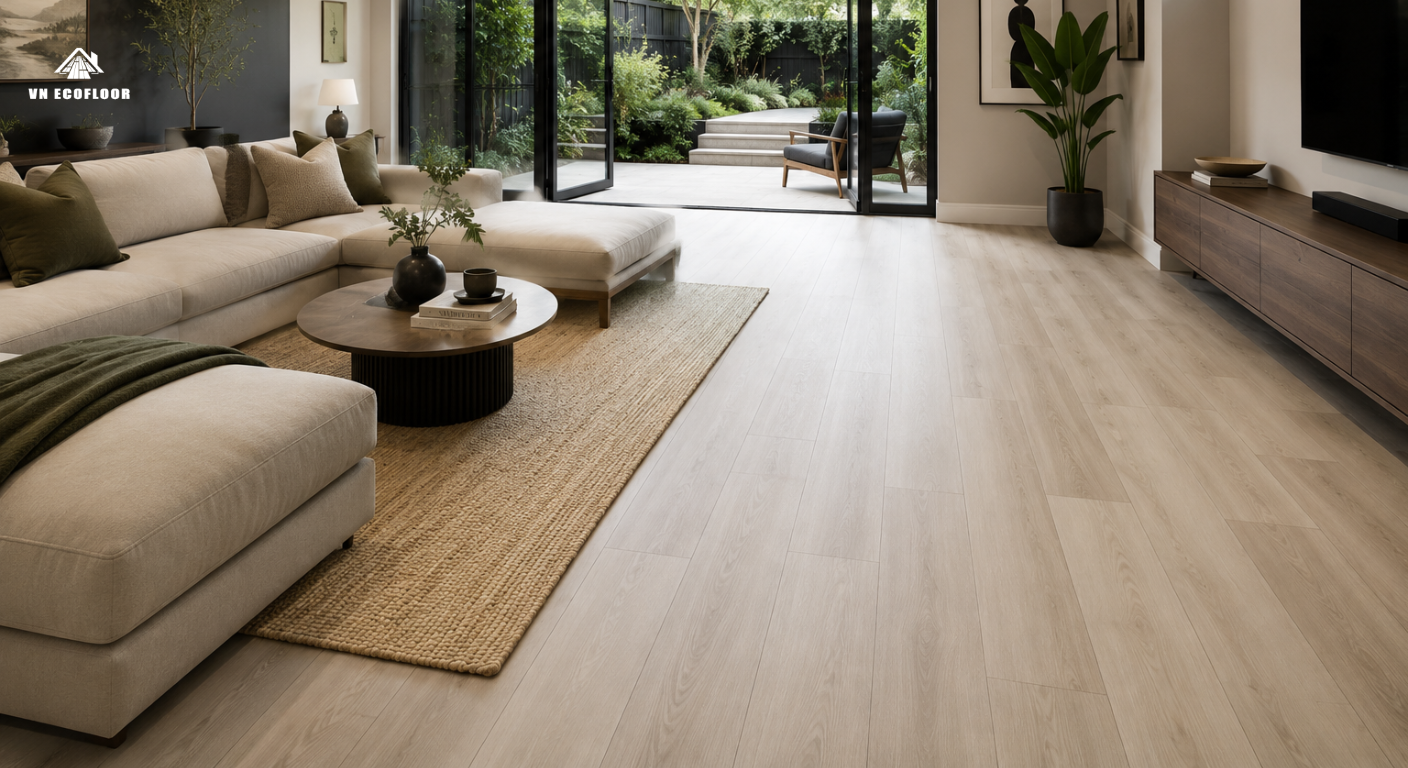
Quick Material Comparison Guide
| Flooring Type | Waterproof? | Scratch Resistance | Comfort Underfoot | Best Rooms |
|---|---|---|---|---|
| SPC Vinyl | Yes | High | Firm / Solid | Kitchens, Basements, Bathrooms, Entryways |
| WPC Vinyl | Yes | High | Very Soft & Cushioned | Living Rooms, Bedrooms, Kitchens |
| LVT (Glue-Down) | Yes | High | Medium | Bathrooms, Rental Properties, Multi-family |
| Laminate | No (Moisture-Sensitive) | Medium to High | Medium | Bedrooms, Living Rooms (Dry zones) |
| Hardwood | No | Low to Medium | Warm & Natural | Living Rooms, Bedrooms |
| Ceramic Tile | Yes | Very High | Cold & Hard | Bathrooms, Utility Rooms |
In conclusion
Understanding the specific strengths and weaknesses of SPC, WPC, LVT, engineered wood, and laminate makes it easy to select the perfect floor for every corner of your home.
Whether you are remodeling a single bathroom or updating your entire house, VN Ecofloor manufactures high-performance SPC and LVT vinyl flooring tailored for real family life. Engineered with 100% virgin resin cores for maximum dimensional stability and certified safe for indoor air quality (FloorScore®,CE,… certified), our collections deliver the natural beauty of real wood and stone with the unmatched durability modern homes demand.
👉 [VISIT VN ECOFLOOR TO EXPLORE OUR COLLECTIONS]
Hotline/WhatsApp: +84 88 801 81 28
Official Website: vnecofloor.com
FAQs
- What is the best flooring for bathrooms?
For bathrooms, waterproof flooring is the most important priority. SPC or LVT vinyl tile is a strong choice because it offers the look of stone or ceramic while feeling warmer and more comfortable underfoot. Ceramic and porcelain tiles are also durable and waterproof, but they can feel cold, hard, and slippery when wet.
- What flooring works best for kitchens?
SPC vinyl plank is one of the best options for kitchens because it is waterproof, durable, and easy to clean after spills. A good UV coating can also help protect the surface from stains caused by cooking oil, coffee, wine, or food messes. For open-plan homes, SPC vinyl planks also allow the same wood-look flooring to flow from the living room into the kitchen.
- Is SPC or WPC better for living rooms and bedrooms?
Both can work well, but they offer different feelings underfoot. WPC usually feels softer and more cushioned, which makes it comfortable for bedrooms and relaxing spaces. SPC feels firmer and more solid, but when paired with acoustic padding, it can still provide good sound reduction and strong durability for pets, furniture, and daily use.
- Can laminate flooring be used in bathrooms or basements?
Laminate is generally not the best choice for bathrooms or basements unless it is specially designed for moisture resistance. Traditional laminate has an HDF core, which can swell, warp, or grow mold when exposed to standing water or moisture vapor. For wet areas, SPC, LVT, WPC, or tile are safer options.
- What is the best flooring for basements?
SPC vinyl flooring is often a strong choice for basements because it is waterproof and dimensionally stable. It performs better than laminate in damp environments and can handle temperature changes more reliably. However, the concrete subfloor should still be level, clean, and properly prepared before installation.
- Does one flooring type work for every room?
Not always. Each room has different needs. Bathrooms and basements need waterproof and moisture-resistant flooring. Kitchens need stain resistance and easy cleaning. Living rooms and bedrooms need comfort, warmth, and sound control. The best flooring choice depends on how the room is used, the level of moisture, foot traffic, budget, and the look you want to achieve.