


When sourcing Stone Plastic Composite (SPC) or Luxury Vinyl Tile (LVT) flooring for commercial projects or developing your own private-label brand, the very first question wholesalers, importers, and contractors must face is: Should you partner directly with an OEM Factory or go through a Trading Company?
In reality, many businesses end up incurring heavy financial losses simply because they cannot clearly distinguish between these two supply models. A contract might look attractive on price initially, but once the containers arrive at the destination port, a mountain of unforeseen risks emerges—from inconsistent quality and borrowed lab certificates to severe shipment delays.
To help you make a strategic business decision and optimize your supply chain, let’s dive into a detailed comparison between an OEM Factory and a Trading Company.
1. Quick Definitions: OEM Factory vs. Trading Company
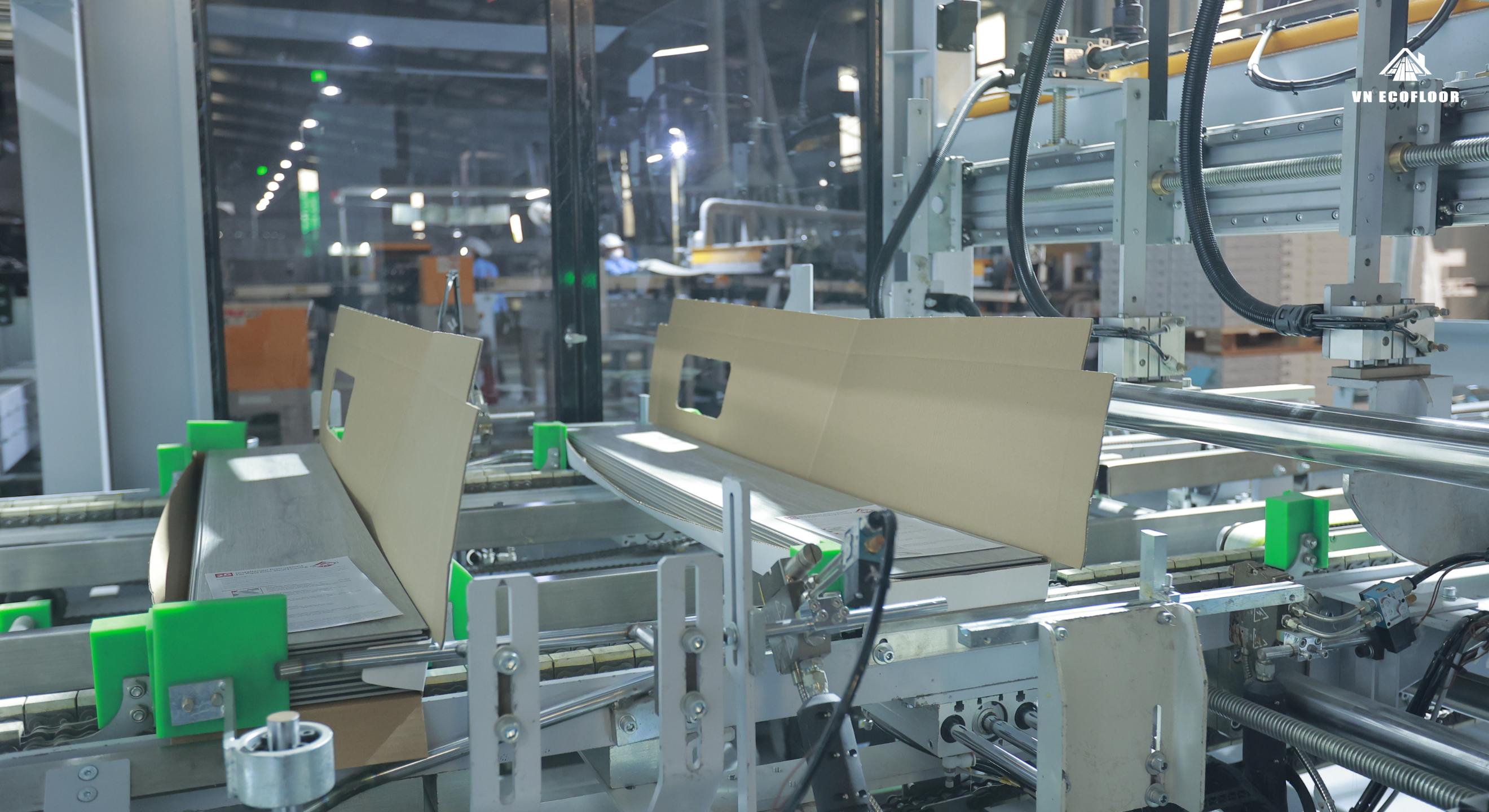
OEM Factory (Original Equipment Manufacturer): An entity that directly owns manufacturing plants, heavy machinery, core extrusion lines, UV coating systems, and an in-house production workforce. They import raw materials directly and manufacture finished products tailored precisely to your requested specifications.
Trading Company (Middleman / Sourcing Agent): A business entity that does not own manufacturing facilities. They act as a bridge: sourcing products from domestic factories and reselling them to international buyers to earn a price markup or sales commission.
2. Detailed Comparison Across 5 Core Sourcing Metrics
2.1 Pricing & Profit Margin Optimization
OEM Factory: Working directly with the source grants you direct factory-gate pricing (FOB) without middleman markups. This typically saves you 5% to 15% in unit costs, giving you healthy profit margins for retail distribution or bidding on major commercial tenders.
Trading Company: Prices quoted by trading companies always include their operational overhead, commission, and profit margins.
2.2 Quality Control & Batch Consistency
OEM Factory: A direct factory controls 100% of the manufacturing process—from raw material formulation (100% virgin resin vs. recycled plastics) and wear layer thickness to precision German click-lock milling. If a technical issue arises, the factory’s R&D team and lab technicians can make real-time adjustments directly on the line.
Trading Company: Trading companies cannot intervene deep inside the production process. They rely entirely on the integrity of whichever factory they outsource to. To maximize their own margins, some trading companies may quietly shift your order to a cheaper satellite factory, resulting in inconsistent quality across container shipments.
2.3 Customization & R&D Capabilities
OEM Factory: This is the ultimate advantage of an OEM factory. You can request exclusive color film development, custom surface sheen levels (Matte vs. High-Gloss), specialized acoustic backings (IXPE/EVA), or integrated scratch-resistant UV topcoats.
Trading Company: Trading entities generally sell stock products that their partner factories are already mass-producing. Their ability to deliver deep, custom-engineered private-label specs is very limited.
2.4 Lab Testing & Export Compliance Transparency
OEM Factory: Critical international compliance credentials—such as FloorScore®, CE, ISO 9001, Bfl-s1 fire ratings, and SGS Test Reports—are registered directly in the factory’s official corporate name. This ensures seamless customs clearance and hassle-free audits in strict markets like the USA, Canada, and Europe.
Trading Company: Many trading companies rely on “borrowed” certificates from sub-suppliers. When customs authorities conduct supply chain traceability audits, the risk of your container being detained at port increases significantly.
2.5 After-Sales Support & Claim Resolution
OEM Factory: If a genuine product defect occurs (such as joint snapping, warping, or batch discoloration), an OEM factory possesses the financial backing and direct legal responsibility to issue replacements, process credits, or make immediate technical adjustments for subsequent runs.
Trading Company: Resolving warranty claims through a middleman is often tedious and slow because the trading company must re-negotiate with the actual manufacturer. In complex scenarios, they may deflect liability or blame transit conditions.
At a Glance: OEM Factory vs. Trading Company
| Comparison Metric | OEM Manufacturing Factory | Trading Company |
|---|---|---|
| Pricing | Direct factory-gate pricing (Most cost-effective) | Higher due to middleman markups |
| Quality Control | Direct, batch-to-batch consistency | Dependent on outsourced factories |
| Technical Customization | 100% customizable (Color, click-lock, backing) | Limited (Mostly off-the-shelf stock) |
| Compliance Transparency | Direct, verified certificates (FloorScore, CE, SGS) | Frequently uses borrowed/sub-supplier testing |
| Production Capacity | Guaranteed timelines based on factory capacity | Vulnerable to delays if partner factories overload |
Importer’s Guide: When Should You Choose Which?
You should consider a Trading Company if: You are just starting out, placing very small orders (a few hundred square meters), need to consolidate multiple different specifications into a single container, and do not require strict private-label brand certifications.
You MUST choose an OEM Factory if: You are a wholesaler, regional distributor, or commercial contractor ordering full container loads (FCL); want to build an exclusive private-label brand; require verified factory-owned certificates for customs clearance; and demand the most competitive FOB pricing on the market.
Optimize Your Supply Chain with VN Ecofloor
If you are looking for a reliable, direct OEM manufacturing partner to develop your private-label SPC or LVT flooring collections, VN Ecofloor provides the rock-solid foundation your supply chain needs.
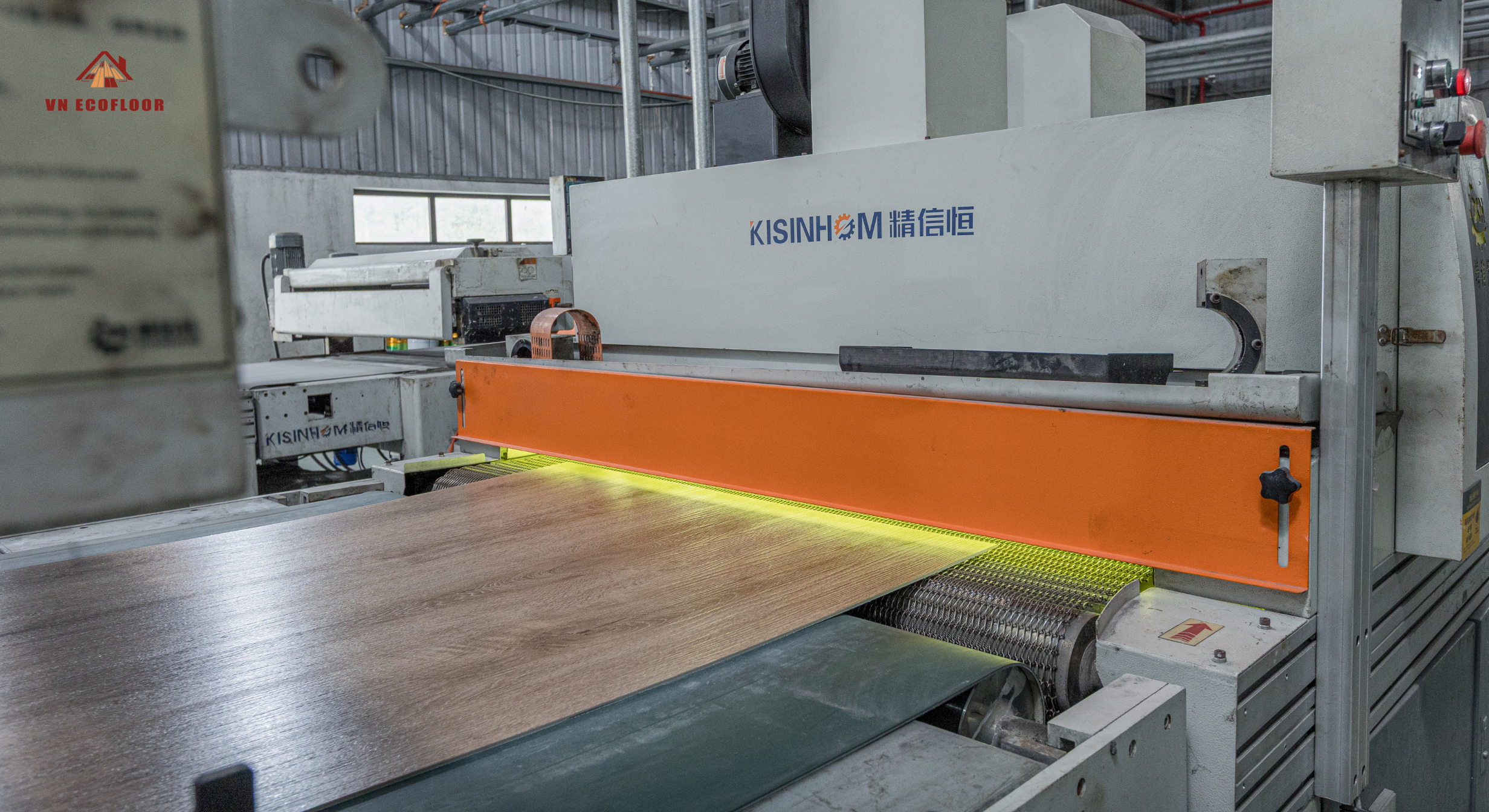
Operating as a premier flooring manufacturer out of Vietnam since 2017, VN Ecofloor brings nearly 10 years of direct export wisdom servicing highly demanding markets across the USA, Canada, and Europe:
- Direct In-House Manufacturing: We operate state-of-the-art facilities, controlling 100% of the process—from core extrusion and anti-stain UV coating to automated click-lock profiling lines.
- Strictly 100% Virgin Core Purity: We compound our rigid cores using strictly pure, medical-grade virgin resin to guarantee zero toxic odors, zero heavy metals, and complete dimensional stability.
- Full Certification Transparency: All our global credentials—including FloorScore®, CE, Bfl-s1 fire ratings, ISO 9001, and SGS Test Reports—are officially registered under the VN Ecofloor corporate name.
- End-to-End OEM Freedom: We support your brand with custom packaging design, tailored wear layer specifications, integrated acoustic backings (IXPE/EVA), and custom color film matching.
Don’t let middleman risks compromise your brand’s reputation and profit margins!
👉 [PLACE OEM ORDERS & REQUEST SAMPLES WITH VN ECOFLOOR]
Ready to work directly with a true manufacturing source and secure competitive FOB quotes?
Head over to our official website at vnecofloor.com or connect directly with our B2B export team to be consulted for free today!
Hotline/WhatsApp: +84 88 801 81 28
Official Website: vnecofloor.com
FAQs
1. What is the difference between a flooring OEM factory and a trading company?
A flooring OEM factory directly owns production facilities, machinery, workers, and quality control systems. It manufactures SPC or LVT flooring based on your required specifications. A trading company does not own the factory; it usually sources products from different manufacturers and resells them to international buyers.
2. Is it cheaper to buy flooring directly from an OEM factory?
In many cases, yes. Buying directly from an OEM factory can help reduce middleman markups and give buyers more competitive FOB pricing. This is especially important for wholesalers, distributors, and contractors ordering full container loads or building a private-label flooring brand.
3. When should a buyer choose a trading company?
A trading company may be suitable for very small orders, mixed product sourcing, or buyers who are still testing the market and do not need deep customization or strict factory-owned certifications. However, buyers should still check product quality, supplier reliability, and documentation carefully before placing orders.
4. Why do wholesalers usually prefer working with an OEM factory?
Wholesalers often prefer OEM factories because they offer stronger control over quality, batch consistency, product customization, compliance documents, and after-sales support. For long-term business, working directly with the manufacturing source can help reduce sourcing risks and protect brand reputation.
5. Why are factory-owned certificates important in flooring exports?
Factory-owned certificates help prove that the actual manufacturer and product meet international requirements. This is important for documents such as FloorScore®, CE, SGS test reports, ISO standards, and fire rating reports. If a supplier uses borrowed or unrelated certificates, buyers may face customs issues, failed audits, or trust problems with retailers.
6. Can an OEM factory support private-label flooring brands?
Yes. A true OEM factory can usually support private-label development, including custom colors, wear layer options, surface finishes, click-lock systems, acoustic backing pads, packaging design, and product specifications. This allows wholesalers and retailers to build a more unique flooring line instead of selling only stock products.