


Launching a private label in the fast-paced flooring industry is a brilliant strategic move. It allows you to build brand equity and grow your business without the massive overhead of owning a factory. However, for many distributors, the dream can turn into a nightmare if the quality shifts between batches or the colors don’t match the samples your customers fell in love with.
To protect your investment and your reputation, you need more than just a supplier; you need a technical partner. This guide outlines the essential quality markers you should demand from your OEM flooring manufacturer.
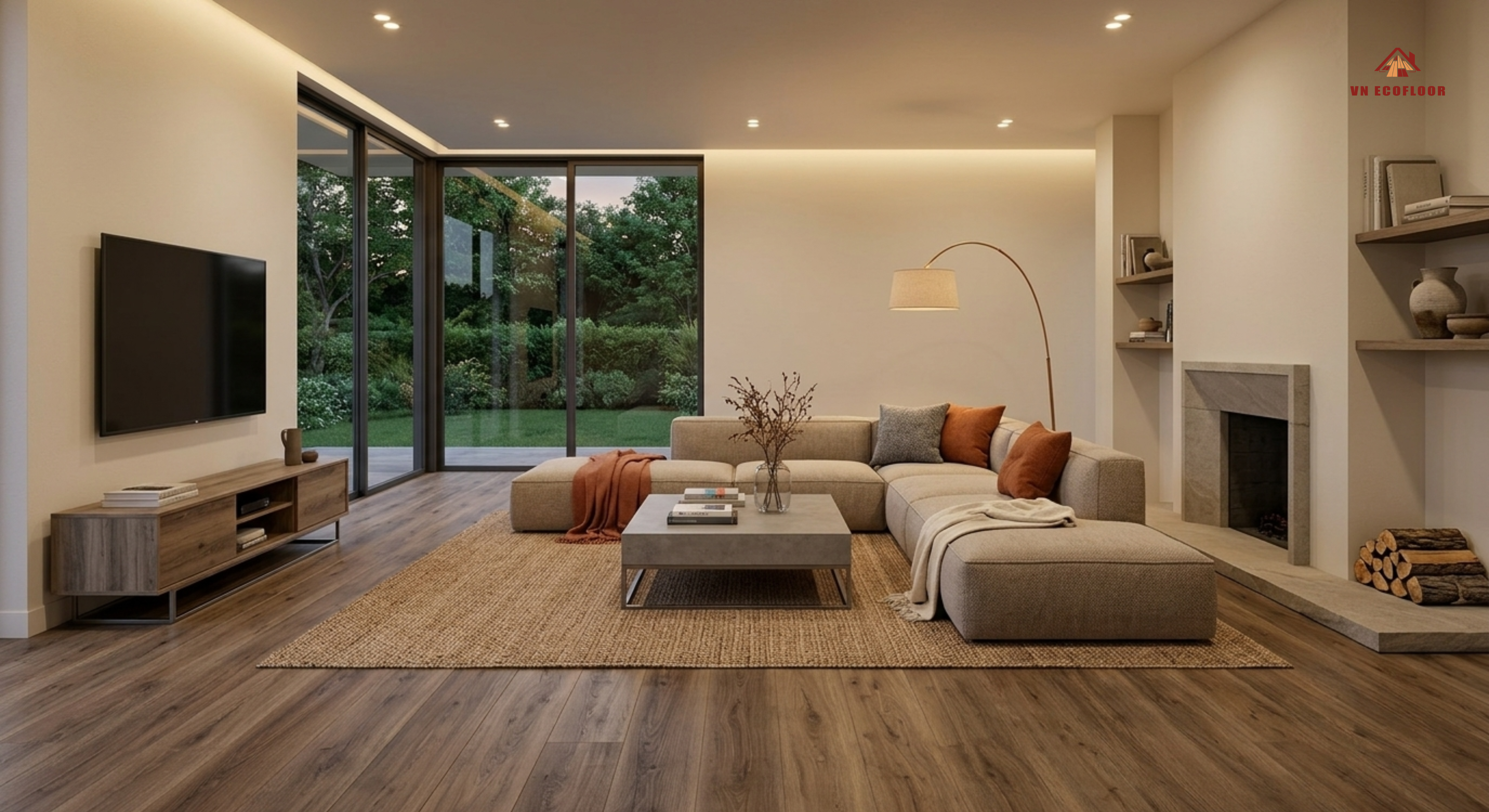
What Does OEM Flooring Really Mean?
In the flooring world, OEM (Original Equipment Manufacturing) is your “backstage pass” to a world-class facility. A manufacturer builds the product according to your specific vision, allowing you to market it under your own brand. This includes:
- Custom Identity: Your logo, your brand name, and your story on every box.
- Exclusive Designs: Hand-picked wood grains, stone patterns, and unique surface textures.
- Tailored Packaging: Boxes designed specifically for your local market’s language and logistics needs.
Why a Quality Checklist is Your Best Insurance
Without a strict “quality roadmap,” buyers often face recurring headaches: floors that shift after a month, wear layers that are thinner than promised, or click systems that simply don’t fit. A rigorous checklist ensures that every dollar you spend builds long-term brand value rather than a pile of warranty claims.
Top 5 OEM Flooring Quality for Your Brand
3.1 Raw Materials
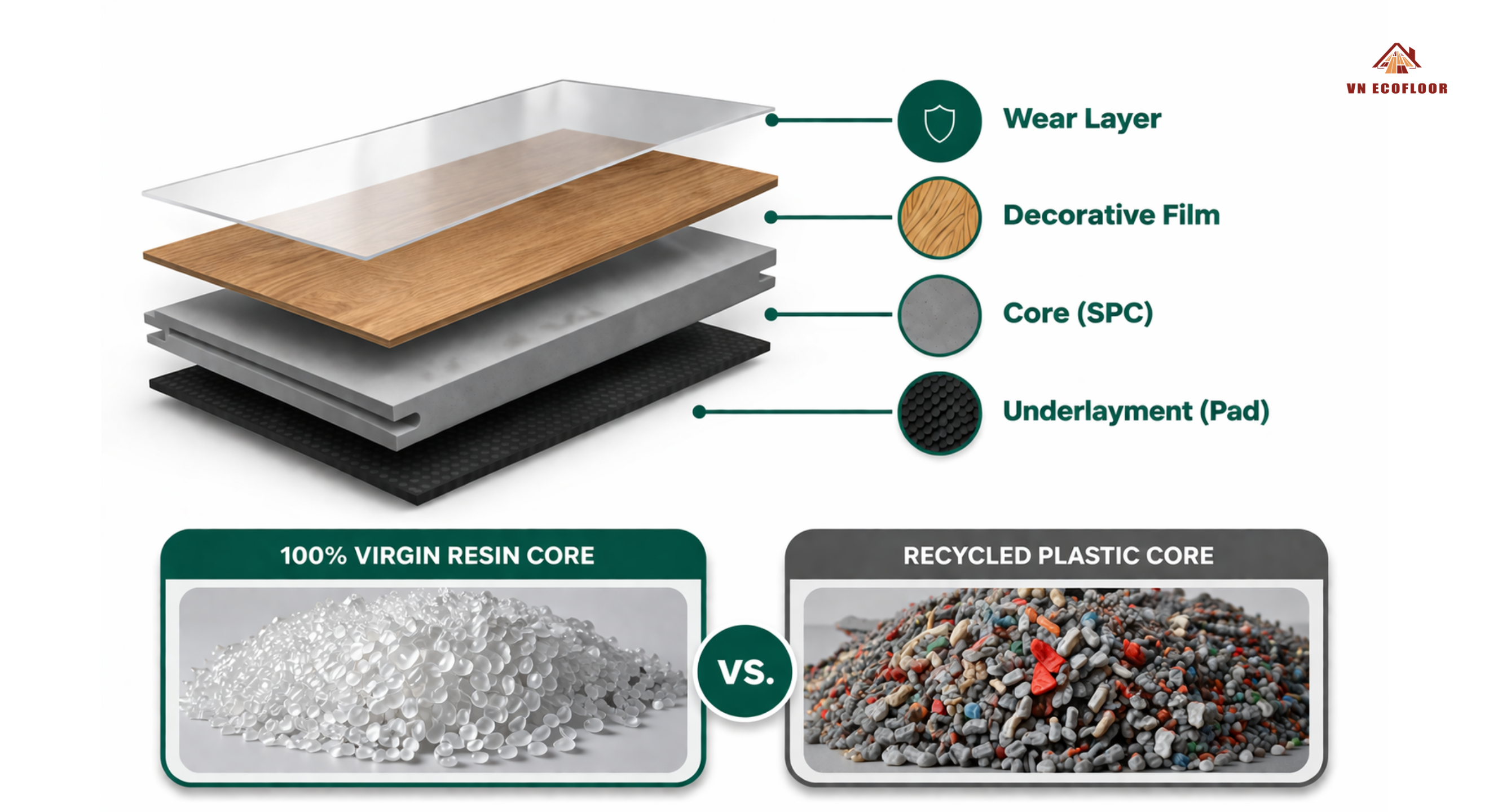
Insist on 100% Virgin Resin. Avoid recycled plastic at all costs—it leads to brittle planks and harmful emissions. Virgin resin is the only way to guarantee a floor that is both stable and safe (formaldehyde-free).
3.2 Product Structure and Thickness
Accuracy is important in the SPC flooring structures. The checklist must confirm:
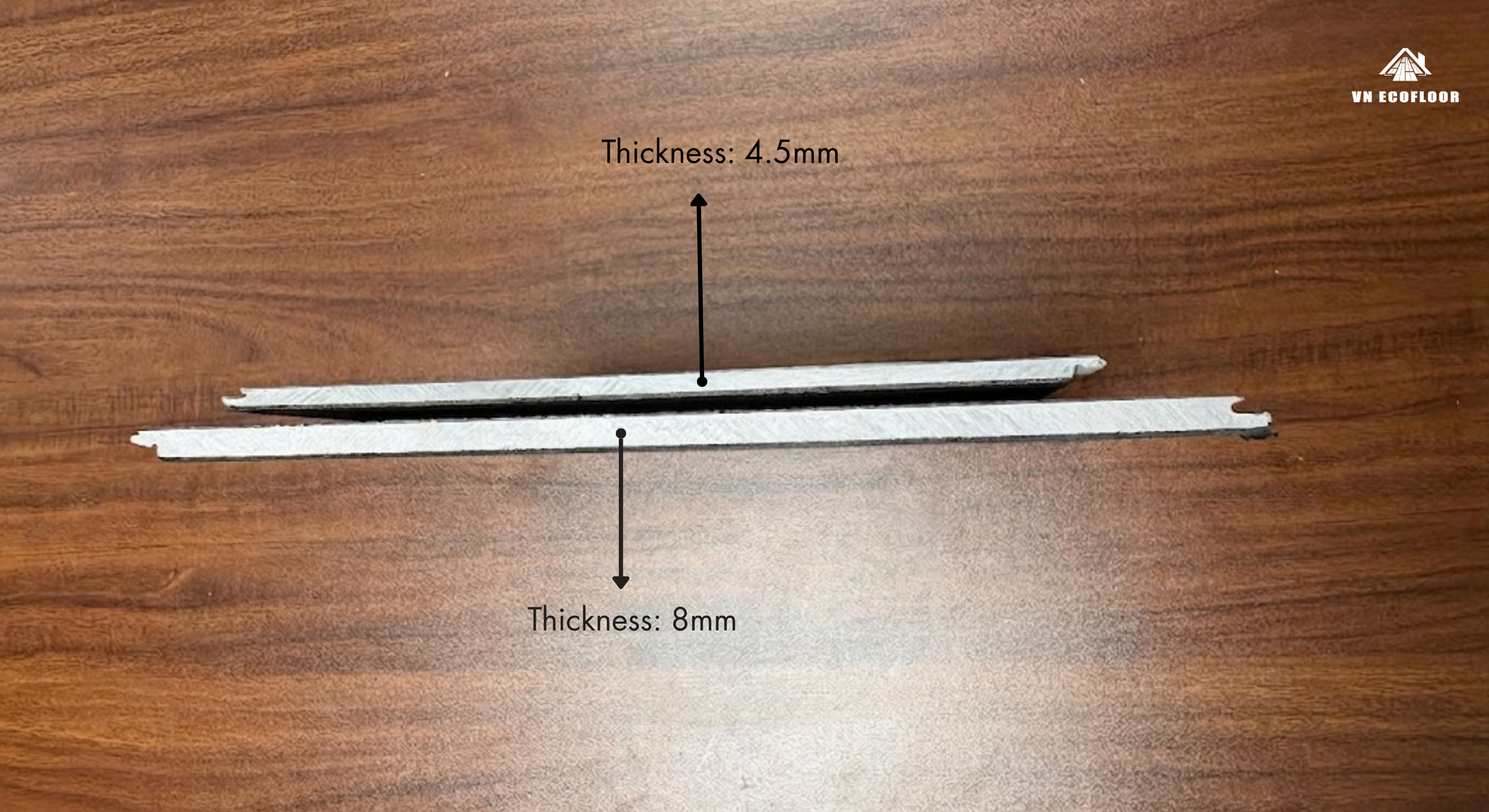
- Total Thickness: Be it 4 mm, 5 mm, or 6 mm, its tolerance must be one of the smallest ones (usually, it should be within the range of 0.1 mm).
- Click-Lock Strength: The profile (Uniclin or Valinge) should be sharp and strong so as not to create a gap once installed.
- Integrated Underlayment: When IXPE padding or EVA padding is needed, make sure that it is glued or bonded to the plank.
3.3 Surface Durability and Scratch Resistance
Surface performance is most important in commercial flooring or high-traffic residential flooring. An effective supplier must deliver the results of the following:
- Abrasion Test: This test measures the number of cycles that the wear layer can take to wear through.
- Scratch Hardness: Evaluating how the UV coating can withstand day-to-day scratches and pet claws.
- Stain Resistance: Making sure that everyday household chemicals do not clean the print effectively, which ensures that the flooring maintains its appearance and durability over time.
- Castor Chair Test: A specialized machine mimics the constant rolling of office chairs to ensure the surface doesn’t crack or wear down under localized pressure.
- Fire-resistant Test: Verifies fire-retardant properties, ensuring the floor is self-extinguishing and meets safety codes (typically Bfl-S1).
3.4 Waterproof & Stability Test
While “waterproof” SPC flooring is a standard claim, “Stability” is the real challenge. Your checklist must include:
- Water Immersion Test: Immersion of samples in water to examine whether they are swollen.
- Temperature Stability: Evaluating the expansion and contraction of the plank in hot and cold environments (up to 60°C). The dimensional stability should have high-quality SPC at a rate of not more than 0.1%.
- Chemical Test: This checks the floor’s reaction to common household agents (oil, vinegar, bleach). A quality floor must be stain-resistant and easy to clean.
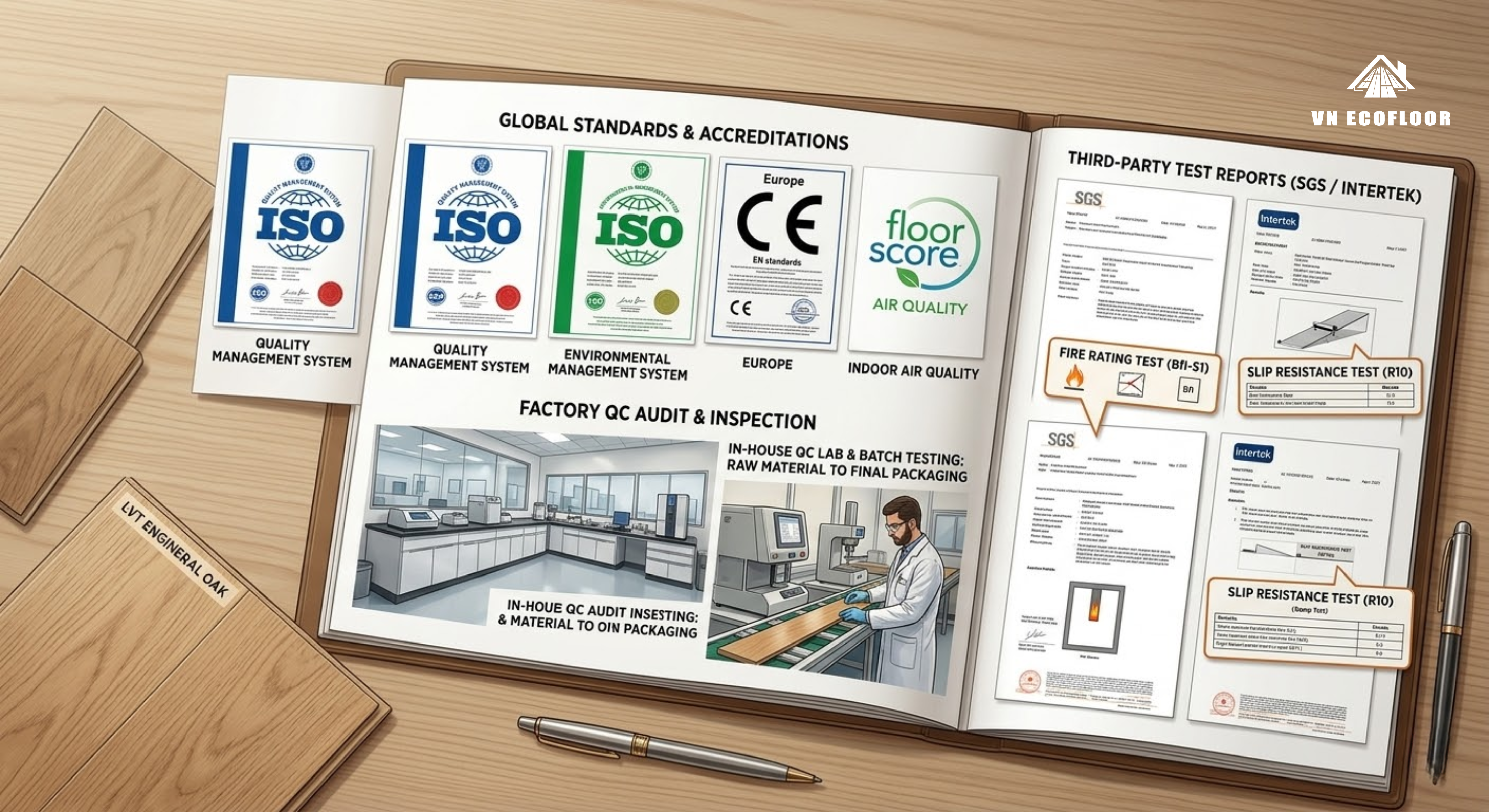
3.5 Certification and Quality Control Process
Take care never to believe a supplier at his word. An expert flooring quality certification package must contain:
- International Standards: ISO 9001, ISO 14001, CE (Europe), and FloorScore (air quality of the US).
- Inspection of the factory: Does the factory maintain an in-house QC lab? Do they conduct QC on each batch (raw material to final packaging)?
- SGS/Intertek Reports: Recent third-party tests (fire rating Bfl-S1 and slip resistance R10).
Additional Tips When Choosing an OEM Flooring Supplier
Assess the business relationships other than the product:
- Capacity: Are they capable of dealing with your delivery in case you increase your orders again in the coming year?
- Experience in Export: Knowledge of international export papers and international freight packaging.
- Customization: The capability to adjust the thickness for your projects.
Why Choose VN Ecofloor as Your Partner?
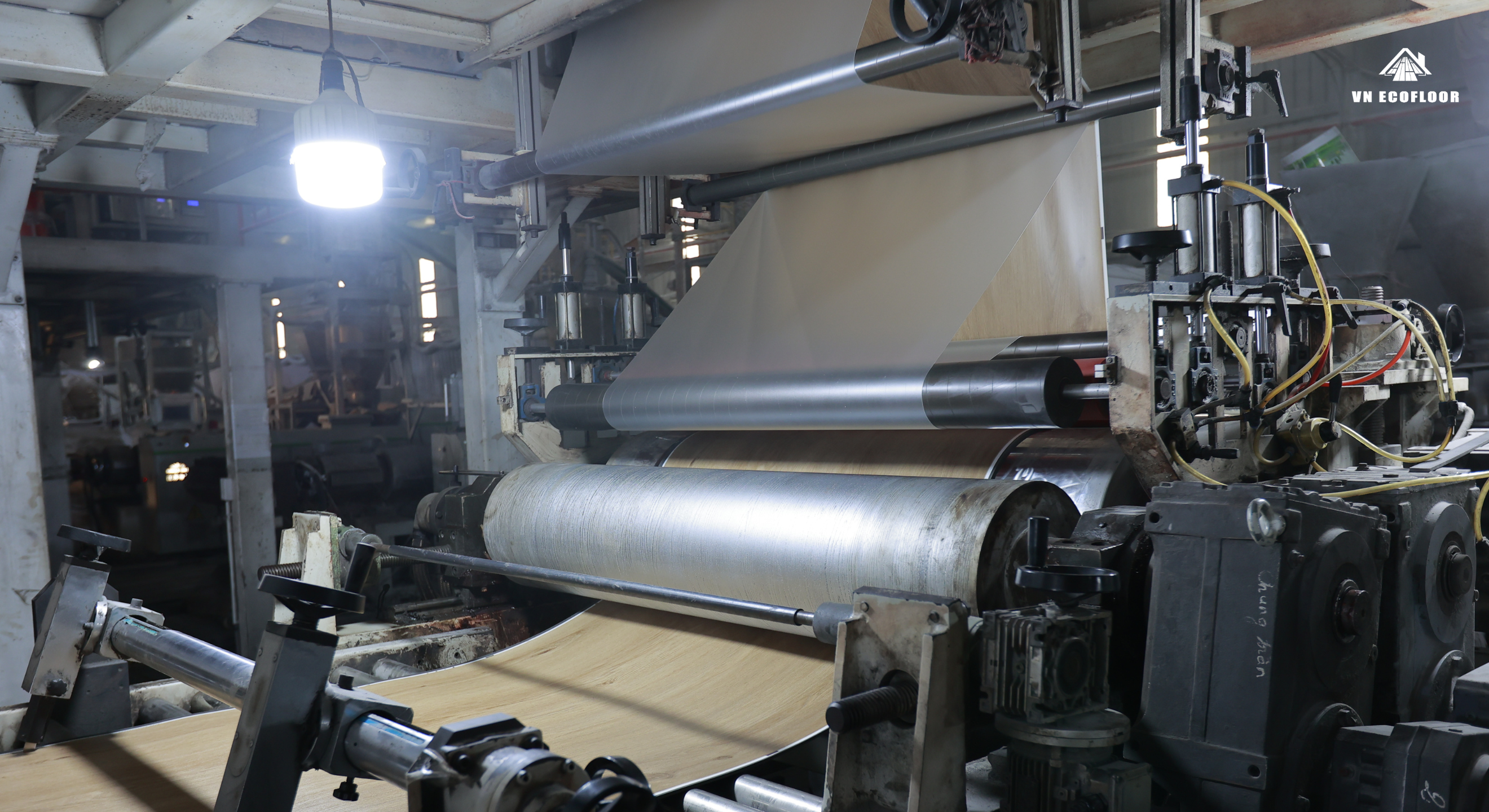
At VN Ecofloor, we don’t just manufacture flooring; we help you build an empire. Based in Vietnam with nearly 10 years of global export experience, we offer:
- Technical Excellence: Advanced SPC lines that ensure micron-level precision.
- Strict QC System: A dedicated team overseeing every step from limestone mixing to click-milling.
- Custom Branding: From the core thickness to bespoke box designs with your private label.
- Global Readiness: Our products are already tested and certified for the US, EU, and Australian markets.
- Competitive Pricing: Direct-from-factory rates with optimized supply chain costs.
Ready to start your brand journey?
👉 [Contact VN Ecofloor] today for a custom OEM quote and our latest sample kit.
Hotline/WhatsApp: +84 88 801 81 28
Website: vnecofloor.com
Conclusion
A detailed OEM flooring quality checklist is the best insurance policy for your business. By focusing on raw material quality, product structure, surface durability, stability, and certifications, you can avoid the common pitfalls of international sourcing.
Choosing the right OEM flooring manufacturer is the most critical step toward long-term success. Partner with a factory that values quality as much as you do.
FAQs
1. What is the MOQ?
MOQ stands for Minimum Order Quantity—the minimum number of products or square meters required for a production order. In the flooring industry, MOQ helps optimize raw material usage, production efficiency, and shipping costs.
2. What is OEM flooring manufacturing?
OEM flooring manufacturing refers to a type of business model whereby a manufacturing facility would manufacture flooring products to the specifications of a buyer and sell them under the brand name of the buyer. One participant is the producer, who has the responsibility of production and the other is the consumer, who is interested in marketing, branding, and distribution.
3. What are the most popular types of flooring manufactured using OEM?
The SPC flooring, vinyl flooring (LVT) and laminate flooring are the most popular products in the OEM flooring industry. They are popular materials for residential and commercial purposes, as they are very durable, waterproof and simple to install.
4. What are the ways that buyers would confirm the quality of OEM flooring prior to making a bulk purchase?
Buyers are supposed to demand samples of the products, third-party and factory testing reports, and certifications. It is also recommended to check key factors such as raw material quality, wear layer thickness, click-lock system, and dimensional stability before confirming a large order.
5. What qualifications is a reliable OEM flooring manufacturer supposed to have?
A professional flooring manufacturer is supposed to offer internationally recognized standards, including, but not limited to, ISO 9001 (quality management) and ISO 14001 (environmental management), CE certification, and indoor air quality FloorScore. International buyers also usually demand the third-party testing reports prepared by SGS or Intertek.
6. Do I need to hire my own designer for the packaging?
Not necessarily. While many of our partners have their own teams, VN Ecofloor provides templates and basic design support. We ensure that your logo, technical specs, and barcodes are laid out correctly so that your boxes look retail-ready the moment they arrive at your warehouse.
7. How long does the OEM process take from order to shipping?
For your first order, it typically takes 30–35 days. This includes time for the custom film selection, box printing, and the rigorous 10-step QC process. Once your brand is “set up” in our system, repeat orders move even faster because OEM flooring partner already has your designs and specs ready to go.