


When selecting Luxury Vinyl Plank (LVP) or Stone Plastic Composite (SPC) flooring for a residential home or commercial project, most people spend all their time debating colors, wood-grain patterns, or wear-layer thicknesses. However, there is a crucial technical detail that directly determines the visual depth of a room and your daily maintenance routine: the gloss level (surface gloss).
Should you go with a dazzling, light-reflecting shine or a subtle, natural matte finish?
Let’s strip away the technical confusion and look at what gloss level actually is, how it is measured in the laboratory, and how to select the perfect sheen for your private-label flooring catalog.
What Exactly Is Gloss Level?
In flooring manufacturing, gloss level refers to the percentage of light reflected off the top protective surface—specifically the UV topcoat—of a flooring plank.
It is not about the color, pattern, or wood grain itself; it is purely a measurement of surface reflectivity.
- High Gloss Levels: The UV coating creates a vibrant, polished sheen that bounces a higher percentage of incoming light, producing bright highlights across the wood grain texture.
- Low Gloss Levels (Matte): The UV coating contains specialized matting agents that scatter incoming light in multiple directions, resulting in a soft, non-reflective, highly natural appearance.
High-Gloss Flooring
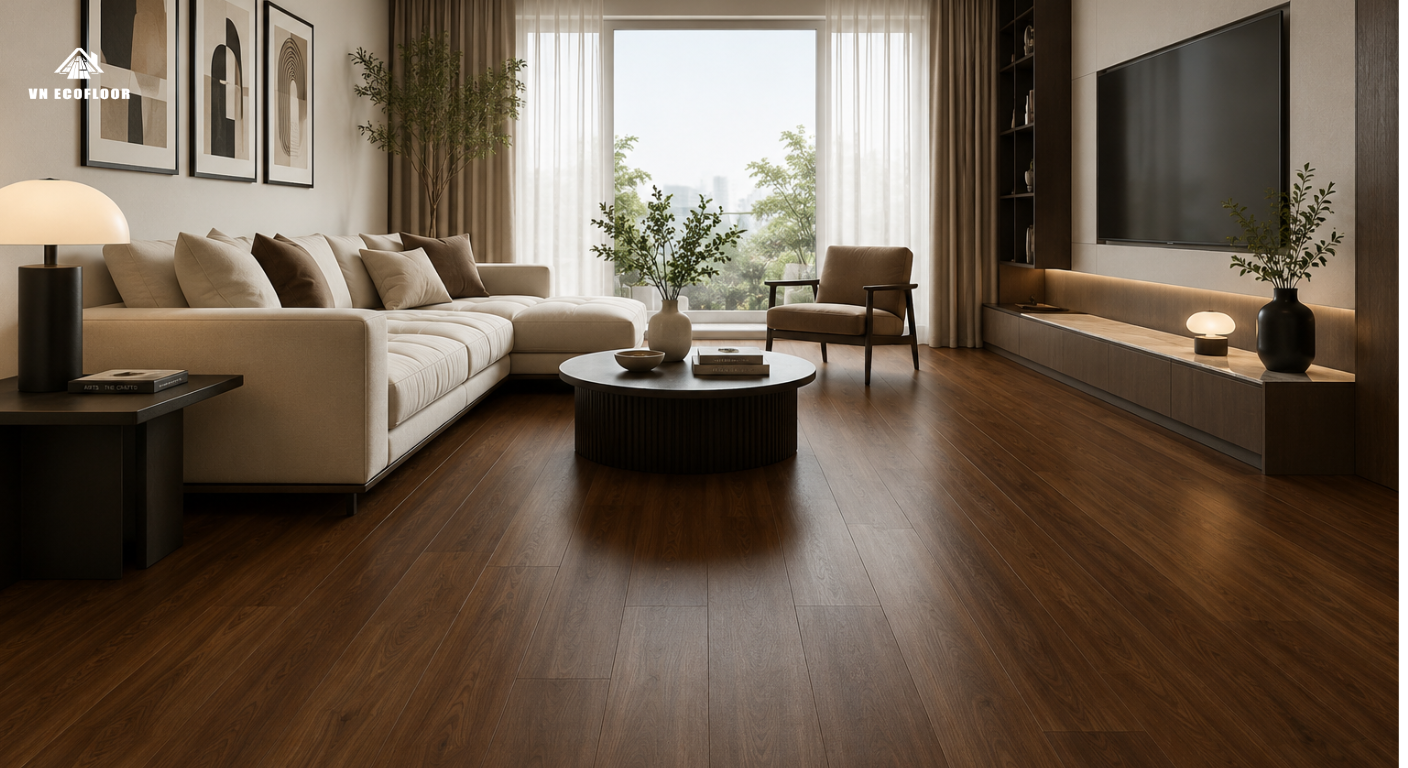
High-gloss features a surface layer that strongly reflects light, creating a bright, polished, and luxurious finish right out of the box.
Pros:
- Expands Room Perception: Thanks to its ability to reflect both natural and artificial light, high-gloss flooring makes small or dimly lit areas (like narrow hallways or compact living rooms) feel significantly larger and airier.
- Elevates Luxury Aesthetics: A high-shine coat enhances the visual depth of rich wood tones (such as dark walnut or cherry), creating an opulent, hotel-lobby aesthetic.
Cons:
- Highlights Surface Flaws: This is its biggest drawback. High-gloss surfaces act like a spotlight on scratches, smudges, dusty footprints, pet paws, and minor subfloor imperfections underneath.
- Requires Frequent Maintenance: You will need to clean and dust-mop more frequently to keep the surface free of dulling streaks and marks.
Ideal Applications: Classic living rooms, grand foyers, luxury commercial showrooms, or low-traffic areas where visual impact is prioritized.
Low-Gloss / Matte Flooring
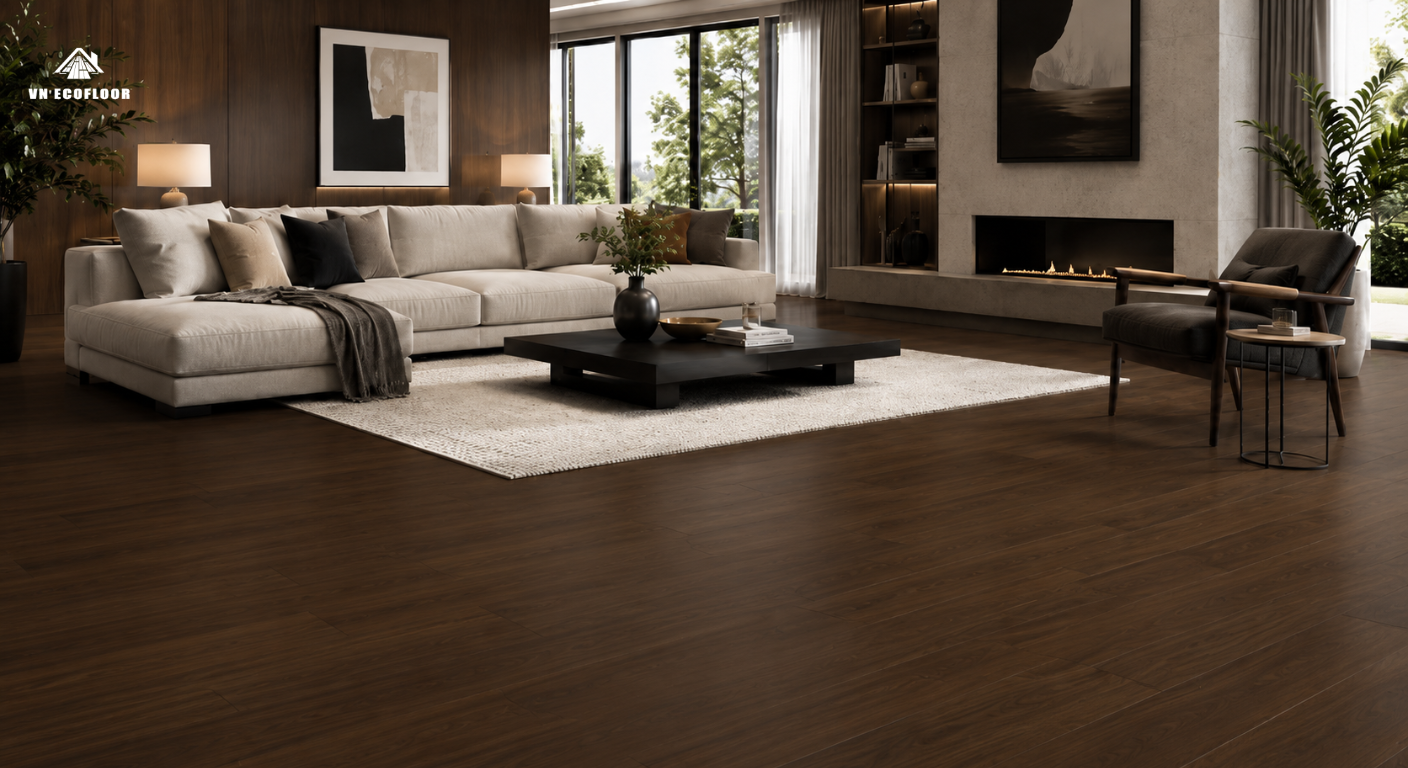
Matte and low-gloss finishes are currently dominating modern interior design trends. The surface absorbs light rather than reflecting it, preserving the raw, organic beauty of the material.
Pros:
- Authentic Wood Realism: When paired with Embossed-in-Register (EIR) synchronized texturing, a matte finish mimics the look and tactile feel of genuine hardwood almost flawlessly.
- Conceals Daily Wear & Tear: Small scratches, dust, and everyday foot traffic marks virtually “disappear” on a matte surface, keeping the floor looking clean between routine sweeps.
- Low-Maintenance Care: You won’t have to worry about water streaks or constant buffing to maintain an even appearance.
Cons:
It lacks the dramatic, light-bouncing gleam that some traditional or formal spaces require under feature lighting.
Ideal Applications: High-traffic family homes with kids or pets, bedrooms, kitchens, modern apartments, and bustling commercial spaces (offices, cafes, retail stores).
At a Glance: High-Gloss vs. Matte Gloss
| Feature | High-Gloss | Matte / Low-Gloss |
|---|---|---|
| Aesthetic Appeal | Formal, dazzling, light-reflecting | Organic, modern, authentic timber look |
| Imperfection Hiding | Low (Scratches & dust are visible) | High (Conceals micro-scratches & dirt) |
| Wood Grain Realism | Up to 70% (Gloss can feel synthetic) | Up to 99% (Especially with EIR texturing) |
| Cleaning Frequency | Requires frequent buffing & cleaning | Low maintenance |
| Best Room Match | Grand foyers, formal rooms, showrooms | Bedrooms, kitchens, high-traffic commercial |
How to Choose the Right Gloss Level for Your Project
To make the best decision, consider these three real-world factors:
- Natural Light Exposure: If a room has massive floor-to-ceiling windows, an overly glossy floor will create harsh, blinding glare. A matte surface balances intense sunlight beautifully.
- Traffic Levels: For busy households with children or pets running around, low-gloss floors ensure long-term aesthetic durability without showing minor scuffs.
- Design Style: Neoclassical and traditional interiors pair well with slight-to-high gloss levels, whereas Scandinavian, Japandi, Industrial, or Minimalist designs strictly demand a natural matte finish.
Wholesale & OEM Buyer Guide: Lead Times & Cost Differences
For distributors, importers, and brand managers placing container-level OEM orders, balancing lead times and profit margins is essential. Here is what you need to know about ordering gloss level lines:
1. Is There a Difference in Production Lead Times?
In short, production lead times for container orders are virtually identical (typically 25 to 30 days depending on order volume).
The Reason: Both matte and high-gloss planks pass through the same extrusion, lamination, and profiling lines.
The Only Variation: By modifying the concentration of silica matting agents in the UV formulation and adjusting the curing intensity of the UV lamps, technicians lock in your exact target Gloss Unit range.
2. Production Costs
In B2B trade, low-gloss or ultra-matte LVP/SPC lines (especially when combined with EIR textures) typically carry a $0.20 to $0.50 per square meter premium over standard high-gloss options. This price difference stems from specific manufacturing realities:
- Specialized Matting Agents: To neutralize surface reflectivity, factories must blend specialized silica matting agents into the UV topcoat formulation, which increases raw material costs.
- Ceramic Bead Scratch Resistance: Matte floors are often specified for modern, high-traffic projects. Incorporating microscopic ceramic beads into the matte UV layer to boost scratch resistance increases the overall coating compound cost.
- Stricter Quality Control (QC): Low-gloss coatings require precise curing line speeds to prevent “uneven gloss sheen” across the plank batch. Higher QC standards slightly increase factory overhead.
Wholesaler Tip: While matte LVP carries a slightly higher FOB unit cost, it yields substantially higher retail margins and carries far lower post-sale return rates due to scratch complaints compared to high-gloss options.
Elevate Your Space with VN Ecofloor
Whether you prefer the dramatic elegance of a high-gloss finish or the raw, authentic charm of a modern matte surface, the true durability of your floor comes down to UV coating quality and 100% Virgin Core engineering.
Operating as an export-focused manufacturing leader out of Vietnam since 2017, VN Ecofloor produces world-class LVP and SPC flooring tailored to global compliance standards.
- Multi-Layer UV Protection: Our automated coating lines precisely calibrate sheen levels to your exact private-label specs while enhancing scratch, stain, and UV-fading resistance.
- 100% Virgin Resin Core: We extrude our cores using strictly pure, medical-grade virgin polymers to guarantee dimensional stability, zero warping, and full compliance with strict indoor air audits (FloorScore®, CE, … certified).
- Extensive Texture Portfolio: Choose from an expansive catalog of synchronized wood and stone textures across all sheen levels—from Ultra-Matte and Satin to High-Gloss.
Ready to inspect physical surface sheens or test our scratch-resistant topcoats yourself? Head over to our official website at vnecofloor.com to browse our collections, or connect directly with our B2B sourcing team to request your physical OEM Sample Kit today!
Hotline/WhatsApp: +84 88 801 81 28
Official Website: vnecofloor.com
FAQs
1. What is the difference between high-gloss and matte LVP flooring?
High-gloss LVP flooring has a shiny, light-reflecting surface that makes a room feel brighter and more polished. Matte or low-gloss LVP flooring has a softer, more natural finish that absorbs light and creates a more realistic wood-like appearance. In simple terms, high-gloss feels more formal and dramatic, while matte feels more modern, natural, and practical for daily use.
2. Is matte LVP flooring better than high-gloss LVP?
Not always. Matte LVP is often better for busy homes, apartments, kitchens, bedrooms, offices, cafes, and retail spaces because it hides dust, small scratches, and footprints more easily. High-gloss LVP can still be a strong choice for formal living rooms, showrooms, grand foyers, or low-traffic areas where visual impact is the main priority.
3. Does high-gloss LVP flooring scratch more easily?
High-gloss LVP does not necessarily scratch more easily, but scratches, dust, smudges, and footprints are usually more visible on a shiny surface. Because the floor reflects more light, even small surface marks can stand out. This is why high-gloss floors often require more frequent cleaning and maintenance to keep their polished appearance.
4. Does gloss level affect flooring durability?
Gloss level itself does not directly decide how durable the floor is. Durability depends more on the wear layer, UV coating quality, surface additives, and core stability. However, gloss level can affect how visible scratches, dust, footprints, and smudges appear. That is why matte or low-gloss flooring often looks better for longer in busy spaces.
5. Is matte LVP flooring more expensive than high-gloss LVP?
In OEM production, matte or ultra-matte LVP can be slightly more expensive than standard high-gloss options. This is because matte finishes may require specialized matting agents, more precise UV coating control, and sometimes upgraded scratch-resistant additives. However, matte flooring can also support stronger retail margins because it fits current design trends and reduces visible scratch complaints.