


When you are building a private-label flooring brand or sourcing a massive wholesale inventory, you know that the initial decision to buy happens with the eyes. A customer walks into a showroom, glances at a display, and makes an instant judgment based on how the floor looks. For years, vinyl flooring (like SPC and LVT) had a major hurdle to clear: it looked like wood, but it felt like plastic. When light hit the planks, a flat, uniform glare exposed it as an imitation. But the flooring engineering world changed completely with the introduction of EIR (Embossed in Register) technology. In 2026, if you are pitching to premium residential clients, luxury interior designers, or high-end commercial projects, EIR surface is no longer just a luxury option—it is the ultimate standard for realistic flooring.
If you are a wholesaler or an importer looking for the perfect OEM factory partner, understanding the mechanics, value, and manufacturing realities of EIR surfaces is the key to unlocking higher profit margins. Let’s break down exactly what EIR is and why it belongs in your product portfolio.
What Exactly Is an EIR Surface?
To understand EIR, let’s first look at how traditional vinyl flooring is textured. In a standard factory run, the planks receive a “generic emboss.” The machine stamps a random wood-grain texture across the top clear layer. The texture doesn’t match the image below it; a knot in the wood print might feel completely smooth, while a smooth section of print might have a random rough groove stamped over it, as you see below.
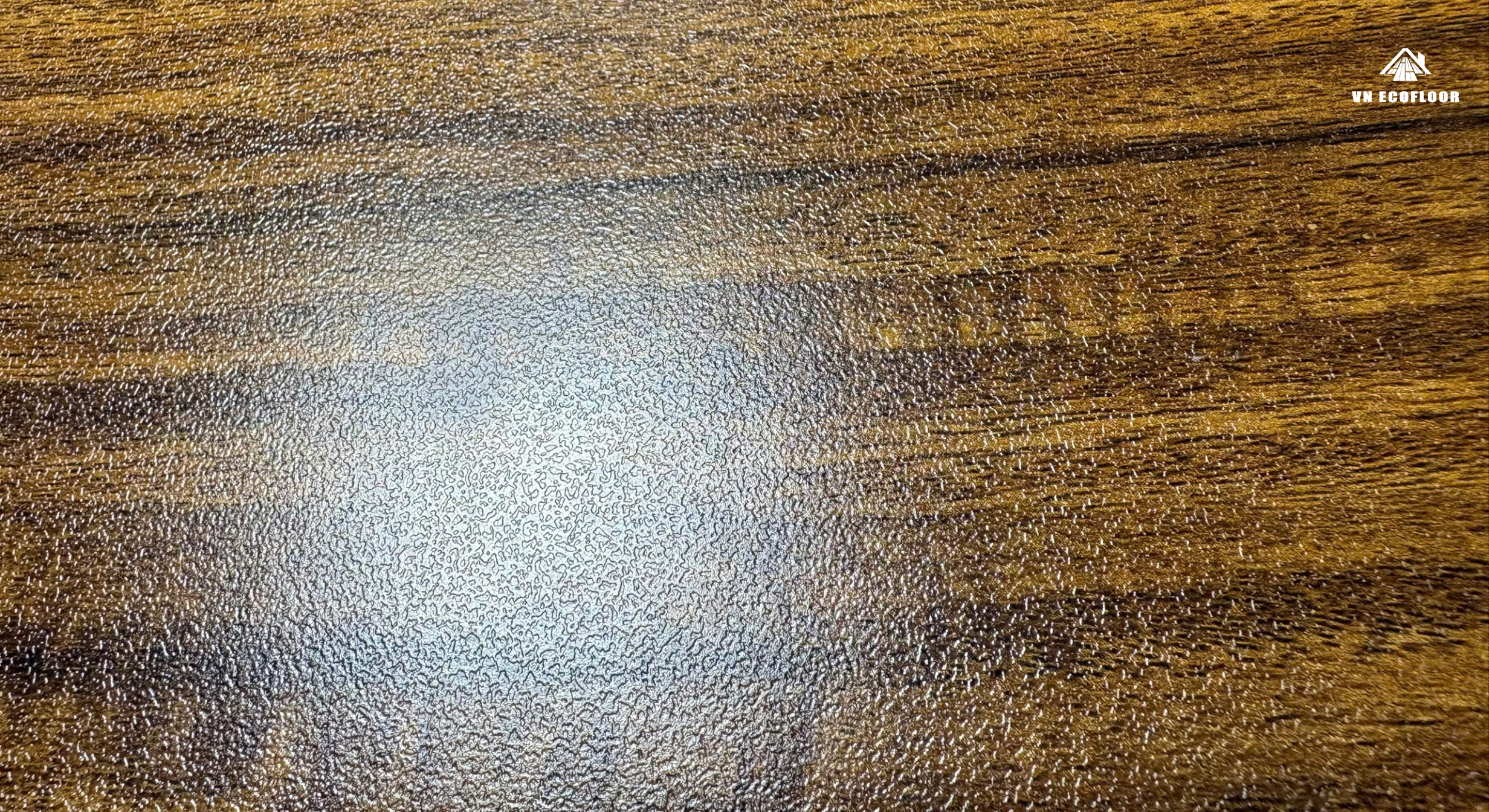
EIR changes the game through perfect synchronization.
“Embossed in Register” means that the physical, tactile texture on the surface of the plank is perfectly aligned with the high-definition decorative print film underneath. If the design film shows a deep oak knot, you can actually feel that exact indentation with your fingers. If the film shows a subtle rustic grain line, that exact grain line is pressed into the floor.
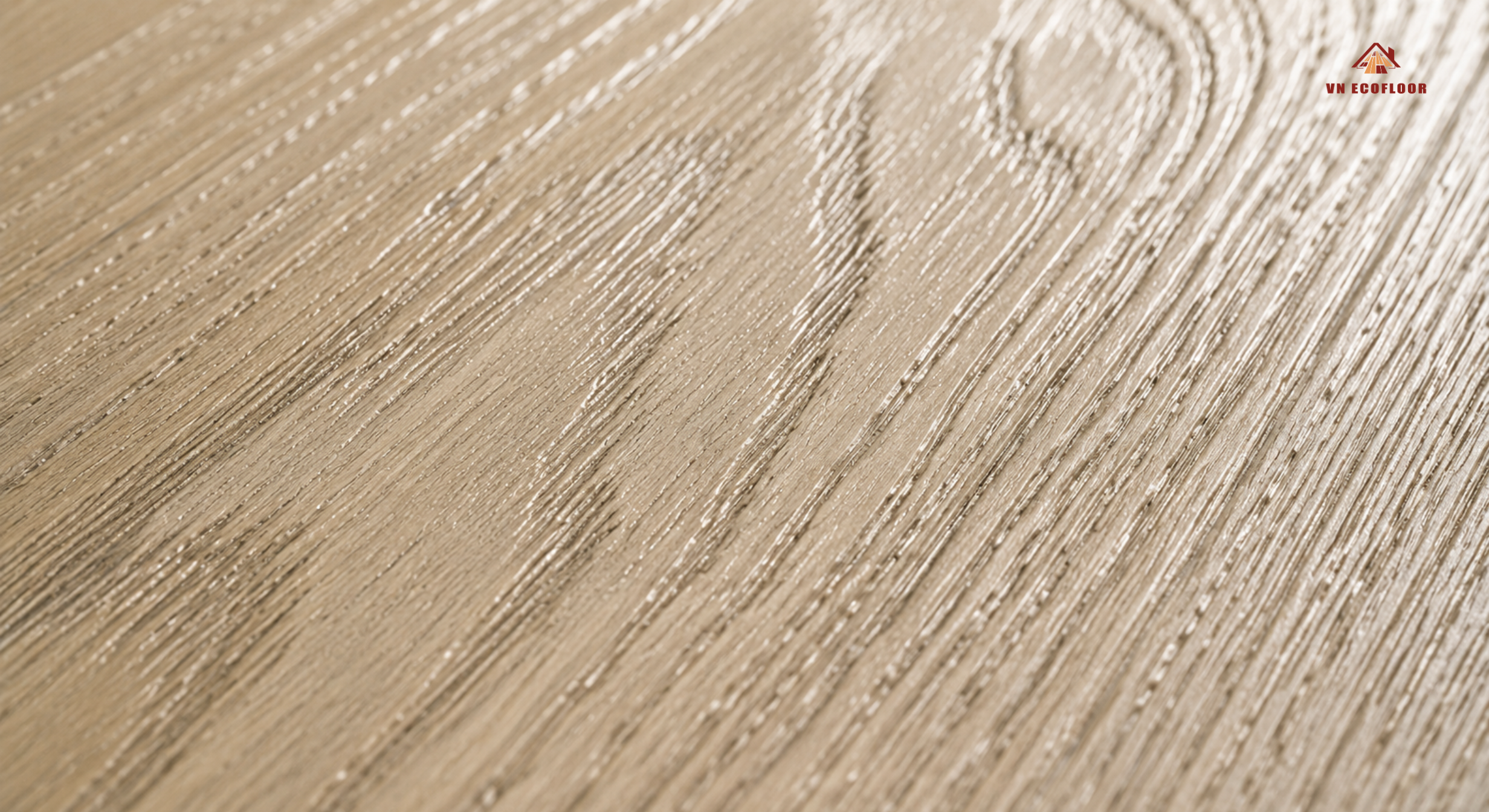
The Simple Explanation: EIR synchronizes what you see with what you feel. It eliminates the cheap, plasticky reflection of traditional vinyl and replaces it with the multi-dimensional depth of real hardwood.
How EIR Is Manufactured
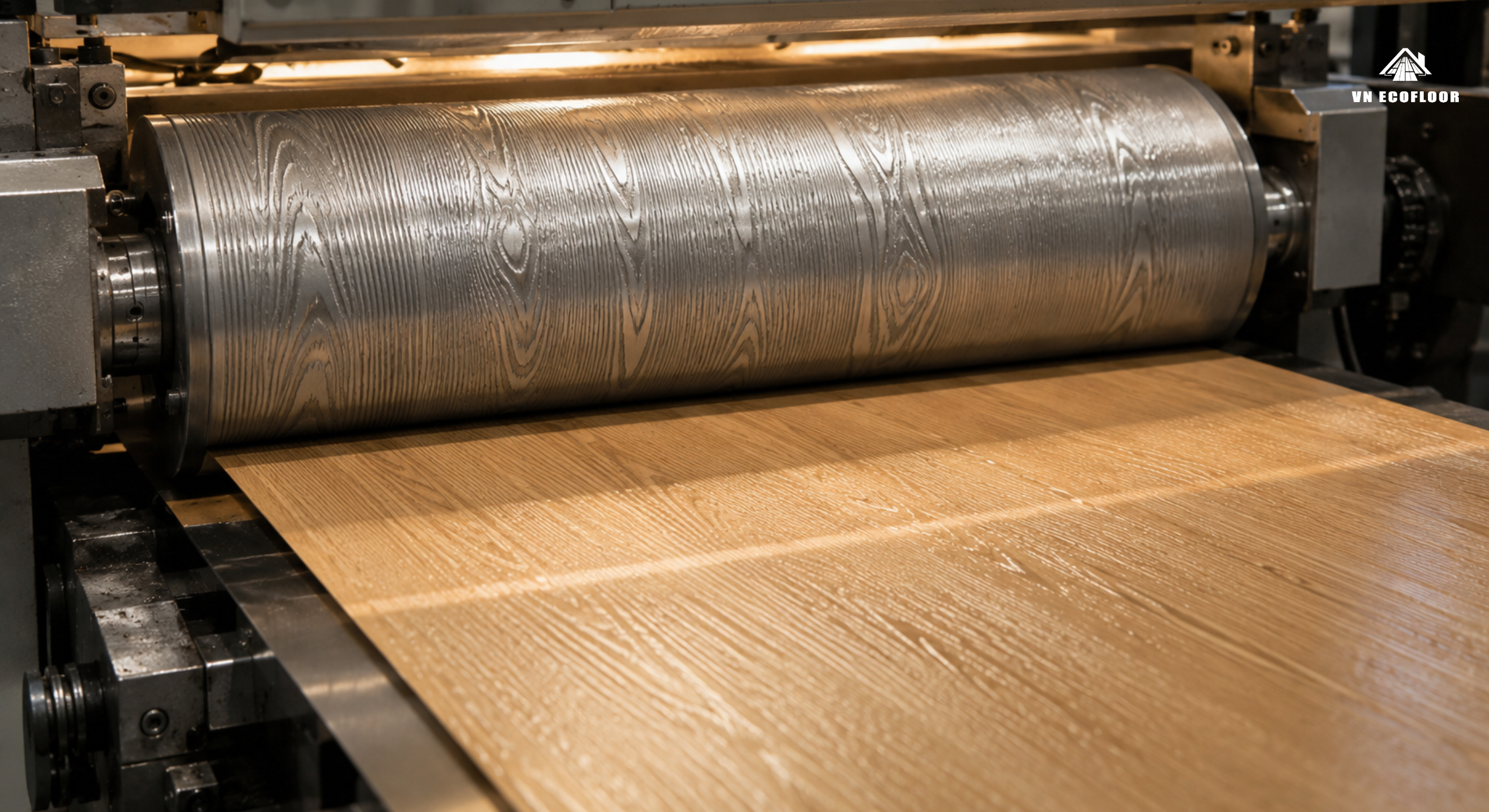
Achieving this level of precision requires advanced manufacturing setups. During production, the layers of the vinyl plank—the rigid core, the print film, and the clear wear layer—are loaded into a heavy-duty thermal pressing machine.
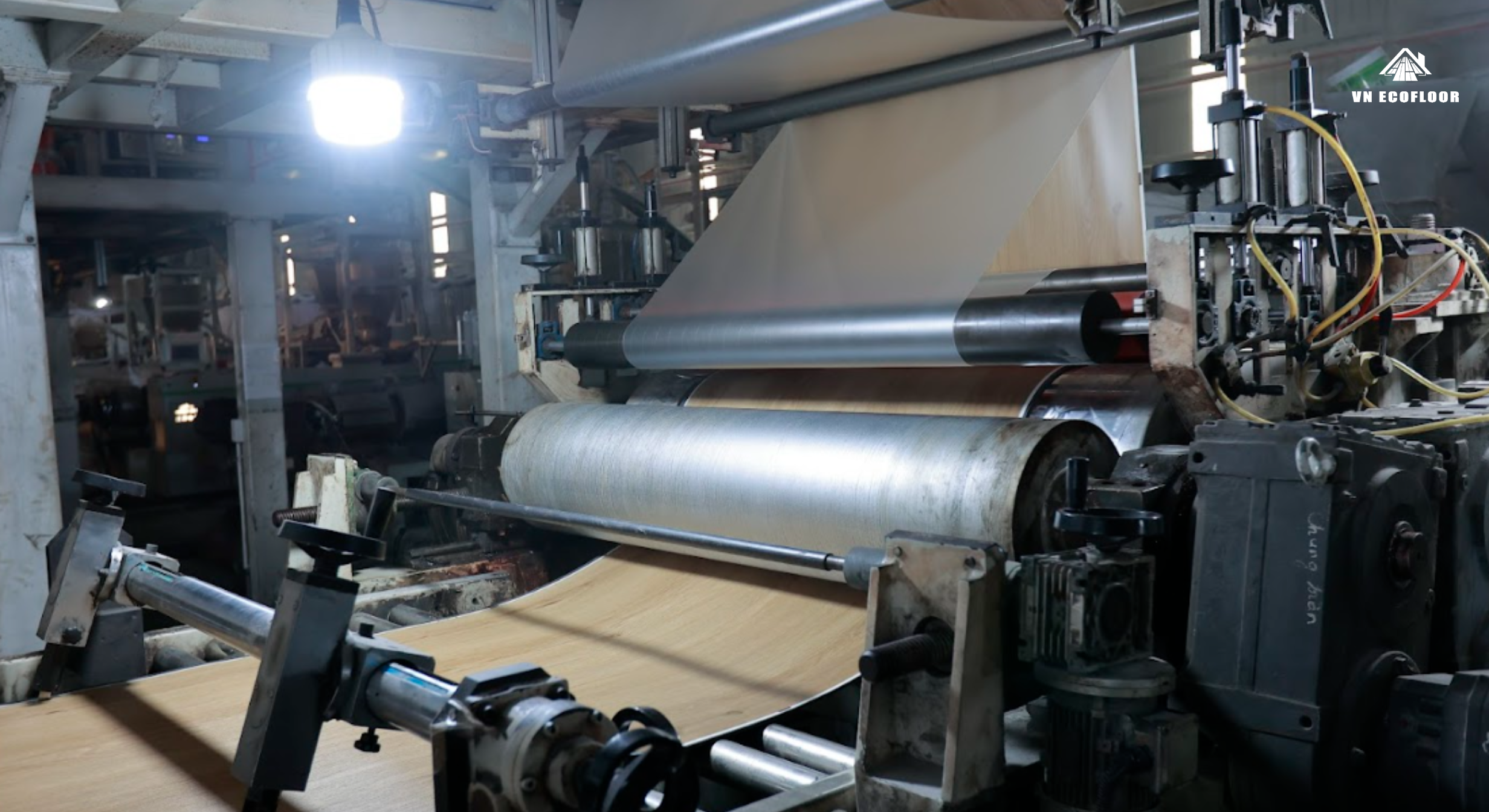
Instead of using a generic texturing roller, an EIR line utilizes a specialized, laser-etched steel plate that mirrors the exact print pattern of the wood film. Using advanced optical sensors and automated alignment cameras, the machine aligns the steel plate with the print film down to a fraction of a millimeter. Under immense heat and pressure, the plate presses the texture directly into the clear wear layer, locking the visual and physical details together permanently.
Why Do Wholesalers and Private Labels Need EIR in the Catalog?
As a B2B sourcing manager or wholesaler, you aren’t just buying flooring specs; you are buying marketability. Here is why investing in an EIR collection with your OEM partner drives business growth:
1. Commands a Premium Price Point
Because EIR flooring is visually indistinguishable from real engineered hardwood once installed, it allows you to step away from the low-margin “price wars” of entry-level vinyl. Wholesalers can position EIR collections in a lucrative, premium pricing tier, yielding much higher margins per container.
2. Captures Light Differently (No Plastic Glare)
One of the biggest complaints about cheap vinyl is how it looks under direct sunlight or bright showroom lighting. A flat glare instantly gives away the plastic composition. Because an EIR surface features authentic, multi-angled micro-grooves, it diffuses light naturally—just like real timber.
3. Drastically Enhances Slip Resistance
Beyond pure aesthetics, the precise, synchronized texturing of an EIR surface increases the micro-friction underfoot. This gives the flooring a naturally safer, more tactile grip, making it a stellar selling point for active families, pet owners, and light commercial spaces.
EIR vs. Standard Embossing: A Quick B2B Reference
When mapping out your next container order, let’s use this matrix to balance your inventory between budget lines and premium options:
| Feature / Metric | Standard Embossed Surface | EIR (Embossed in Register) Surface |
|---|---|---|
| Texture Alignment | Random; does not match the wood grain print | 100% Synchronized with the printed wood pattern |
| Visual Depth | Flat; can look synthetic under direct light | Three-dimensional; mimics genuine hardwood |
| Tactile Feel | Uniformly smooth or artificially rough | Highly realistic; knots and grains feel authentic |
| Sourcing Cost | Lowest upfront production cost | Higher due to specialized steel molds and alignment tech |
| Target Market | Budget property management, quick flips | Premium residential, luxury showrooms, boutique hotels |
| Profit Margin Potential | Low to Moderate (Highly competitive) | High (Premium differentiation) |
The Sourcing Challenge
Here is a crucial insider reality for sourcing agents: EIR requires a highly mature manufacturing partner.
Because the texturing plate must align perfectly with the print film, even a microscopic shift of 0.5mm during thermal pressing will ruin the effect, creating a blurry, low-quality edge. Cheap factories with outdated machinery experience high defect rates, leading to uneven patterns across a single batch. It demands precise tension control, automated optical calibration, and regular mold maintenance to ensure batch-to-batch consistency.
Why Global Sourcing Teams Centralize EIR Production with VN Ecofloor
If you are navigating the complexities of the global supply chain, you cannot afford to risk your brand’s reputation on inconsistent texturing or high factory defect rates. You need an established, reliable OEM partner who treats surface engineering as a science.
That is exactly why global wholesalers and private-label brands build their premium collections with VN Ecofloor.
Operating as an export-focused manufacturing leader out of Vietnam, VN Ecofloor brings extensive experience in high-tech manufacturing and global export, supplying the highly demanding markets of the USA, Canada, and Europe. We bridge the gap between high-end design and structural integrity:
- Flawless EIR Precision: Our state-of-the-art production lines’ premium laser-etched molds ensure that every knot, grain, and cleft aligns perfectly across millions of square meters.
- 100% Virgin Core Foundation: We back our beautiful EIR surface textures with a strictly 100% Virgin Resin rigid core. This guarantees absolute dimensional stability—meaning the floor stays perfectly flat, the click-lock joints remain rock-solid, and the product completely satisfies strict international audits like FloorScore® and CE.
- Advanced Topcoat Integration: To protect your EIR investment, we can seamlessly integrate advanced Ceramic Bead or Aluminium Oxide UV topcoats. This preserves the stunning matte clarity of the wood grain while building a bulletproof matrix against micro-scratches and scuffs.
- Complete Private-Label Freedom: From customizing the exact matte-gloss levels to designing retail-ready packaging with your brand logo, we handle the entire OEM pipeline.
Don’t settle for generic, flat plastic floors. Give your sales network a premium collection that looks, feels, and performs like real hardwood.
👉 [VISIT VN ECOFLOOR TO REQUEST PREMIUM EIR SAMPLES]
Ready to run your fingers over a true, perfectly synchronized EIR plank? Head over to our official website at vnecofloor.com to explore our full technological capabilities, download our latest testing data, or connect directly with our sourcing team to request a physical OEM Sourcing Sample Kit today.
Hotline/WhatsApp: +84 88 801 81 28
Official Website: vnecofloor.com
FAQs
1. What does EIR mean in vinyl flooring?
EIR stands for Embossed in Register. It means the surface texture of the vinyl plank is aligned with the printed wood design underneath. So when you see a wood knot or grain line on the plank, you can also feel that same texture on the surface.
2. Is EIR vinyl flooring better than standard embossed flooring?
Yes, especially for premium collections. Standard embossed flooring uses a random texture that does not match the wood print, so it can look flatter or more artificial. EIR flooring creates a more realistic wood look and feel, making it a better choice for showrooms, residential projects, boutique hotels, and higher-end private-label lines.
3. Why does EIR flooring look more like real hardwood?
EIR flooring looks more realistic because the texture follows the actual wood pattern printed on the decorative film. The grain, knots, and rustic details are not just visual—they are physically embossed into the wear layer. This creates more depth and helps the floor reflect light more naturally, similar to real timber.
4. Does EIR surface only improve appearance?
No. While the biggest benefit is visual realism, EIR can also improve the tactile feel of the floor. The synchronized texture gives the surface more natural grip and micro-friction, which can help make the flooring feel safer and more comfortable underfoot compared with a flat, glossy vinyl surface.
5. Is EIR flooring more expensive to produce?
Usually, yes. EIR requires laser-etched molds, precise alignment between the texture plate and the print film, and better production control. This makes the production cost higher than standard embossed vinyl flooring. However, it also allows wholesalers and private-label brands to position the product in a more premium price range.
6. What should buyers check before ordering EIR flooring from an OEM factory?
Buyers should check whether the factory has mature EIR production lines, stable mold quality, accurate print-film alignment, and strong batch-to-batch consistency. It is also smart to request real samples before mass production, because even a small alignment error can make the texture look blurry or mismatched.
7. Is EIR flooring suitable for private-label brands?
Yes. EIR is a strong option for private-label brands that want to move beyond basic vinyl flooring and build a more premium product collection. It gives your sales team a clearer story to tell: the floor looks more realistic, feels more natural, reduces plastic-like glare, and can command a higher perceived value in the market.