

When sourcing SPC or LVT flooring, you can often fall into the trap of treating the UV coating as just another box to check on a spec sheet. However, as all savvy distributors know, this micro-layer is actually your product’s first line of defense—and its quality can make or break how a floor performs over time.
Understanding exactly how this layer works is key for you to choosing a product that keeps its promises to your customers. Let’s look past the technical jargon and dive straight into the science behind UV coating, how it protects the floor, and why the manufacturing formula matters to your business.
What is UV Coating on Vinyl Flooring?
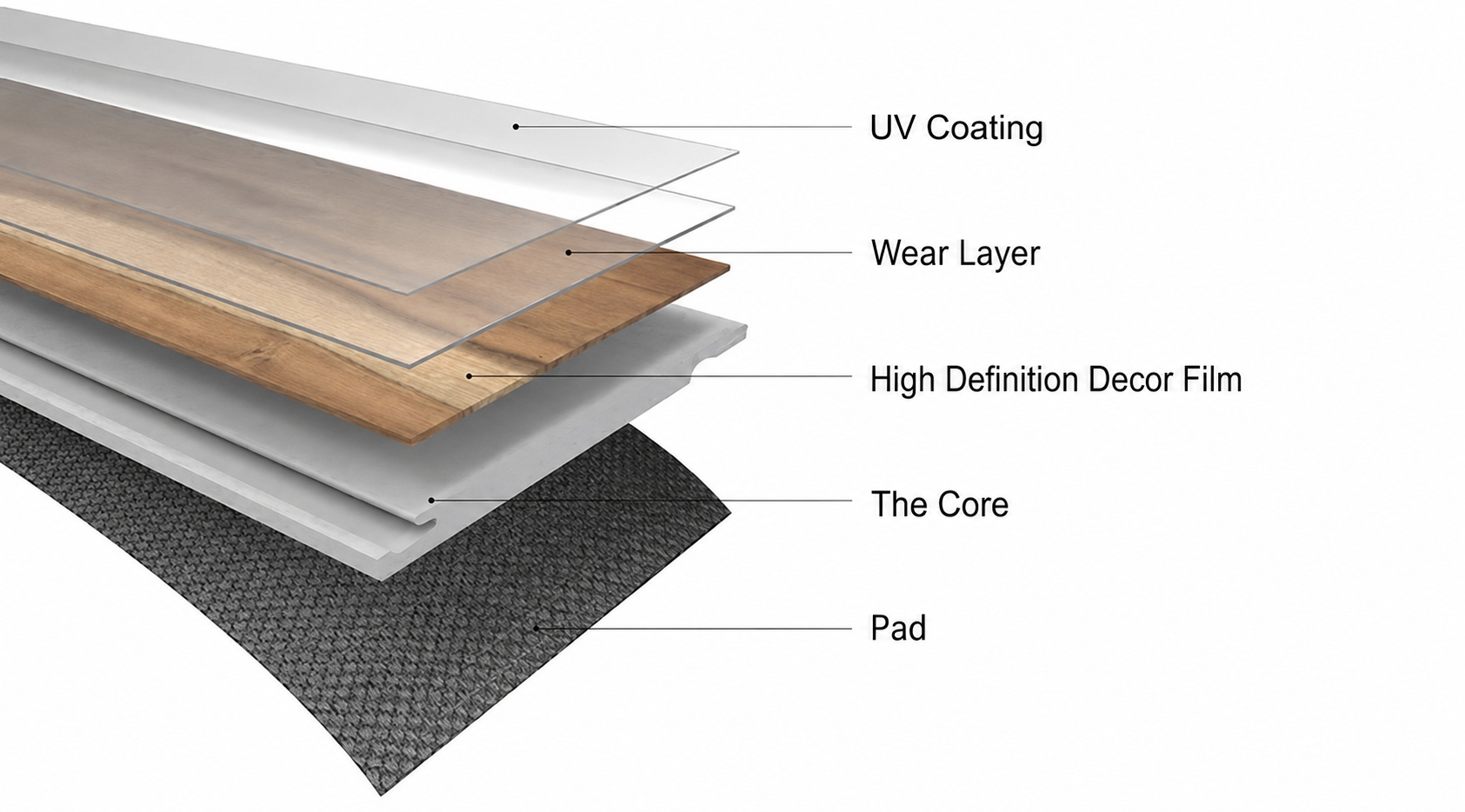
The UV coating is a special protective layer that is applied to the uppermost surface of the vinyl flooring plank in the manufacturing process. It is cured with high-intensity ultraviolet (UV) light, then immediately forms a clear, durable shield.
It is similar to putting a top-quality sunblock on your floors. It rests on the wear layer to protect the realistic wood or stone pattern that it covers.
Why Do Your Vinyl Floors Need a UV Coating?
Vinyl flooring, particularly contemporary Stone Plastic Composite (SPC) and Luxury Vinyl Tile (LVT), is highly sought after for its durability. But there’s still one natural predator: prolonged, direct sunlight.
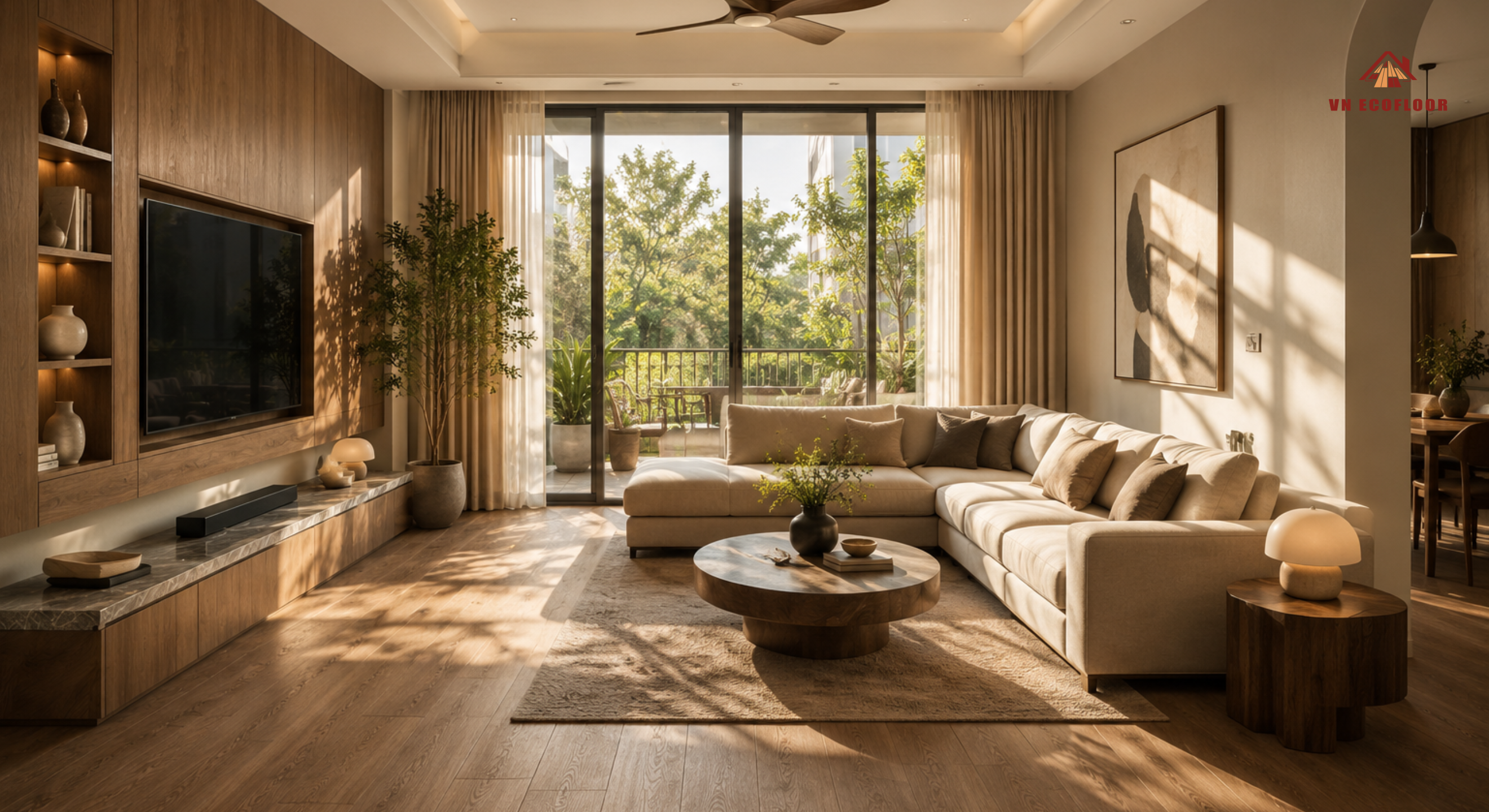
Here’s how UV coating helps you have beautiful floors that last longer:
- Helps prevent fading and discoloration
Have you ever moved a rug or a piece of furniture after a few years and noticed the floor underneath looks completely different? The reason is that pigments slowly fade away in direct sunlight, which dulls the color of the floor over time.
A good UV coating plays an important role at the beginning by absorbing a significant amount of these hard UV rays, allowing the slowing down of the fading process. However, it is important to remember that long-term color stability also depends heavily on managing indoor sun exposure (like using blinds during peak hours) and keeping up with proper floor maintenance.
Note: UV coating does not automatically make vinyl flooring suitable for outdoor use. Most SPC and LVT products are still designed for indoor applications.
- Increases scratch and stain resistance
While a thick wear layer does the heavy lifting against deep gouges and dents, a quality UV coating provides an extra layer of surface tension. This added protection makes your floor much more resilient against everyday micro-scratches—the kind caused by pet nails, shifting chairs, and abrasive dust particles. It helps create a smoother, less porous surface, making it easier to clean up any common messes, like coffee or wine, if they are cleared up on time.
- Makes cleaning noticeably easier
Because a UV-cured surface is incredibly smooth and non-porous, it creates a barrier that prevents dirt and grime from building up. This makes a huge difference in daily maintenance, turning what could be a stubborn chore into a quick, hassle-free task.
For your customers—especially busy households with children or pets—this microscopic smoothness means they can easily keep their floors clean most of the time with just a soft broom, a vacuum, or a damp mop. There is rarely a need for harsh chemical cleaners, which is a major selling point for modern, eco-friendly homes.
Not All UV Coatings Are The Same
When you delve deeper into UV protective coatings for vinyl flooring, you’ll find that manufacturers often incorporate special components to enhance durability. The two most popular options currently available are UV Coating with ceramic beads and UV Coating with aluminum oxide.
Each type has its own advantages, suitable for different needs and living spaces.
1. UV Coating with Ceramic Beads
This technology introduces micro-sized, silica-based ceramic particles into the UV formula. These tiny particles act like an invisible reinforcement grid, strengthening the surface while keeping the floor looking smooth and refined.
Look and Feel: It generally offers a smoother, more glossy, natural-looking finish, which feels comfortable and gentle underfoot.
Best Suited For: This option hits the sweet spot between surface protection, aesthetics, comfort, and cost. It is an ideal match for family homes, apartments, pet-friendly households, and light-traffic office spaces.
2. UV Coating with Aluminium Oxide
If you are looking for something focused heavily on pure performance and robust scratch resistance, a UV coating infused with aluminum oxide particles is a strong contender.
Look and Feel: Because of the natural hardness of the mineral, this coating tends to feel a bit more textured and usually comes with a modern, matte finish. It is highly practical and built to handle daily wear and tear.
Best Suited For: While it might be more than what a quiet residential home needs, it is an excellent choice for demanding, high-traffic commercial environments—such as retail stores, hotels, showrooms, busy corporate offices, or rental properties.
The Bottom Line: There is no single “perfect” choice here—it is all about what fits your space best. If you want a soft, natural feel for your cozy living room, Ceramic Beads are a great way to go. But if you need a tough, resilient floor that can withstand heavy foot traffic in a commercial space, Aluminium Oxide is well worth considering.
Looking for UV-Coated Vinyl Flooring from Vietnam?
Vietnam has become a growing manufacturing hub for SPC and LVT flooring. Many global buyers now source vinyl flooring from Vietnam because of competitive production costs, export experience, and growing OEM capabilities.
If you are looking for a vinyl flooring manufacturer in Vietnam that can support different UV coating options, VN Ecofloor can help you develop a product line that fits your market needs.
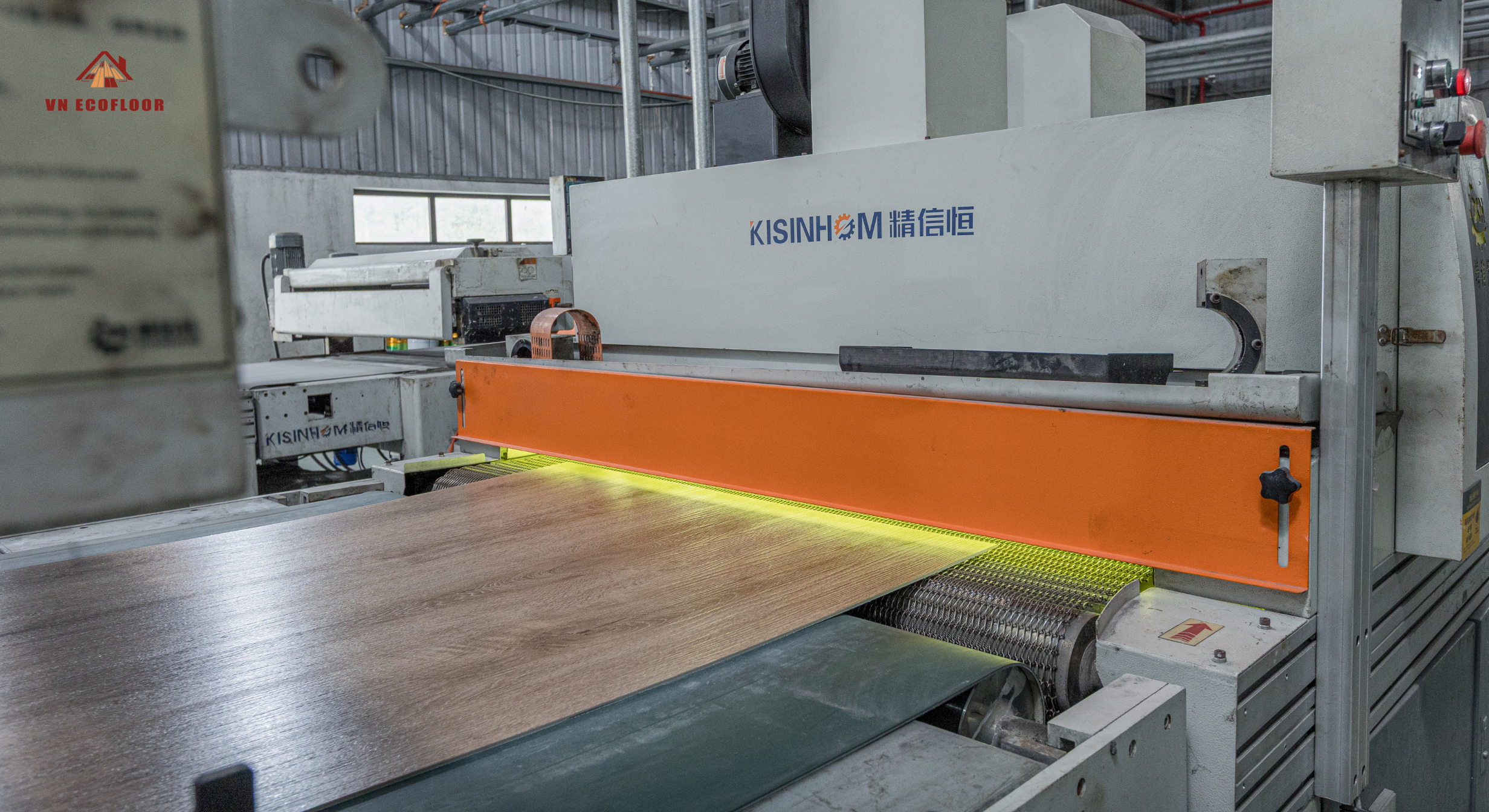
VN Ecofloor supports customized SPC and LVT flooring solutions, including:
- Standard UV coating
- Ceramic Bead UV coating
- Aluminium Oxide UV coating
- Wear layer selection
- Thickness customization
- Surface finish options
- OEM and private-label packaging
- Technical quality control
If you are building a vinyl flooring collection and want to explore the right surface coating solution, VN Ecofloor can help you compare options, request samples, and develop a product line that fits your customers.
Ready to build better UV-coated vinyl flooring?
Contact VN Ecofloor today to request samples and discuss OEM production options.
Hotline/WhatsApp: +84 88 801 81 28
Website: vnecofloor.com
Conclusion
While a UV coating cannot make a floor completely invincible to the laws of nature, it is a highly practical feature that significantly extends the lifespan and beauty of your vinyl flooring. If your room features large windows or if you simply want a floor that is easier to maintain every day, choosing a product with a quality UV coating is a smart investment.
Tip for Homeowners: Even with a UV coating, it is always a good practice to use sheer curtains or blinds during peak sunlight hours to keep your interior spaces looking fresh for years to come.
FAQs
- Does vinyl flooring have UV coating?
Yes, most vinyl floor products today, especially the high-quality vinyl such as SPC and LVT, include a UV coating. However, it’s not a one-size-fits-all feature. Coating quality and formulas vary significantly from one manufacturer to another, so it’s always a good idea to check the exact product specifications before placing an order.
- What does UV coating actually do on vinyl flooring?
Imagine it is the last shield on the top of the floor. It is primarily responsible for coping with hazards on the surface. It enhances resistance to light scratches, scuffs, stains and minor fading and creates a much smoother and easier-to-clean floor in general use.
- Is the UV coating the same as the wear layer?
Not quite. They are working together and each has a specific role. The wear layer is a thicker, clear layer that is intended to protect the floor from deep gouges and heavy dents. The UV coating is placed directly over that layer of wear and is designed to maintain the top’s surface appearance, shine, and cleanability
- Can a UV coating completely prevent vinyl flooring from fading?
In practice, no coating can prevent the workings of nature, but a good coating will certainly lessen the fading and discoloring from the sun. Actually, long-term colour stability is a team game, which relies on managing indoor sun exposure (like using blinds during peak hours), and keeping up with proper floor maintenance.
- What are the differences between Ceramic Bead and Aluminium Oxide UV coatings?
It is all about the habitat they’re designed to fit in. Available in Ceramic Bead coating, it has a smoother and more refined satin finish and a natural and comfortable feel underfoot, ideal for homes, apartments, pets and light office settings. Aluminium Oxide, on the other hand, is pure performance with a harder, slightly rougher surface for hard-wearing in high-traffic commercial environments.
- Does a UV coating make vinyl flooring absolutely scratch-proof?
No, it significantly enhances the scratch resistance of the floor in day-to-day use but there is still a possibility of getting marks from sharp objects and heavy furniture that has been dragged across the floor. It is still recommended to place felt pads under big furniture.
- Can UV-coated vinyl be used outside?
In general, no, even if the floor has a high-quality UV coating, standard SPC and LVT flooring products are strictly engineered for indoor environments. This coating is effective at managing the sun pouring in through a window, but it is not designed to withstand heavy outdoor use and extreme temperature shifts.