


Let’s be honest: in the flooring business, a beautiful design might get a customer’s attention, but it’s the surface performance that keeps them happy years down the road. Think about what an SPC or LVT floor goes through every single day—heavy foot traffic, dragging furniture, excited pets with sharp claws, spilled coffee, harsh sunlight, and endless cleaning. The top surface takes a beating. That’s why the quality of the surface coating is just as critical as the look of the floor itself. If you are a wholesaler, distributor, or private-label brand looking to upgrade your collection and slash your warranty claims, there’s one advanced technology you need to know about: UV Coating with Ceramic Bead. Let’s break down exactly what it is, how it works, and why it’s the ultimate selling point for your brand in 2026.
What is UV Coating in SPC and LVT Flooring?
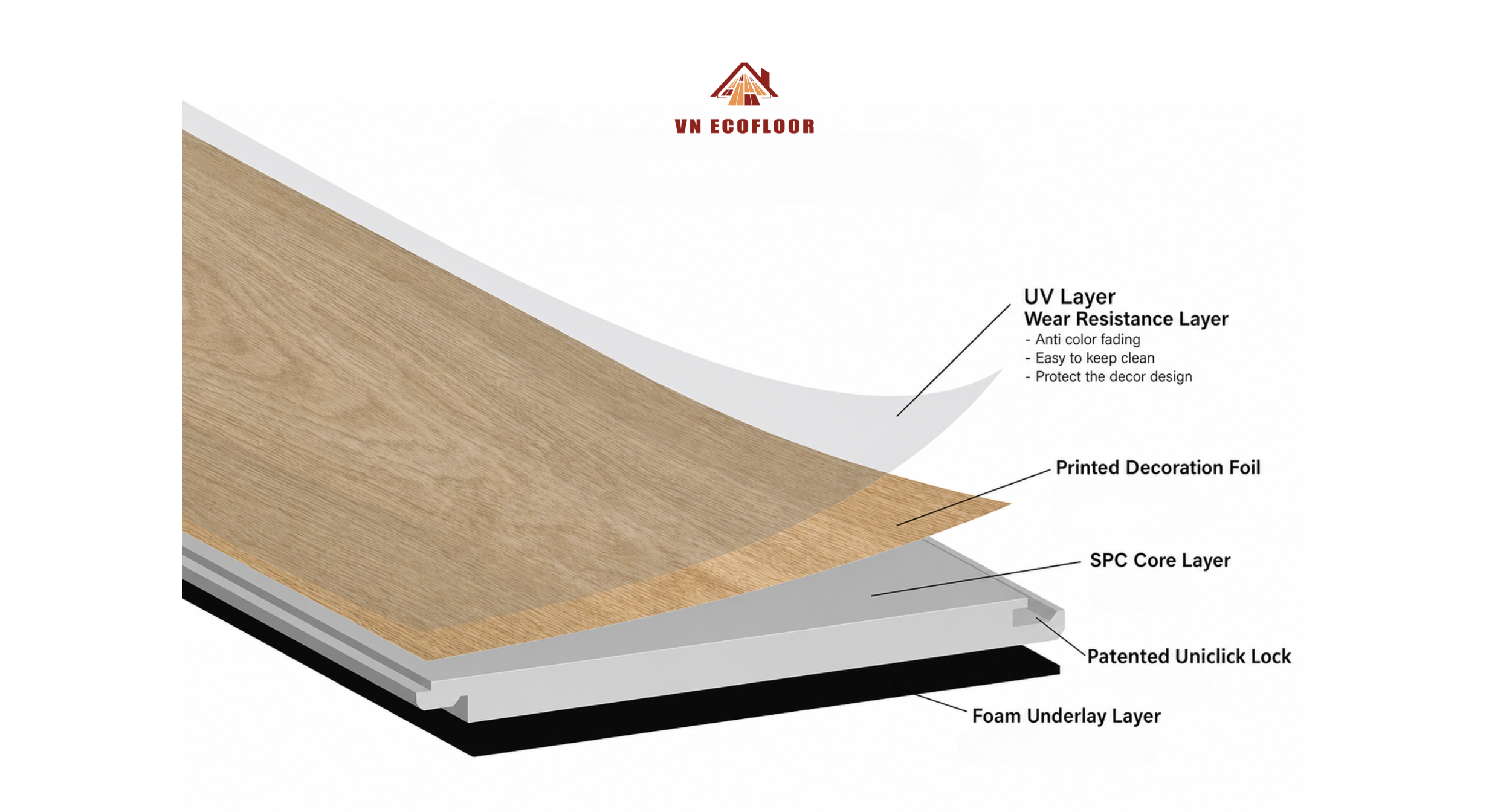
UV coating is the final protective layer applied to the surface of SPC or LVT flooring.
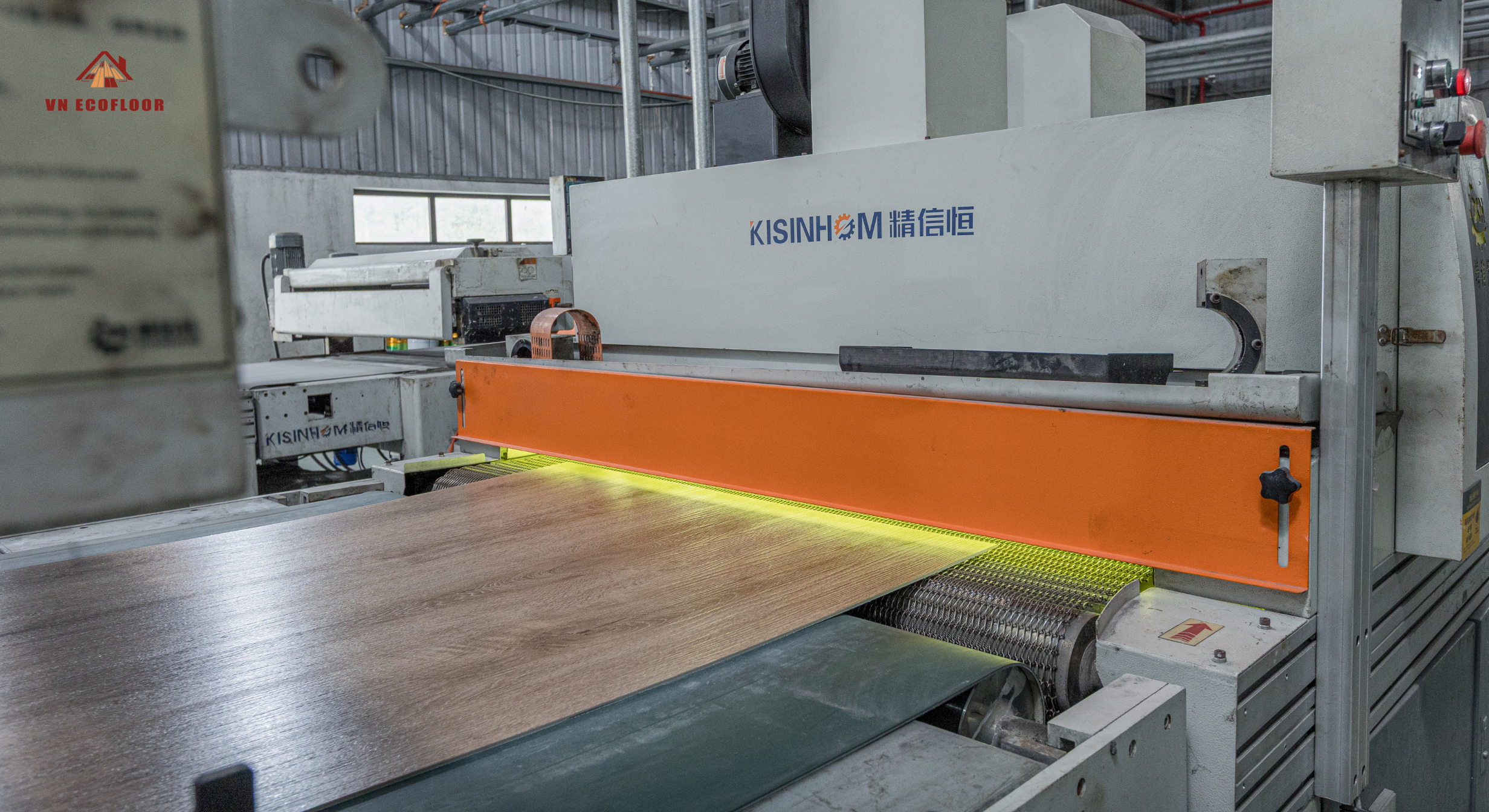
Once the liquid coating is applied at the factory, it passes under high-intensity ultraviolet (UV) lights, which instantly flash-cure it into a hardened shield. Its job is simple: protect the decorative film from fading under the sun and give the floor basic protection against scuffs and stains.
In simple terms:
The wear layer gives the floor its deep structural durability, while the UV coating handles surface defense and makes daily maintenance a breeze.
What is UV Coating with Ceramic Bead?
Think of this as standard UV coating but with a built-in suit of armor. In this upgraded system, microscopic ceramic particles—specifically silica-based ceramic spheres (SiO₂)—are mixed directly into the liquid topcoat before it gets cured under the UV lights.
When the coating hardens, these tiny ceramic beads lock into place, creating an invisible, incredibly tough matrix across the surface.
Here is what UV Coating with Ceramic Bead technology brings to the table:
- Mineral-Hard Protection: It leverages silica-based particles to give the surface a stone-like resilience against friction.
- Clean, Natural Aesthetics: It softens direct light reflections, replacing a cheap, shiny plastic glare with a smooth, premium, natural-looking gloss.
- Smart Scratch Defense: It provides a much stronger shield against day-to-day abrasions than a basic UV coat.
- Comfort Underfoot: Unlike rougher, harder mineral additives, ceramic beads keep the floor feeling soft, smooth, and comfortable to walk on barefoot.
Which Flooring Types Can Use UV Coating with Ceramic Bead?
UV coating with ceramic bead is most commonly used on vinyl-based flooring products, especially:
- SPC Flooring: Because SPC is already celebrated for its rock-solid rigid core and 100% waterproof nature, adding ceramic bead coating further improves surface resistance for real-world residential and light commercial use.
- LVT Flooring: For traditional glue-down vinyl, this coating injects crucial surface rigidity, making sure the flexible planks don’t easily scuff or wear down under localized pressure.
- WPC & Vinyl Plank: It adds an extra layer of premium performance to wood-plastic composites and standard luxury vinyl tile options.
Why is Ceramic Bead Added to UV Coating?
Why should an OEM buyer care about this upgrade? Because it solves the most common headaches end-users face:
- Defeating Scratches: Pet claws, vacuum cleaners, and tracked-in grit act like sandpaper on a standard floor. The round shape of ceramic beads helps deflect this pressure, stopping micro-scratches from dulling the floor.
- Slowing Down Wear and Tear: In high-traffic spots like busy households, active offices, or retail showrooms, it keeps the floor looking brand new for years.
- Sealing Out Stains: The reinforced coating creates a less porous, more stain-resistant surface, helping common spills like coffee, wine, oil, and sauces clean up more easily when addressed promptly.
- Enhanced Surface Appearance: Ceramic bead coating can help create a smoother, cleaner, and more naturally polished appearance. This is especially useful for wood-look and stone-look SPC flooring where surface clarity is important.
- Boosting Long-Term Brand Value: For distributors and wholesalers, a floor that doesn’t scratch easily means fewer customer complaints, lower warranty risk, and stronger long-term brand trust.
UV Coating with Ceramic Bead vs. Standard UV Coating
| Feature | UV Coating with Ceramic Bead | Standard UV Coating |
|---|---|---|
| Primary Ingredient | Polyurethane Resin + Micro Silica Spheres | Liquid Polyurethane Resin |
| Curing Mechanism | Instant Flash-Curing: Solidifies immediately under high-intensity ultraviolet (UV) lamps, locking the molecular structure instantly. | UV-cured: Relies on natural drying or solvent evaporation, which takes significant time and can leave soft spots. |
| Long-Term Durability | Extremely High: Outstanding resistance to household chemicals, temperature fluctuations, and structural erosion. | Lower Resilience: Prone to slowly wearing away or eroding over time under heavy, repetitive foot traffic. |
| Scratch Resistance | Superior Protection: Microscopic ceramic spheres act as stone-hard shields, deflecting micro-scratches and heavy scuffs. | Minimal Defense: Offers little to no physical protection; easily gouged by tracked-in grit, sand, or pet claws. |
| Visual Finish | Smooth, refined, natural matte gloss | Can look plasticky or overly shiny |
| Best For | Busy homes, pets, and light commercial projects | Low-traffic, budget residential lines |
| Average Lifespan | Long-Lasting (8–12 Years): longer-lasting under proper use and maintenance; actual performance depends on coating formula, wear layer, traffic level, and maintenance. | Short-Term (2–5 Years): Requires frequent maintenance, buffing, or re-coating as the thin polyurethane layer degrades. |
| Cost Profile | Low to Medium: Cost-effective upgrade compared with premium heavy-duty coating systems. | Very Low upfront / High long-term: Cheapest to produce initially, but costs more down the road in warranty claims and replacements. |
Is UV Coating with Ceramic Bead Expensive?
In general, UV coating with ceramic bead is more expensive than standard UV coating; however, it sits comfortably within a highly reasonable, mid-range to premium cost level.
The final cost depends on several factors:
- Coating formulation
- Ceramic bead content
- Wear layer thickness
- Flooring thickness
- Surface finish requirement
- Order volume
- OEM customization needs
- Testing and certification requirements
For a wholesaler, this shouldn’t be viewed as an extra expense—it’s an investment that prevents costly warranty payouts and justifies a higher retail margin.
How to Choose the Right UV Coating with Ceramic Bead for Your Brand
Before placing a bulk order, buyers should check the following:
- Ask for a Physical Sample
Never judge coating quality only through photos. Touch the surface, check the gloss level, and test scratch resistance manually.
- Check the Wear Layer
A ceramic bead coating can improve performance, but the wear layer still matters. Common wear layers include 0.3mm, 0.5mm, and 0.7mm depending on residential or commercial use.
- Request Test Reports
Ask for scratch resistance, abrasion resistance, stain resistance, color fastness, and chemical resistance tests.
- Compare Gloss and Texture
Ceramic bead UV coating can affect how the surface feels and reflects light. Make sure the final effect matches your brand identity.
- Confirm OEM Consistency
For private-label buyers, the key is not only the first sample but also batch-to-batch consistency across future orders.
Which Factories in Vietnam Can Produce UV Coating with Ceramic Bead Flooring?
1. VN Ecofloor
As one of the top export-focused leaders, VN Ecofloor treats surface engineering as a science. They integrate advanced UV and ceramic bead structures directly into their strictly 100% Virgin Resin core lines, backing up production with full FloorScore®, CE,… certifications for international markets.
2. ANZ Flooring
A well-known exporter to North America and Europe, providing solid SPC lines utilizing protective UV layers to combat fading and scuffing.
Important note for buyers: Not every factory that offers UV coating automatically offers ceramic bead UV coating as a standard option. Ceramic bead formulation should be confirmed directly through product specifications, surface coating details, sample testing, and factory technical documentation.
3. Neo Floor
Neo Floor is a Vietnam-based SPC flooring manufacturer with large-scale SPC production capacity and a focus on virgin raw materials and limestone resource integration
Conclusion
At the end of the day, UV coating with ceramic bead is much more than a surface upgrade—it’s your brand’s insurance policy. It protects the floor from daily life, helps the floor maintain its appearance longer under normal use and proper maintenance.
As Vietnam continues to grow as a strategic hub for SPC and LVT flooring manufacturing, buyers have more opportunities to source high-performance flooring with advanced surface technologies. The key is to work with a factory that understands both the technical side of flooring and the commercial needs of global brands.
If you are looking for UV-coated SPC or LVT flooring with strong surface protection, VN Ecofloor can help you develop a product line that fits your market, your brand, and your customers.
Ready to upgrade your flooring collection with better surface protection?
Contact VN Ecofloor today to request samples and explore OEM coating options.
Hotline/WhatsApp: +84 88 801 81 28
Website: vnecofloor.com
FAQs
- What exactly is UV coating with ceramic bead in SPC and LVT flooring?
Think of this layer as a valuable upgrade for mid-range and premium flooring lines. Instead of just applying a standard, clear polyurethane topcoat, the factory mixes microscopic ceramic particles that reinforce the coating surface. When this mixture passes under high-intensity ultraviolet (UV) lamps, it instantly flash-cures, permanently locking those tiny ceramic beads into a tight molecular matrix. This creates an armored top layer that significantly steps up the floor’s defense against scratches, stains, and daily wear.
- How does ceramic bead UV coating actually differ from a standard UV coat?
A standard UV coating offers a basic level of protection out of the box, but it is highly vulnerable to micro-scratches from daily foot traffic, which dulls the floor over time. Ceramic bead UV coating, on the other hand, introduces those stone-hard silica particles to act like miniature bumpers. It deflects surface friction, prevents early erosion of the finish, and stands up much better against household chemicals and sunlight.
- Which flooring types can utilize this ceramic bead UV technology?
This advanced finish is incredibly versatile but is most effective on vinyl-based flooring. You will primarily see it applied to SPC (Stone Plastic Composite) rigid core flooring, LVT (Luxury Vinyl Tile) glue-down planks, and premium WPC (Wood Plastic Composite) options. It is the go-to technical specification when an OEM buyer wants to build a product line specifically tailored for busy residential spaces, pet-friendly households, or light commercial projects.
- Why should wholesalers choose flooring with a ceramic bead UV finish?
As a wholesaler, your biggest headache is dealing with post-installation warranty claims and complaints about dull, easily scratched floors. Choosing a ceramic bead UV finish is essentially buying insurance for your brand’s reputation. It gives you a powerful, highly marketable technical selling point (USP) that justifies a premium price tier, increases your margins, and keeps your after-sales claims to an absolute minimum.
- Is ceramic bead UV coating truly suitable for homes with pets and active kids?
Absolutely. This technology was designed with busy, real-world households in mind. Toys dragged across the room, heavy shoes, and sharp pet claws tend to skate right over the microscopic ceramic spheres rather than gouging permanent white lines into the clear coat. While no floor is entirely indestructible, a ceramic-bead-finished surface will maintain its original, out-of-the-box look significantly longer than a standard floor.
- Does adding ceramic bead technology make the flooring overly expensive?
While it does cost a little more to formulate and apply than an entry-level standard UV coat, the price adjustment sits comfortably within a highly reasonable, mid-range to premium cost tier. For an OEM buyer, the slight increase in manufacturing cost per square meter is negligible compared to the massive value it adds to your product’s positioning and the money you save by avoiding future quality disputes
- How can international buyers verify the quality of a ceramic bead finish before placing a bulk container order?
Never rely solely on a factory’s promise. Always request physical “Golden Samples” to physically evaluate the gloss levels—a real ceramic bead finish will have a smooth, sophisticated matte luster rather than a cheap, plastic sheen. Next, demand recent, independent laboratory test reports covering abrasion resistance, scratch hardness (Mohs scale), stain resistance, and color fastness. Finally, make sure your OEM factory has an on-site laboratory capable of performing parallel testing to ensure batch-to-batch consistency before mass production begins.