

In the international market, especially across Europe and high-stakes commercial sectors globally, fire safety is a non-negotiable barrier to entry. If you are pitching flooring products for public spaces, hotels, corporate offices, or multi-family housing complexes, there is one technical code you will constantly see in the tender requirements: Bfl-s1.
Let’s strip away the dry regulatory jargon and look at exactly what a Bfl-s1 certification is, how it is tested, and why it is your ultimate ticket to winning high-margin commercial bids.
Decoding Bfl-s1: What Do the Letters and Numbers Mean?
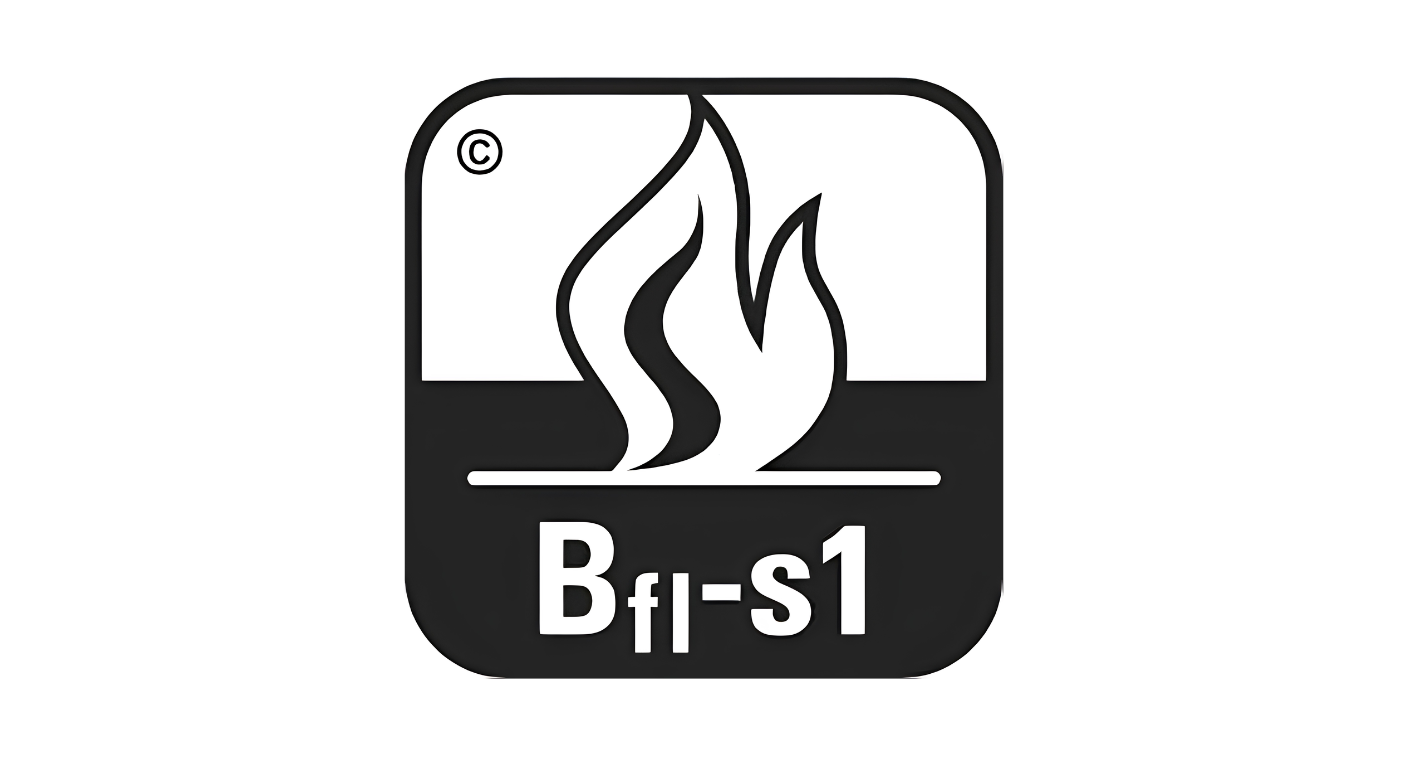
The Bfl-s1 rating is part of the Euroclass system (governed by the European standard EN 13501-1), which classifies how construction materials and floor coverings react when exposed to fire. Instead of a vague “fire-resistant” label, the Euroclass system breaks compliance down into a precise, three-part scientific code.
Let’s dissect exactly what you are reading when you see Bfl-s1:
1. The Main Class: “Bfl” (Reaction to Fire for Floorings)
The first letter denotes the material’s structural contribution to a fire. The “fl” subscript simply stands for flooring. The classes run from A to F:
- A1fl / A2fl: Completely non-combustible materials (like concrete or stone).
- Bfl: Very limited contribution to fire. This is the highest possible rating a synthetic polymer-based flooring (like SPC or LVT) can practically achieve. It means the material is highly flame-retardant and exceptionally difficult to ignite.
- Cfl to Ffl: Materials that range from limited to high contributions to fire (such as standard untreated wood or cheap plastics).
2. The Smoke Class: “s1” (Smoke Production)
In a real-world building emergency, fire itself is only half the danger; toxic smoke inhalation is often the primary hazard. The “s” section measures the quantity and speed of smoke generated by the floor covering within the first few minutes of exposure:
- s1: Absent or very weak smoke production. This is the safest possible rating.
- s2 / s3: Medium to heavy smoke density that can obscure exit signs and trap occupants.
A Bfl-s1 certification guarantees that the flooring makes a very limited contribution to fire and produces minimal smoke, providing vital, life-saving minutes during building evacuations.
How Is a Floor Tested for Bfl-s1?
To obtain an official Bfl-s1 test report from independent third-party laboratories (such as SGS, Intertek, or SATRA Technology), the flooring planks must undergo rigorous testing.
- The Radiant Panel Test (EN ISO 9239-1): The flooring sample is placed horizontally inside a test chamber and exposed to a radiant heat source and a small pilot flame. Technicians measure the critical radiant flux—the amount of heat energy required to keep a flame burning across the surface. To score a Bfl rating, the floor must withstand high levels of thermal radiation without allowing the flame to spread easily.
- The Single-Flame Source Test (EN ISO 11925-2): A direct flame is impinged upon the edge or surface of the flooring plank for a set period to observe if it ignites or continues to burn on its own once the flame source is removed.
Why Sourcing Bfl-s1 Certified Flooring Protects Your Wholesale Bottom Line
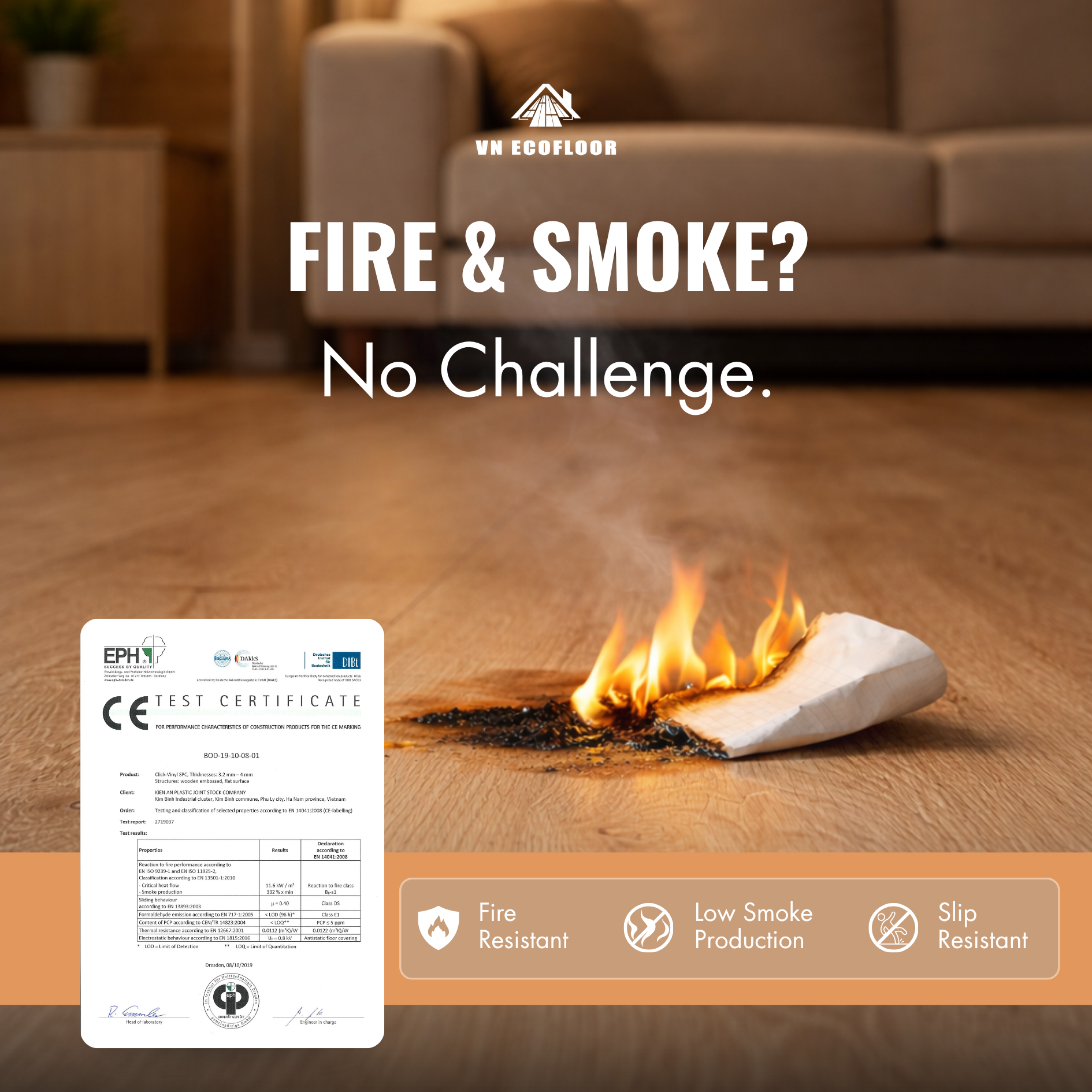
As a B2B sourcing professional, investing in factory-backed fire certifications provides three massive commercial advantages for your private-label brand:
1. The Golden Key to Commercial Tenders
Residential buyers might prioritize color and price, but commercial architects, developers, and government contractors strictly follow fire codes. Whether you are bidding on a luxury hotel chain, a corporate office park, a school, or a hospital, a Bfl-s1 rating is almost always the baseline legal requirement for floor coverings.
2. Effortless CE Marking and Customs Clearance
If you are exporting into the European Economic Area, your flooring must carry a CE Mark. The CE framework evaluates fire performance as a core metric. Sourcing a floor that effortlessly hits Bfl-s1 guarantees your containers clear port customs smoothly, protecting you from devastating supply chain delays.
3. The Virgin Resin Difference
Here is an insider manufacturing reality: it is incredibly difficult to pass a Bfl-s1 test using cheap, recycled plastic cores. Low-grade recycled plastic often contains unpredictable chemical mixtures and volatile stabilizers that ignite easily and produce thick, acrid smoke. Achieving a clean, consistent Bfl-s1 rating requires high-density cores made from pure, stable compounds.
In conclusion
A Bfl-s1 fire rating is the ultimate certification for safety and legal compliance, opening the door to lucrative commercial tenders and smooth international distribution.
Operating as an export-focused manufacturing powerhouse out of Vietnam since 2017, VN Ecofloor is the trusted OEM partner built to support your brand’s strict compliance strategy. We engineer our premium SPC and LVT lines utilizing strictly 100% virgin resin cores, ensuring every container we ship is highly flame-retardant, produces minimal smoke, and is fully certified to clear international customs effortlessly. Let us handle the technical testing and factory compliance so you can focus on winning high-value commercial contracts with absolute peace of mind.
👉 [VISIT VN ECOFLOOR TO REVIEW OUR COMPLIANCE CERTIFICATES]
Hotline/WhatsApp: +84 88 801 81 28
Official Website: vnecofloor.com
FAQs
- What does Bfl-s1 mean in flooring?
Bfl-s1 is a European fire performance rating for floor coverings. “Bfl” means the flooring has a very limited contribution to fire, while “s1” means it produces very little smoke during fire exposure. For commercial flooring buyers, this rating helps show that the product meets a higher level of fire safety.
- Is Bfl-s1 important for SPC and LVT flooring?
Yes. For SPC and LVT flooring used in commercial spaces, Bfl-s1 is often an important requirement. Hotels, offices, schools, hospitals, public buildings, and multi-family housing projects may require flooring with verified fire performance before approving it for installation.
- How is Bfl-s1 flooring tested?
Bfl-s1 flooring is usually tested under European fire testing standards such as EN ISO 9239-1 and EN ISO 11925-2. These tests assess how easily the floor ignites, how far flames spread across the surface, and how much smoke is produced when exposed to fire.
- Is Bfl-s1 better than Cfl or Dfl?
Yes, Bfl-s1 is generally a higher fire performance classification than Cfl or Dfl. It means the flooring contributes less to fire spread and produces lower smoke. For buyers targeting commercial or regulated markets, Bfl-s1 is usually a stronger and safer specification.
- Why do commercial buyers ask for Bfl-s1 certified flooring?
Commercial buyers ask for Bfl-s1 because fire safety is a key part of building compliance. A valid Bfl-s1 test report can help flooring suppliers meet tender requirements, support CE documentation, reduce project approval risks, and build trust with architects, contractors, and developers.
- How can buyers verify a Bfl-s1 fire rating?
Buyers should ask the supplier for a valid third-party fire test report showing the product name, tested specification, standard used, laboratory name, test date, and final classification. The report should match the exact flooring product being ordered, not a different model or another supplier’s material.