


When you are building a private-label flooring brand or stocking up a wholesale inventory, a gorgeous design gets the client’s attention, but the surface durability dictates whether they stay happy or flood your inbox with warranty claims. Think about the daily torture test a floor goes through—sand tracked in on shoes, heavy office chairs rolling back and forth, pets racing around, and intense sunlight streaming through windows. Over time, this constant friction turns a premium floor into a dull, scratched mess. If you are sourcing SPC (Stone Plastic Composite) or LVT (Luxury Vinyl Tile) in 2026, you need a surface shield that doesn’t just promise protection but actually delivers it under pressure. That is exactly where UV Coating with Aluminium Oxide comes into play.
Let’s break down exactly what this armored technology is, how it compares to other coatings, and why it’s the ultimate selling point for high-traffic and commercial product lines.
What is UV Coating in SPC and LVT Flooring?
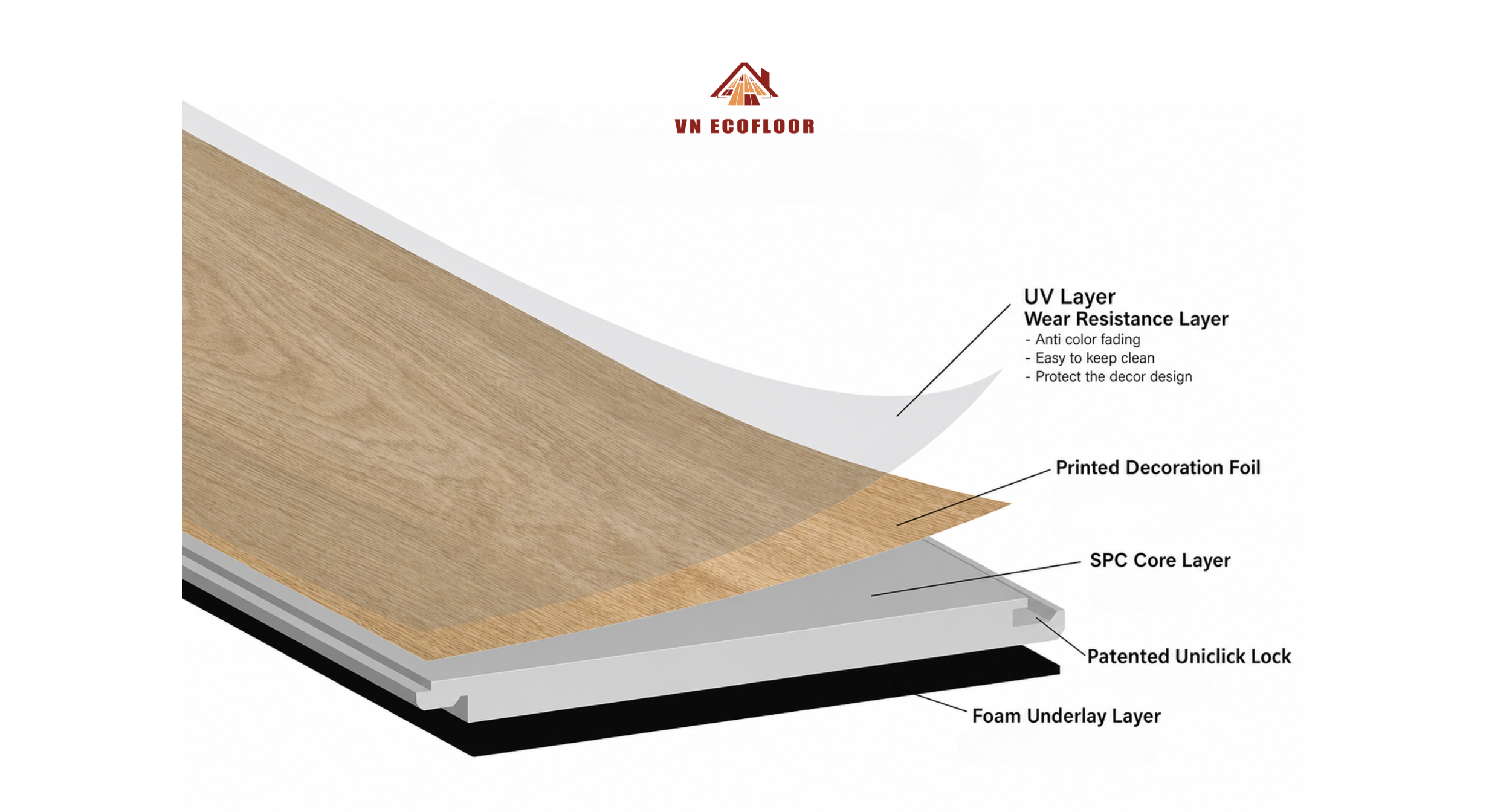
UV coating is the very final layer applied to the top of an SPC or LVT plank, sitting right above the clear wear layer.
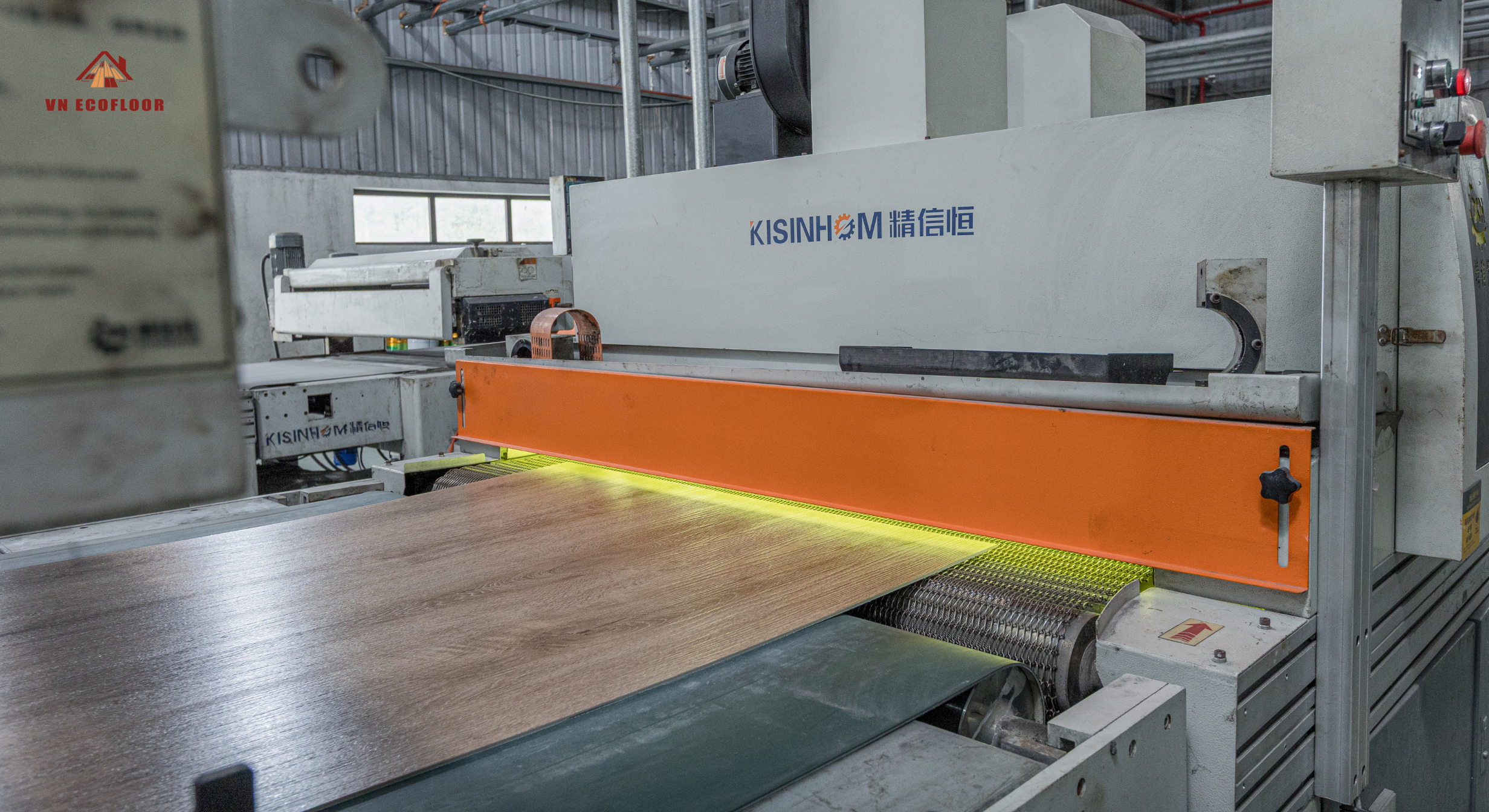
At the factory, this liquid polyurethane resin is rolled onto the plank and immediately passed under high-intensity ultraviolet (UV) lamps. The UV light triggers an instant chemical reaction that flash-cures the liquid into a hardened shield.
In simple terms, the UV coating acts as the front line of defence, taking care of all surface maintenance, stain protection, and sun fading on the decorative film, while the clear wear layer is the deep structural wear protection layer under the clear top layer. Therefore, a quality UV coating will keep the floor cleaner and keep its new appearance for longer.
What is UV Coating with Aluminium Oxide?
Think of this as your standard UV coating infused with bulletproof vest technology. In this premium system, incredibly fine particles of aluminum oxide are blended directly into the liquid resin before it hits the UV curing lamps.
Aluminium Oxide, also known as Al₂O₃, is a very hard mineral compound. It is widely used in abrasion-resistant applications because of its hardness and strength. Public technical references commonly place Aluminum oxide is at around 9 on the Mohs hardness scale, close to diamond at 10.
When flash-cured, these microscopic mineral shields lock into place across the surface. Instead of a smooth, easily scuffed plastic film, you get a micro-armored matrix that deflects real-world abuse.
A standard UV coating can protect the floor from basic stains. But when the floor is exposed to heavy traffic, pets, office chairs, sand, or furniture movement, standard coating may not be enough.
What you can expect from an Aluminium Oxide finish:
- Maximum Scratch Defense: Built specifically to resist the deep gouges or dragged furniture. This is one of the biggest reasons flooring brands use Aluminium Oxide coating for premium or commercial product lines.
- Better Abrasion Resistance: Engineered to withstand millions of steps without eroding or losing its integrity.
- Sophisticated Matte Appeal: Because of the dense mineral particles, it naturally diffuses light, offering a premium, high-end matte or satin look rather than a cheap, plasticky glare.
- Tactile Performance: It gives the plank a slightly more textured, slip-resistant feel underfoot, which is a massive plus for public spaces.
Which Projects Demand Aluminium Oxide Protection?
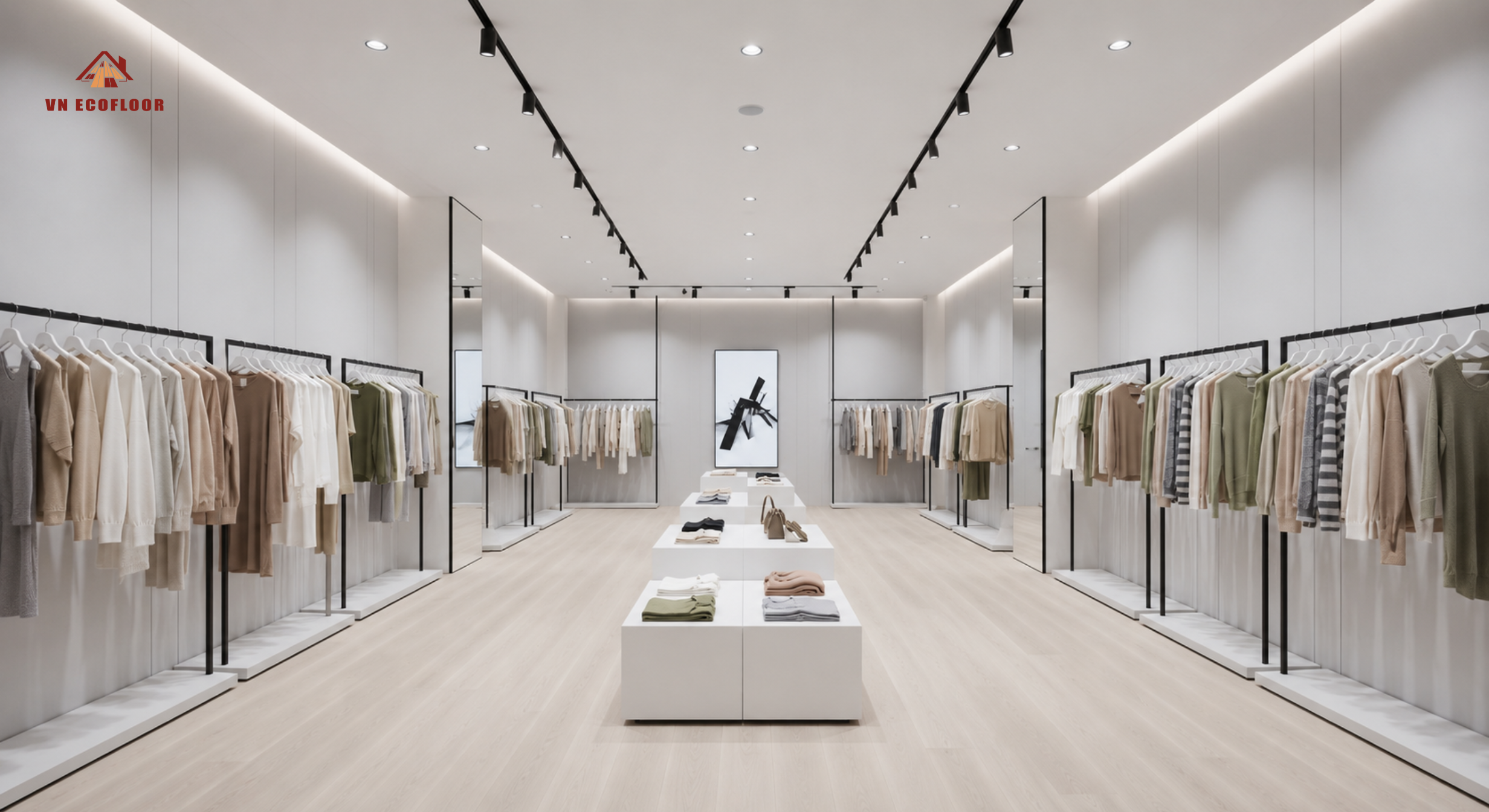
Because of its heavy-duty performance profile, this coating is a must-have for vinyl-based flooring targeted at high-traffic environments:
Commercial SPC Flooring: SPC’s rigid limestone-plastic core offers strong dimensional stability and better resistance to indentation than flexible vinyl flooring, especially when installed on a properly prepared subfloor. Pairing that rigid core with an Aluminium Oxide topcoat significantly improves surface durability for high-traffic applications, perfect for retail stores, corporate offices, hotels, and schools, which have high traffic.
Mainstream & Luxury LVT: Glue-down LVT is highly flexible. Adding a super-hard Aluminium Oxide topcoat prevents the surface from scuffing from furniture movement or cleaning wear—for heavy residential use or light commercial spaces.
UV with Aluminium Oxide vs Standard UV Coating vs Ceramic Bead
Different coating systems serve different market needs. The best choice depends on your customer segment, budget, and performance expectations.
| Key Criteria | Standard UV Coating | UV with Ceramic Bead | UV with Aluminium Oxide |
|---|---|---|---|
| Main Purpose | Basic surface protection. | Balanced protection + smooth, natural appearance. | Maximum scratch and heavy wear resistance. |
| Main Additive | Pure UV-cured Polyurethane resin. | Silica-based ceramic spheres (SiO₂). | Aluminium Oxide particles (Al₂O₃). |
| Curing Mechanism | UV-cured or basic evaporative curing. | Instant Flash-Curing via high-intensity UV lamps. | Instant Flash-Curing via high-intensity UV lamps. |
| Hardness Level | Standard baseline. | Medium to High (~6-7 Mohs). | Extreme (~9 Mohs), close to diamond. |
| Scratch Resistance | Basic to medium; prone to fine white lines. | Medium to good; deflects micro-scratches from pet claws. | Very high; protects against sand, heavy grit, and dragging. |
| Long-Term Durability | Lower resilience; wears down predictably over time. | Good resistance to daily scratches, stains, and household wear. | Maximum industrial wear resistance under constant friction. |
| Surface Feel | Smooth and flat. | Smooth, refined, and soft underfoot. | Slightly rougher / more textured (depending on the finish design). |
| Appearance & Visuals | Clear and simple; can look plasticky or overly shiny. | Natural gloss, smoother look with a hydrophobic "lotus-leaf" effect. | Deep matte or satin look; may look slightly more matte if content is high. |
| Average Lifespan | Short-Term (2–5 Years); requires early maintenance. | Long-Lasting (8–12 Years) of clear visual performance. | Maximum Lifespan (12-20 Years) without surface degradation. |
| Suitable Use | Residential, low-traffic spaces. | Residential, active homes with pets, light office spaces. | Commercial, heavy-traffic venues, premium SPC/LVT lines. |
| Cost Level | Lowest upfront factory cost. | Low to medium; highly cost-effective upgrade. | Higher; positioned as a premium, commercial-grade tier. |
| Brand Positioning | Entry-level / Budget-friendly. | Mid-range to premium private labels. | Premium / Commercial-grade powerhouse. |
Is UV with Aluminium Oxide Expensive?
In general, UV coating with Aluminium Oxide is more expensive than standard UV coating and usually higher than ceramic bead coating
However, it should not be viewed only as an added cost.
For wholesalers and OEM buyers, Aluminium Oxide can help create a higher-value product line. It can support premium pricing, reduce warranty risk, and improve customer satisfaction.
The final cost depends on:
- Aluminium Oxide content
- UV coating formula
- Wear layer thickness
- Flooring thickness
- Gloss or matte finish requirement
- Order quantity
- OEM customization level
- Testing requirements
- Target market standards
For entry-level residential flooring, standard UV coating may be enough. But for premium SPC or commercial flooring, Aluminium Oxide coating can be a smart long-term investment.
Which Factories in Vietnam Can Produce UV-Coated SPC and LVT Flooring?
Vietnam has become one of the strongest manufacturing hubs for SPC and LVT flooring. Several Vietnam-based manufacturers publicly list UV-coated SPC flooring or advanced surface treatment as part of their product structure.
However, an important note:
Not every factory that offers UV coating automatically offers Aluminium Oxide UV coating as a standard option.
For Aluminium Oxide coating, buyers should confirm directly through technical specifications, samples, test reports, and factory documentation.
1. VN Ecofloor
VN Ecofloor is a Vietnamese manufacturer of SPC flooring, LVT flooring, and PVC marble sheets. Public company information states that VN Ecofloor was established in 2010 and exports to markets such as the USA, Canada, and Europe.
For OEM buyers, VN Ecofloor can support customized SPC and LVT flooring specifications, including surface coating options, wear layer choices, private-label packaging, and technical testing support.
2. ANZ Flooring
ANZ Flooring positions itself as an SPC flooring manufacturer in Vietnam serving global markets. Public product information describes SPC flooring structures with UV coating used to help protect decorative film from sunlight fading and indoor conditions.
3. An Cuong Flooring
An Cuong Flooring lists SPC flooring products with anti-fade UV coating designed to improve grain clarity and anti-scratch performance.
4. Neo Floor
Neo Floor is a Vietnam-based SPC flooring manufacturer associated with Pha Le Plastics. Public information indicates that Neo Floor has its own SPC ecosystem, including a quarry, a stone powder factory, an SPC flooring factory, an accessories factory, and a seaport.
Neo Floor also describes the layers of SPC flooring, including a UV coating for anti-fading and easier cleaning.
Buyer Reminder
These manufacturers publicly list SPC flooring or UV-coated flooring products, but buyers should confirm directly whether Aluminium Oxide UV coating is available as a standard or customized option. Before placing bulk orders, always ask the factory:
- Is the coating standard UV, ceramic bead UV, or Aluminium Oxide UV?
- What is the Aluminium Oxide content?
- What scratch and abrasion tests are available?
- Can the coating be customized for a matte, satin, or gloss finish?
- Can the same coating quality be repeated across future shipments?
Conclusion
In a crowded B2B market, you can’t win by just screaming “low price.” You win by giving your customers a floor that survives real life. UV coating with Aluminium Oxide turns a generic vinyl plank into a high-performance, commercial-grade asset. It gives your sales team a bulletproof technical story to tell, eliminates costly after-sales disputes, and builds long-term brand equity.
If you are looking for SPC or LVT flooring with stronger scratch resistance and premium surface protection, VN Ecofloor can help you explore the right coating option for your market.
Ready to build a stronger flooring collection?
Contact VN Ecofloor today to request samples and discuss OEM coating solutions.
Hotline/WhatsApp: +84 88 801 81 28
Website: vnecofloor.com
FAQs
- What is UV coating with Aluminium Oxide in SPC and LVT?
Consider this to be an “armor plate” for the surface of your floor. Aluminium Oxide (Al₂O₃) is a very small particle that we add, mixing it into the liquid polyurethane resin prior to curing in the factory under UV light. These rock-hard mineral particles are firmly entrenched in the matrix of the surface as soon as the coating is exposed to the UV lamps. This provides your SPC or LVT flooring with a hard shell on the front line against deep scratches, scuffs, hard-to-remove stains, and heavy daily traffic.
- Why is Aluminium Oxide used as a specific material for the surface coatings for floors?
The answer is very plain and simple — it is very difficult. Aluminium Oxide has a Mohs hardness of 9—a massive number on the Mohs Hardness Scale, which ranges from 1 for talc up to 10 for a diamond. It’s a mineral compound that is added to the topcoat and makes it almost like stone when it comes to impact. This helps make sure that the hardest “floor-killers,” such as buried sand and grit, rough pet claws, rolled furniture over the floor, and the constant rubbing of rolling office chairs, are easily handled by the floor.
- Is UV coating with Aluminium Oxide better than standard UV coating?
In commercial properties or luxury residential properties, the answer is definitely yes. A standard UV coating will only provide the floor with basic protection against stains and shallow scratches. But UV coating with Aluminum Oxide is designed to prevent physical abrasion and deep scratching, maintaining the floor’s new appearance for 10 years or more under heavy daily traffic.
- What is the difference between UV coating with Aluminium Oxide and UV coating with Ceramic Bead?
It’s a comfort versus utmost performance decision.
- UV coating with Ceramic Bead (Silica-based): Balanced lifestyle. Produces a true, smooth, refined finish and is soft and comfortable for barefoot traffic. It is suitable for family houses, apartments, light office buildings, etc.
- UV coating with Aluminium Oxide: Attacks the raw surface layer. Produces a slightly roughened, micro-textured surface and is extremely hard. Designed to stand up in high-traffic areas, public corridors, and high-quality project lines.
- What type of flooring should be used with this UV Coating with Aluminium Oxide finish?
It is the right coating for SPC rigid core flooring, glue-down LVT and commercial vinyl sheets. If you are bidding on, or supplying flooring to, a high-traffic installation such as a high-turnover rental, a medical clinic, school, busy hotel, or a corporate office, don’t forget to include a UV Coating with Aluminium Oxide topcoat.
- Would the flooring be much more expensive with UV Coating with Aluminium Oxide?
Yes, it is more expensive than an entry-level standard coat or ceramic bead finish. As a wholesaler or OEM buyer, however, you shouldn’t see this as a hurtful cost; it’s a profitable investment. It provides your sales team with a technical story that they can always count on, it enables you to offer your product line in the high-dollar “Premium Tier” and it protects your business from high-dollar post-installation warranty claims.
- What are the things that international sourcing managers should do before ordering a bulk container?
To protect your investment when negotiating with an OEM factory, always run through this technical checklist:
- Request Physical Samples: Test them yourself by dragging grit or a key across the surface to check the scratch resistance and examine the tactile matte/satin finish.
- Ask About the Concentration: Confirm the exact percentage of Aluminium Oxide mixed into the formulation.
- Demand Lab Proof: Ask for certified third-party test reports (such as Taber abrasion or scratch resistance tests).
- Verify Batch Consistency: Ensure the factory possesses the automated agitation machinery required to repeat the exact same coating quality across all future production batches without clumping.