


Stone Plastic Composite SPC (Stone Plastic Composite) flooring has become the most used substitute for hardwood, which is both costly and difficult to maintain. It provides aesthetic luxury with higher durability and water resistance to become the gold mine of flooring businesses.
Today, launching your own flooring brand has become more accessible than ever through OEM (Original Equipment Manufacturer) partnerships. However, while starting is easy, choosing the right manufacturer is a high-stakes decision. If you are planning to enter the SPC market, here are the essential tips to ensure your brand stands on a solid foundation.
6 Crucial Advices in Selecting an SPC OEM Partnership
1. Raw Materials
An SPC plank consists of several layers: the wear layer, the decorative film, the core, and the underlayment (pad). Meanwhile, the core is the most significant, which dictates the life span and strength of the floor.
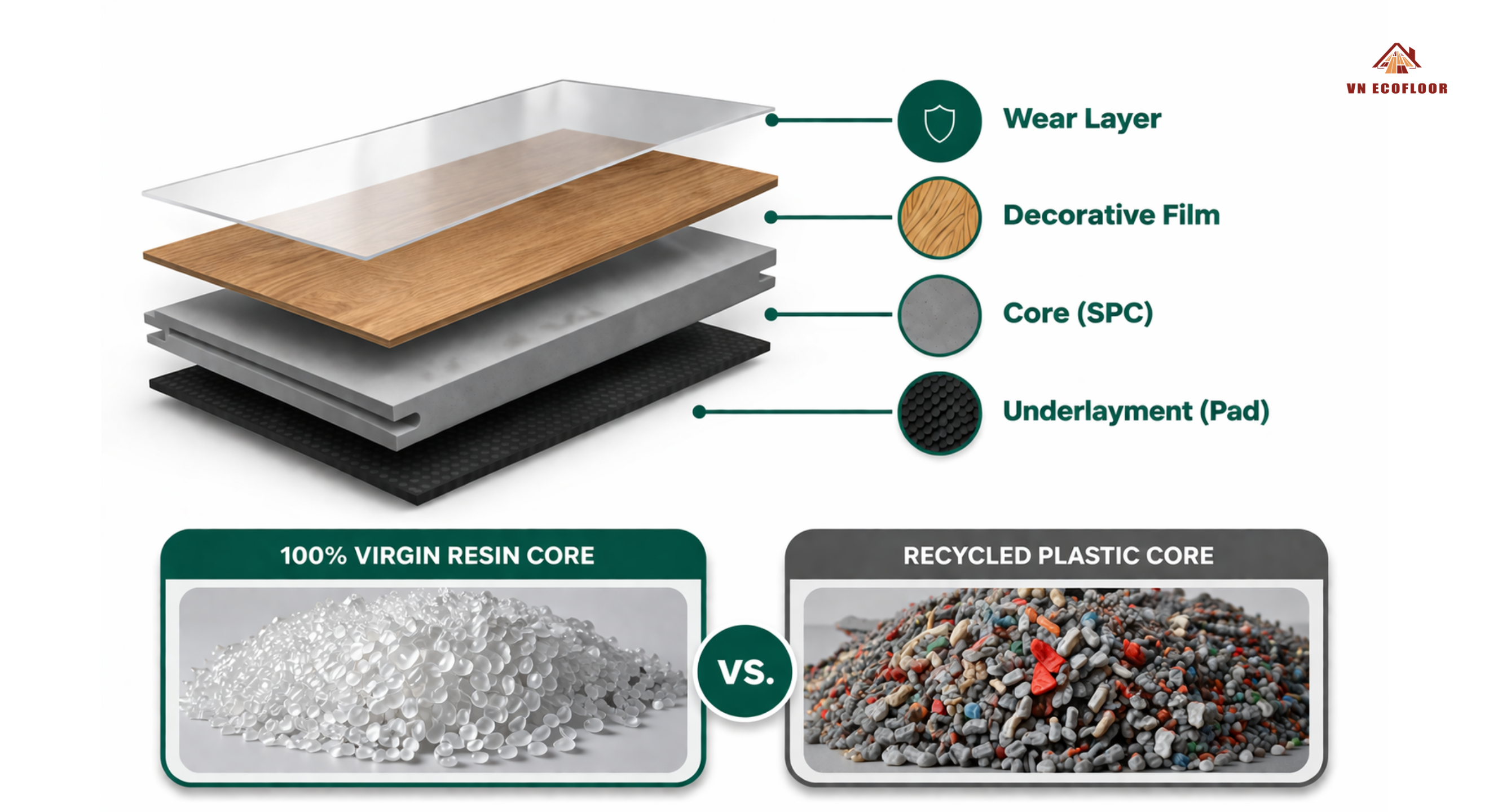
A core made from 100% virgin resin offers superior structural integrity, consistent density, and excellent dimensional stability. It minimizes the risk of common issues such as warping, shrinking, or joint failure, especially under temperature fluctuations. More importantly, it ensures a cleaner composition with fewer impurities, contributing to a safer and more environmentally responsible product.
In contrast, recycled plastic—while more cost-effective—often contains mixed materials and contaminants. This inconsistency can lead to weak core structure, reduced lifespan, and unpredictable performance, which ultimately increases the risk of installation failures and warranty claims.
Hence, if you are looking to build a reliable product line and earn customer trust, always choose an SPC OEM manufacturer that uses 100% virgin resin core.
2. Standard Certifications
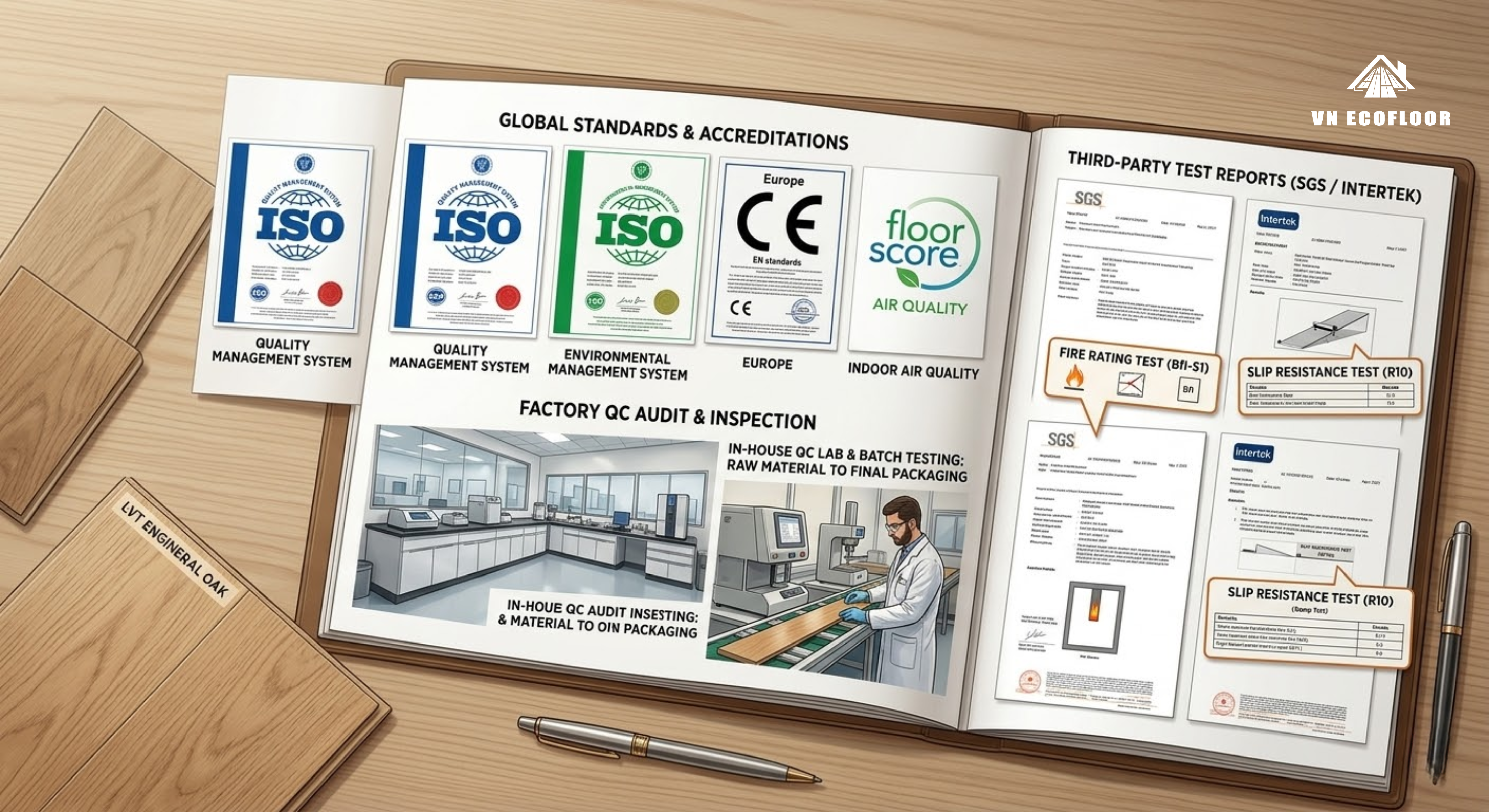
Never regard certifications as just red tape; in the flooring business, this is your final selling guarantee. When you collaborate with an SPC OEM that follows the ISO, ASTM, and EN standards to the letter, the nightmare of liability to come will spare your brand. These international standards ensure that the product can technically withstand pressure and promise the highest indoor air quality standards. Most low-priced products of SPC have undisclosed heavy metals such as Lead, Mercury, and Cadmium to save on prices. Therefore, always insist on certified certificates to show that the flooring is 100% non-toxic (like RoHS). It is an ethical duty that protects the most defenseless users (children and the elderly) and cushions your business against catastrophic health-related cases.
3. Scalability and Consistency
Another trap that new wholesalers are likely to face is selecting a factory that does not have consistency in large-scale production. Nothing will hurt your reputation in the flooring industry as much as the so-called color drift, when a second shipment does not ensure a good fit of the first one, or uneven click systems, which cannot be installed at all. A high-end partner must be accurately and rigorously color-calibrated so that all planks in your 100th container are the same as the very first plank that you sold.
4. Flexibility in Customization
In a saturated market, a one-size-fits-all strategy will not come to your rescue. In order to save your margins, seek out an OEM that is predominantly flexible when it comes to customization. This will enable you to design a product that is unique to local weather and customer demands. There are three pillars on which your partner should offer choices:
- Aesthetics: A universal collection of high-definition, print movies, ranging in quality and cost, between the authentic European oak grains and the present-day industrial stone textures.
- Technical Specifications: flexing core thickness (e.g., 4mm vs. 5mm) and wear layer depth (e.g., 0.3mm on residential vs. 0.5mm on commercial) to fit into certain project budgets.
- Brand Identity: Your own packaging fully customized, underlayment branding, and labelling that makes a generic product your exclusive brand.
5. Provide Physical Samples
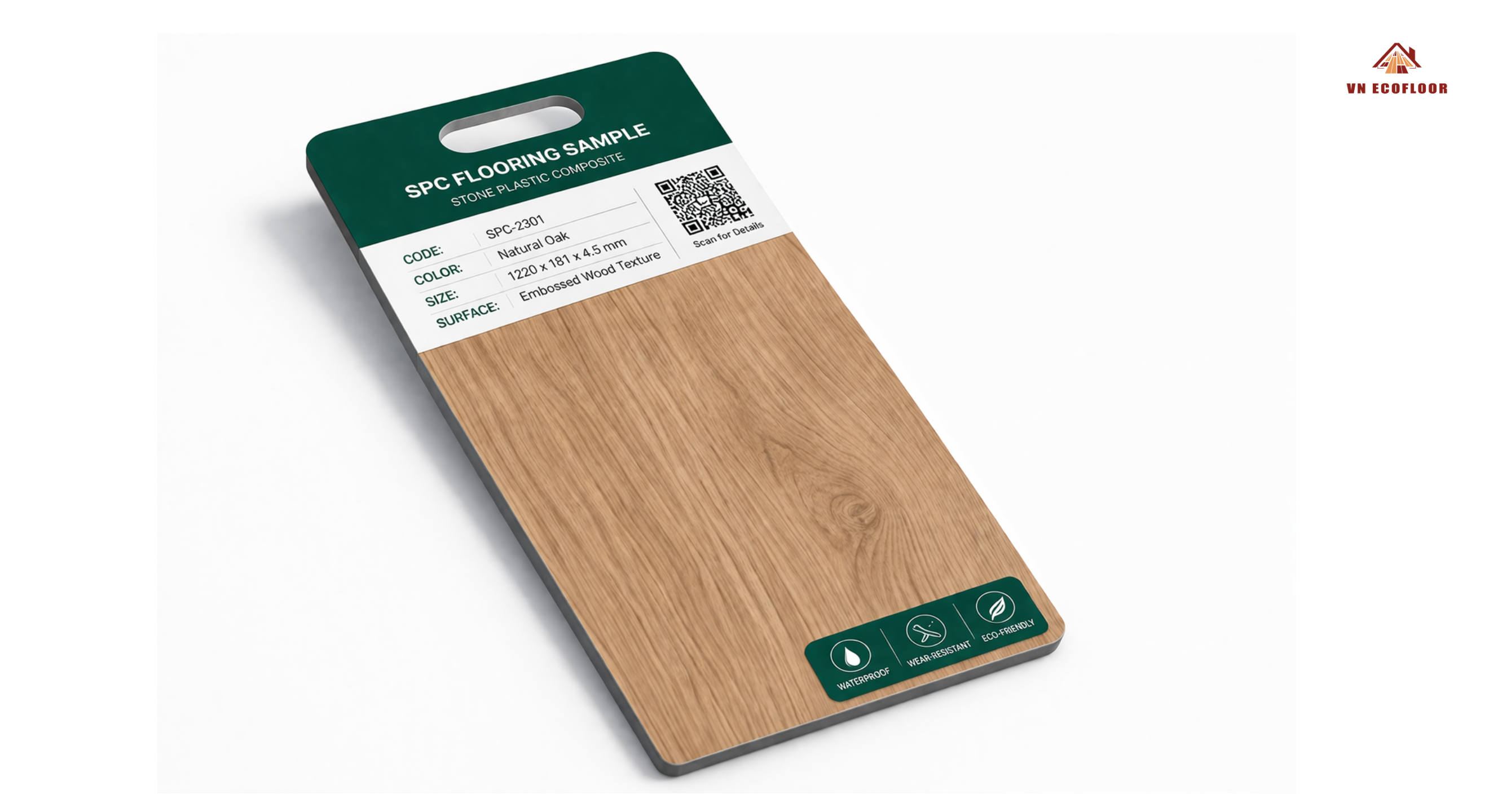
Never commit your capital based on digital catalogs or high-resolution photos. Digital screens may distort colors by up to 20%, and they offer no information on the feel of the floor. Never sign a contract without a Physical Sample Book or full-sized loose planks.
With the product in your hands, you are able to give the product an in-person stress test: do you hear the high-quality locking system crisply clicking, feel the depth of the Embossed-In-Register (EIR) texture, and check the transparency of the wear layer? The only way to be convinced that what you see is the final product, which will satisfy your customers, is by seeing the samples under the local conditions of your own lighting.
6. Social Proof
The digital presence of a factory in the post-modern age is a lot. A manufacturer that is “silent” online is a red flag. Check their work-related profiles, such as LinkedIn, Facebook or Instagram to determine whether they are active and transparent.
Look for “Behind-the-Scenes” content: videos of their production lines at work, pictures of their recent shipments all over the world, and news about their laboratory tests. Regular updates and participation in the flooring community worldwide indicate a positive, stable, and progressive organization. And not to mention, do not only take their word on it but also read the feedback and reviews of the other international distributors to understand how they treat the long term partnership.
Watch Out for These SPC OEM Red Flags
Making a bad supplier not only costs you money but can totally ruin the brand name you have just created. Be extremely careful when dealing with the following signs displayed by the factory that you are negotiating with:
🔴 Vague answers about raw materials and product structure:
Inquiring about the proportion of stone powder to virgin resin or the source of the wear layer, they provide vague responses or do not have certain details. This means that the factory has no control over the input materials, or it does not master the technology of production. You will never be sure whether the next batch will be of a similar quality to the first one.
🔴 Inconsistent or substandard technical documentation:
Certifications (ISO, ASTM, CE, etc.) are changed, the information is inconsistent in reports, or they are not written in the form of international standards. This is a sign of a lax management system. A factory that does not emphasize technical documentation will definitely fail to uphold a constant quality of products in its manufacturing line.
🔴 Difficulty explaining QC processes and compliance standards:
They are unable to articulate where quality control (QC) occurs during the production process, or they are unaware of whether their product is in compliance with the laws of the market to which they plan to sell their product. Such dangers tend to burst out in the future as mass product defects or legal issues at customs.
🔴 Rigid OEM terms, refusal to discuss in-depth details or customization:
The factory is willing to sell only what they have in stock, and they are not ready to make an effort to change the technology or packaging to suit your needs. This eliminates the possibility of differentiating your brand, forcing you into a price war because your product is no different from mass-produced goods on the market.
🔴 Unclear communication regarding production lead times and minimum order quantities (MOQ):
The figures for delivery times are frequently changed or given as “approximates.” This is the main reason for supply chain disruptions, project delays, and unexpected warehousing costs and contract penalties.
Recommendation of VN Ecofloor: All the signs can be viewed as small issues individually. However, taken together, they form a “storm” of danger capable of hitching up your cash flow, chasing away customers, and severely damaging your brand. Don’t just choose the cheapest option; choose the most transparent one.
Why VN Ecofloor is the Partner You’ve Been Looking For
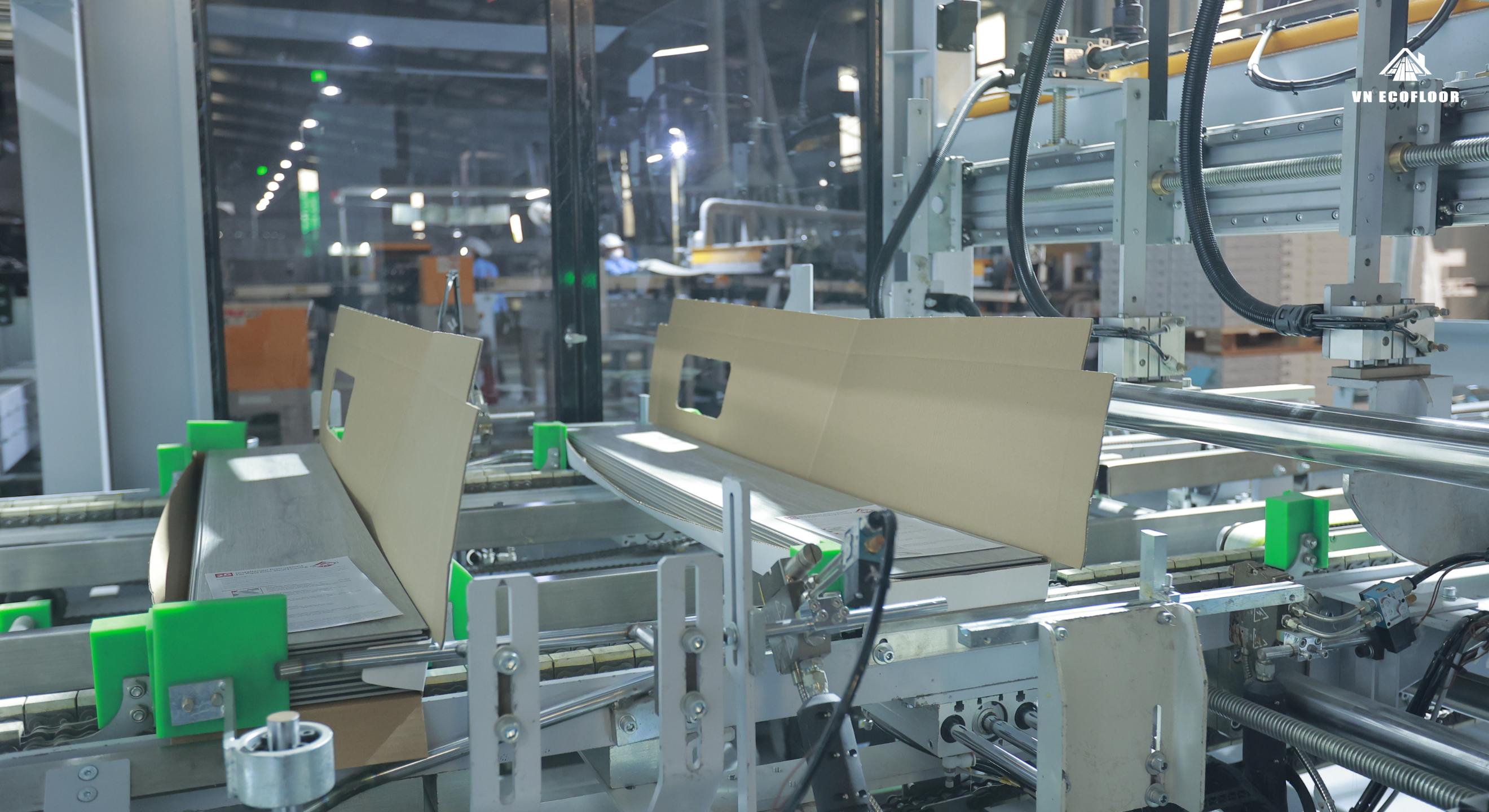
At VN Ecofloor, we don’t just meet the standards; we set them. We are a premier SPC OEM partner designed to help wholesalers scale with total confidence.
- We have 9+ Years of Export Excellence: We know the intricacies of the global market and regulatory provisions.
- Global Compliance & Licensed Technology: We provide full legal and quality assurance with a comprehensive portfolio of international certifications, such as FloorScore®, i4F®, CE, ISO,… ensuring your brand is protected by intellectual property and offers the easiest, most reliable installation on the market.
- New Large-Scale Production: We have up to 20,000 square meters per year to guarantee that your supply chain does not fail.
- Scientific Precision: Each batch is subjected to the 9-point technical gauntlet on the basis of the world-class equipment.
- Complete Customization: Custom texts to custom packaging, we will assist you in developing a brand that is as distinctive as you are.
Ready to build a flooring brand that lasts?
👉 [Connect with VN Ecofloor today] to request your sample kit and experience the stability of a true manufacturing partner.
Hotline: +84 88 801 81 28
Website: vnecofloor.com
FAQs
- What do I need to find in selecting an SPC OEM manufacturer?
You should evaluate key factors such as raw materials (especially virgin vs recycled core), certifications (ISO, ASTM, EN), production consistency, customization capability, and transparency in communication.
- What is the significance of virgin resin in SPC flooring?
Virgin resin provides greater structural stability, predictable quality, and reduced warping or shrinkage. It also minimizes contaminants, and thus the product is safer and more dependable than recycled plastic.
- Do we really need to get certified when sourcing SPC OEM flooring?
Yes. Several certifications, such as ISO, FloorScore, CE and RoHS ensure that a product is safe and durable, meeting international standards. They also safeguard your brand against legal risks and quality problems.
- What can I do to guarantee the consistency of products in bulk orders?
Choose a manufacturer with strict quality control, color calibration systems and stable production processes. This prevents issues like color variation between batches or inconsistent locking systems.
- What is the rationale for requesting physical samples before making an order?
Online photos are capable of distorting colors and textures. With physical samples, you can test the locking system, surface quality and actual appearance in your local light conditions.
- What are the red flags in dealing with an SPC OEM supplier?
Red flags can be vague answers regarding materials, lack of consistency in documentation, weak QC explanation, inflexibility of customization, and undefined delivery times. These may cause supply chain risks and quality problems.