



In the global flooring market, “Quality” is a word used by everyone but defined by few. For professional wholesalers and distributors, a lack of technical understanding regarding Flooring Quality Standards can lead to costly claims and damaged reputations.
At VN Ecofloor, we believe transparency is the foundation of partnership. That is why we are here to help you demystify the essential tests that every high-quality LVT and SPC plank must pass to compete on the global stage.
When you read terms as “ISO” or “ASTM” or “EN,” they are not mere names; they are strict standards that emulate years of practical use within just days. The following is a list of tests that you will go through in the sourcing of high-quality flooring.
1. Dimensional Stability Test
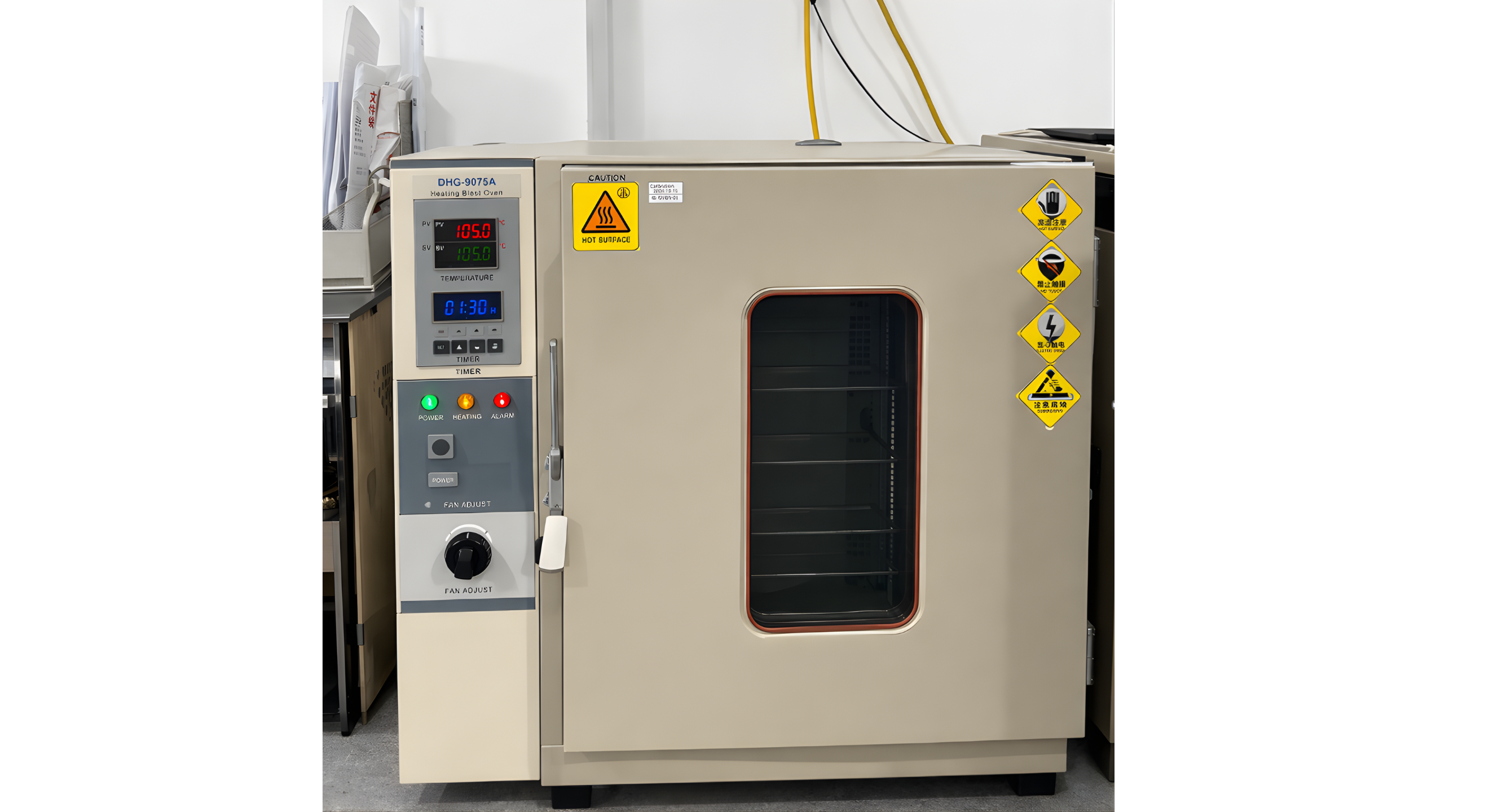
Purpose: To avoid “Buckling” (by expansion) and “Gapping” (by contraction).
The process begins by cutting floor specimens to standard sizes and marking precise reference points. These samples are then placed inside the oven at a high temperature (typically 80°C) for 6 consecutive hours to simulate extreme real-world thermal stress. Once the heating phase is complete, the specimens are removed and allowed to recondition at room temperature for 24 hours. Finally, technicians use high-precision digital calipers to measure any changes in length, width, and vertical curling. Ensuring a shrinkage rate of less than 0.1% through this test is the “key” that prevents flooring from experiencing gapping or buckling after installation.
2. Castor Chair Test (ISO 4918 / EN 425)
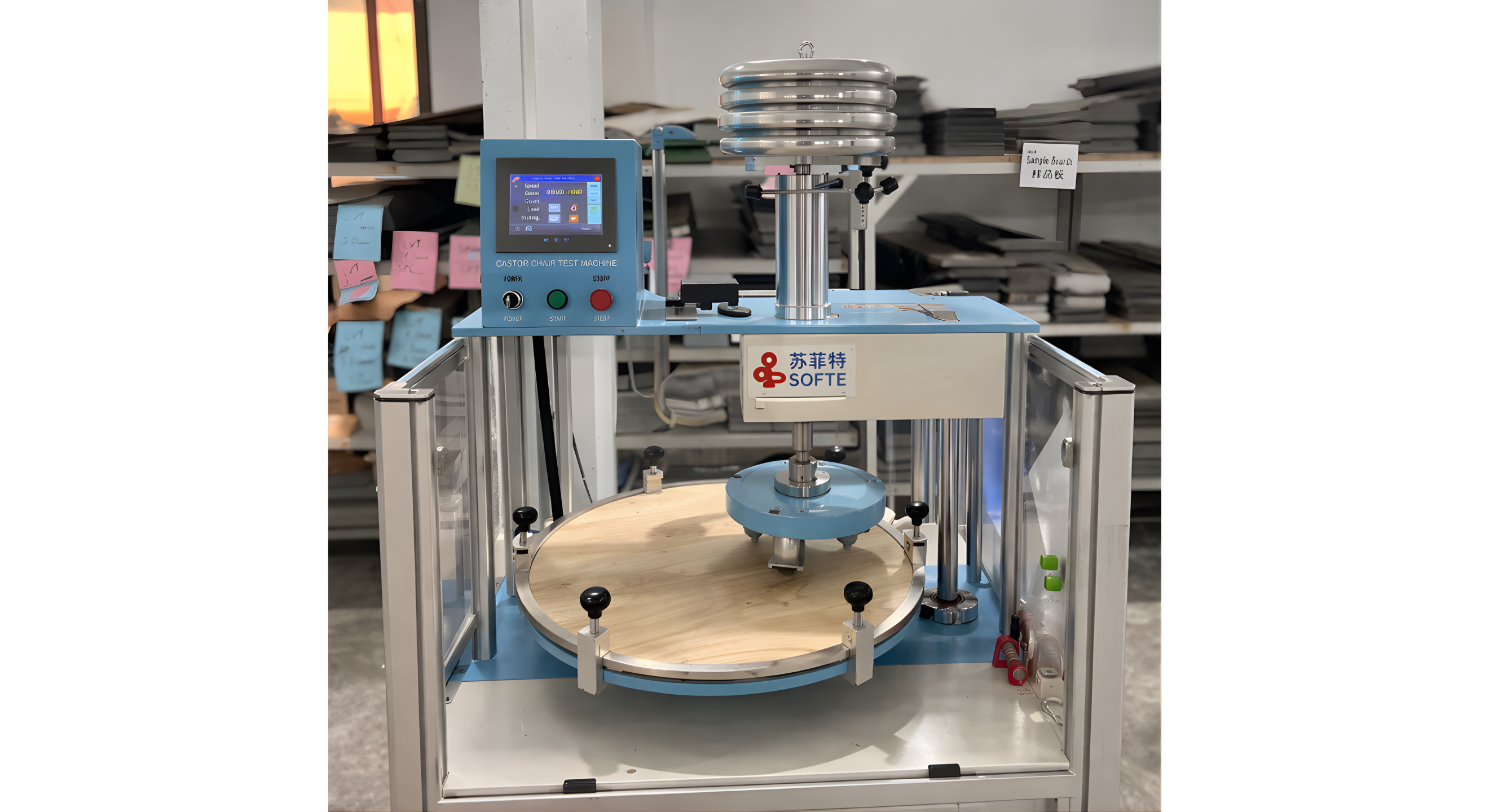
Purpose: To test the joint integrity and surface durability in offices.
This mechanical stress test is a simulation of more than 10 years of office usage to check the integrity. A floor sample is fixed on a rotary base, and three standard caster wheels loaded with a weight of 90kg are used. The machine has a continuous 25,000-cycle cycle with the wheels having an intricate epicyclical path to help replicate the numerous direction shifts. The floor is monitored during the process to determine delamination or surface fatigue.
3. Strength Peeling Strength Test
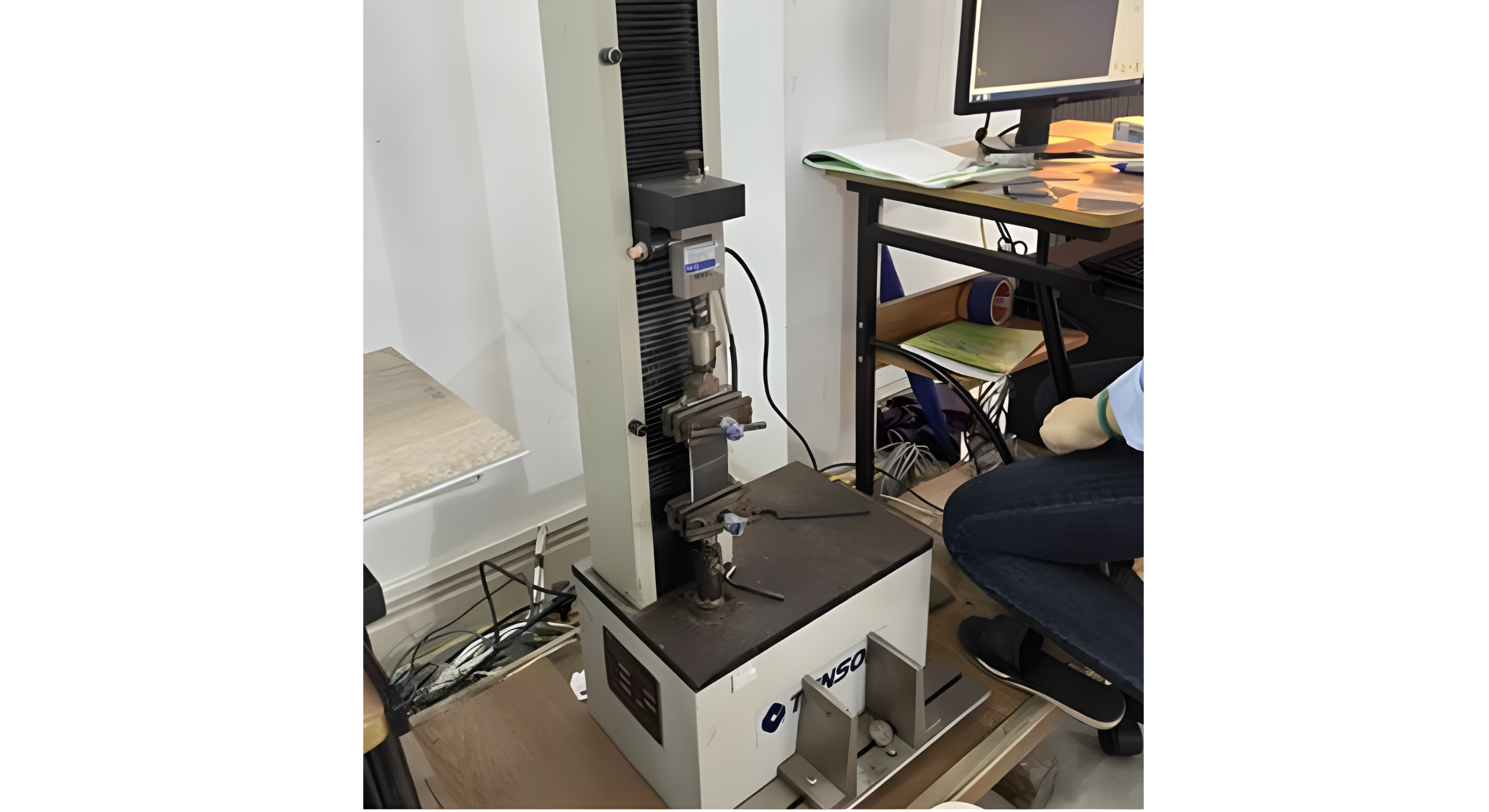
Purpose: To confirm the structural integrity and long-term durability of every plank manufactured.
The process involves partially separating a strip of the floor’s top layers from its core and clamping the specimen into the machine’s grips. The UTM then pulls the layers apart at a constant, controlled speed of 10 inches per minute at a 90 or 180-degree angle. During operation, the system precisely records the average force required to separate the bond between the wear layer, decorative film, and core. Maintaining high peeling strength is essential to ensure that all layers remain permanently fused and do not delaminate under environmental stress or heavy traffic.
4. Abrasion Test
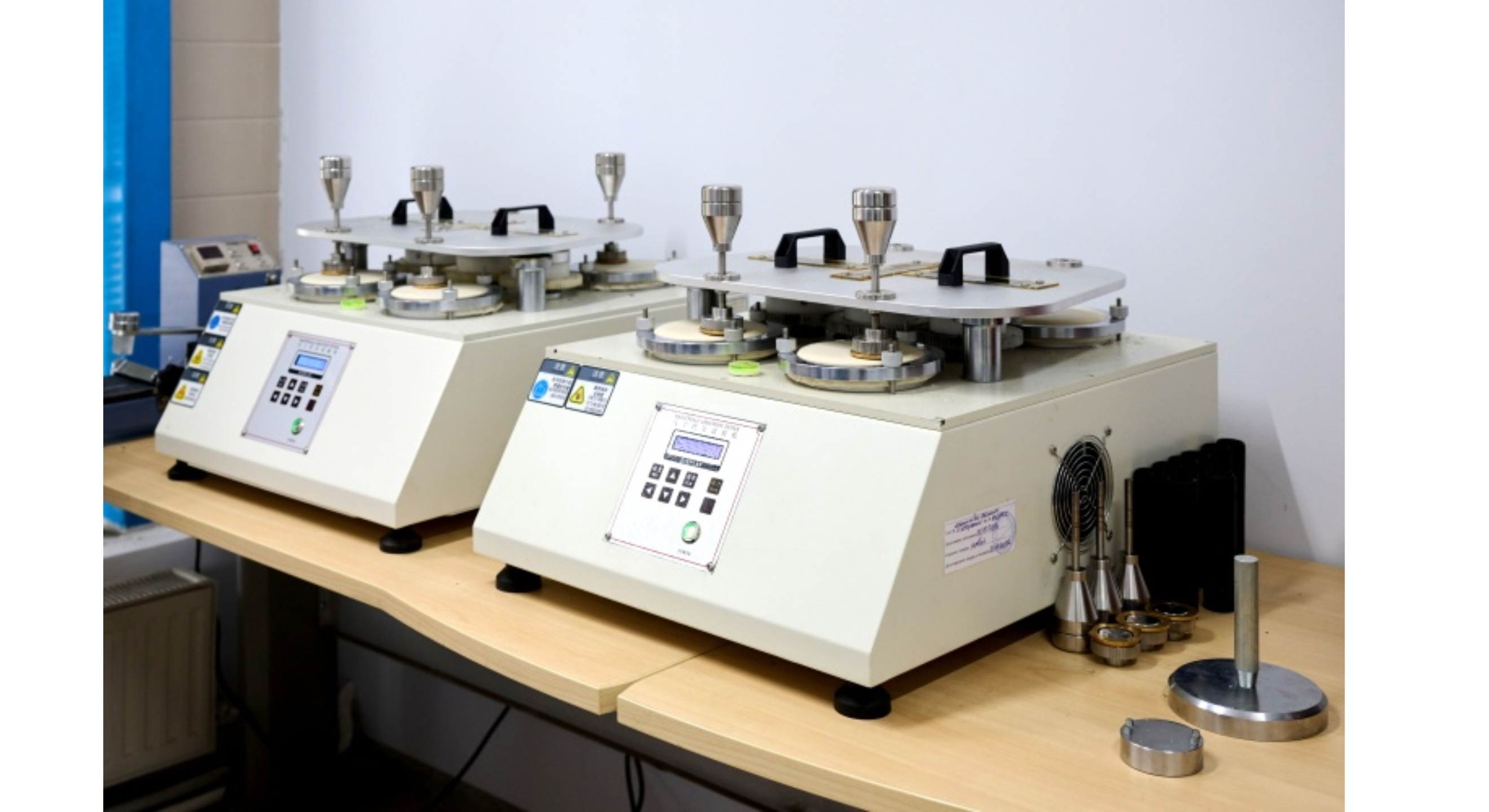
Purpose: To establish the life of the visual floor surface.
The process begins by securing small flooring samples in holders, which are then pressed against a standard abrasive material under a precise load. A unique feature of this machine is its ability to operate in a complex Lissajous pattern, creating multidirectional frictional movements to simulate real-world foot traffic. Once the preset thousands of continuous cycles are complete, the samples are inspected under a standard light source to assess any damage to the wear layer. This analysis ensures that our flooring surfaces maintain their original aesthetic and superior scratch resistance, even in high-traffic commercial environments.
5. Scratch Test
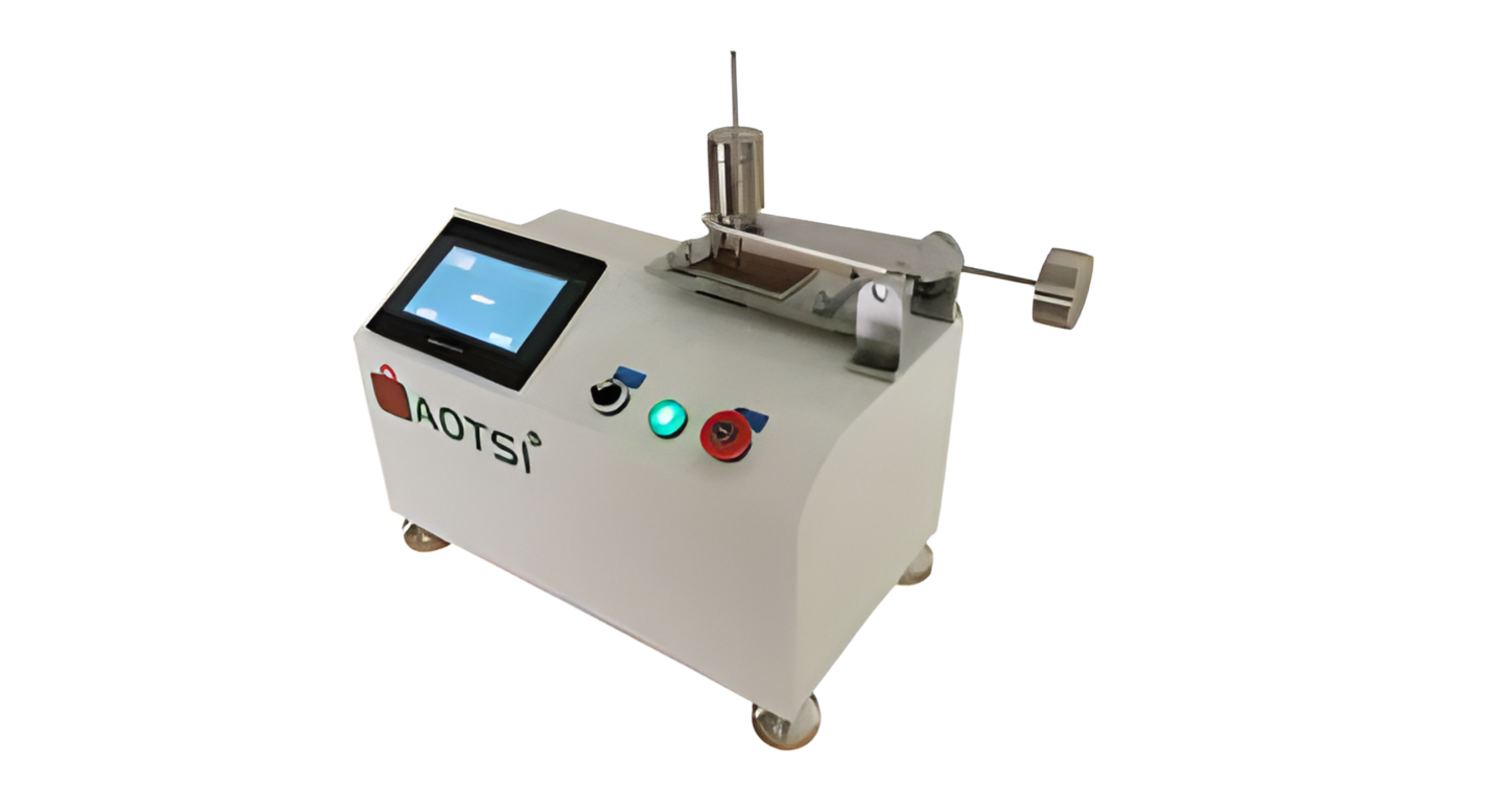
Purpose: To evaluate the hardness and surface protection levels of its flooring products.
The process begins by securing a flooring specimen onto the test platform and selecting a standardised scratching tip, such as a diamond or hardened steel needle. The technician then applies a specific load by placing calibrated weights onto the mechanical arm, simulating real-world pressure from furniture legs or dropped sharp objects. Once activated via the touchscreen interface, the tip moves across the sample surface for a predefined distance at a precisely controlled speed. After the cycle, the specimen is inspected under a standard light source to determine the depth and severity of the scratch. This rigorous testing ensures the wear layer meets professional durability standards, preserving the floor’s aesthetic integrity against daily physical impacts.
6. Heavy Metal Test
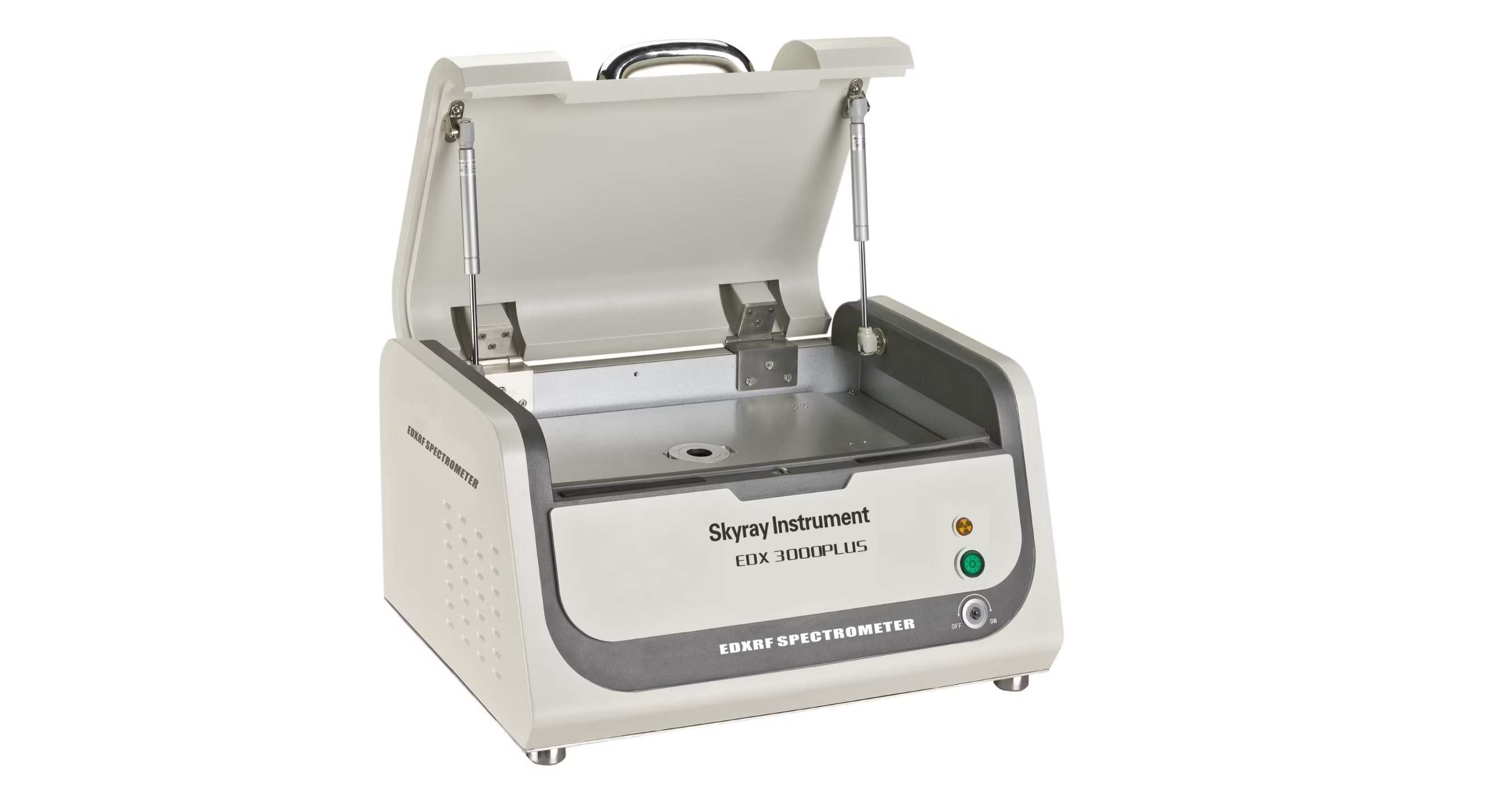
Purpose: To control quality, ensuring total chemical safety for every production batch.
The process begins by placing a flooring sample into the chamber, where the machine uses X-rays to excite the atoms within the material non-destructively. Once excited, these atoms emit secondary X-rays (fluorescence) with energy levels unique to each specific chemical element. The high-precision detector captures these signals, which are then processed by software to accurately determine the identity and concentration of each element. This allows us to verify that our products are free from hazardous heavy metals such as Lead, Mercury, or Cadmium, strictly adhering to global RoHS and health safety standards.
7. High-Precision Analytical Test
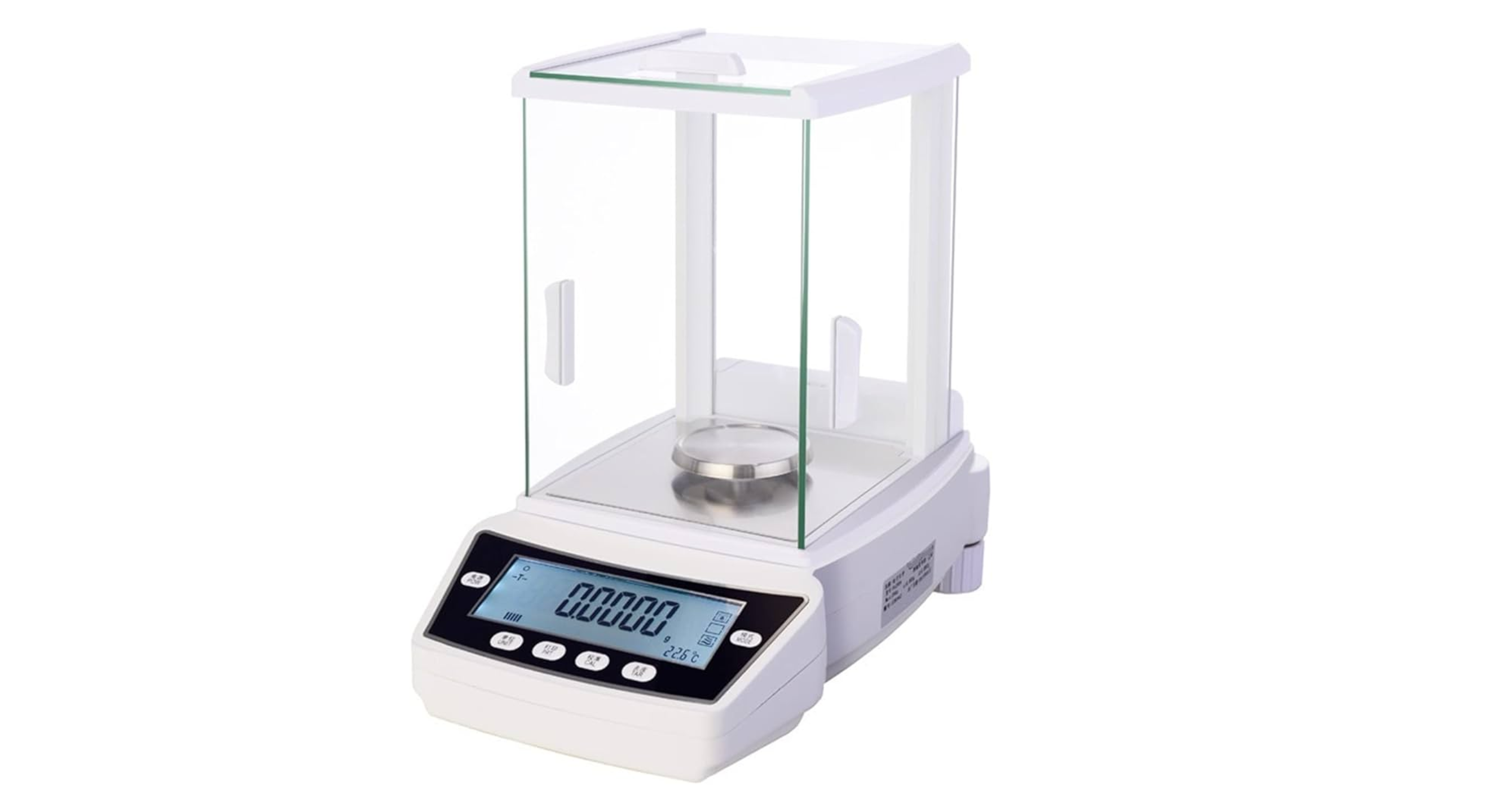
Purpose: To accurately determine sample mass at the milligram level for physicochemical analysis.
The process begins by powering on the device and waiting for the system to auto-stabilise, followed by the technician pressing the “Tare” key to reset the display to 0.0000g. The sample is introduced onto the weighing pan through the draft shield’s sliding doors to eliminate interference from external air currents or subtle vibrations. Once the stability indicator appears, the measurement—accurate to four decimal places—is recorded for in-depth raw material and moisture content analysis. This meticulous weighing ensures absolute consistency in the material composition, directly determining the quality and long-term durability of every plank.
8. Fire Safety / Burning Test
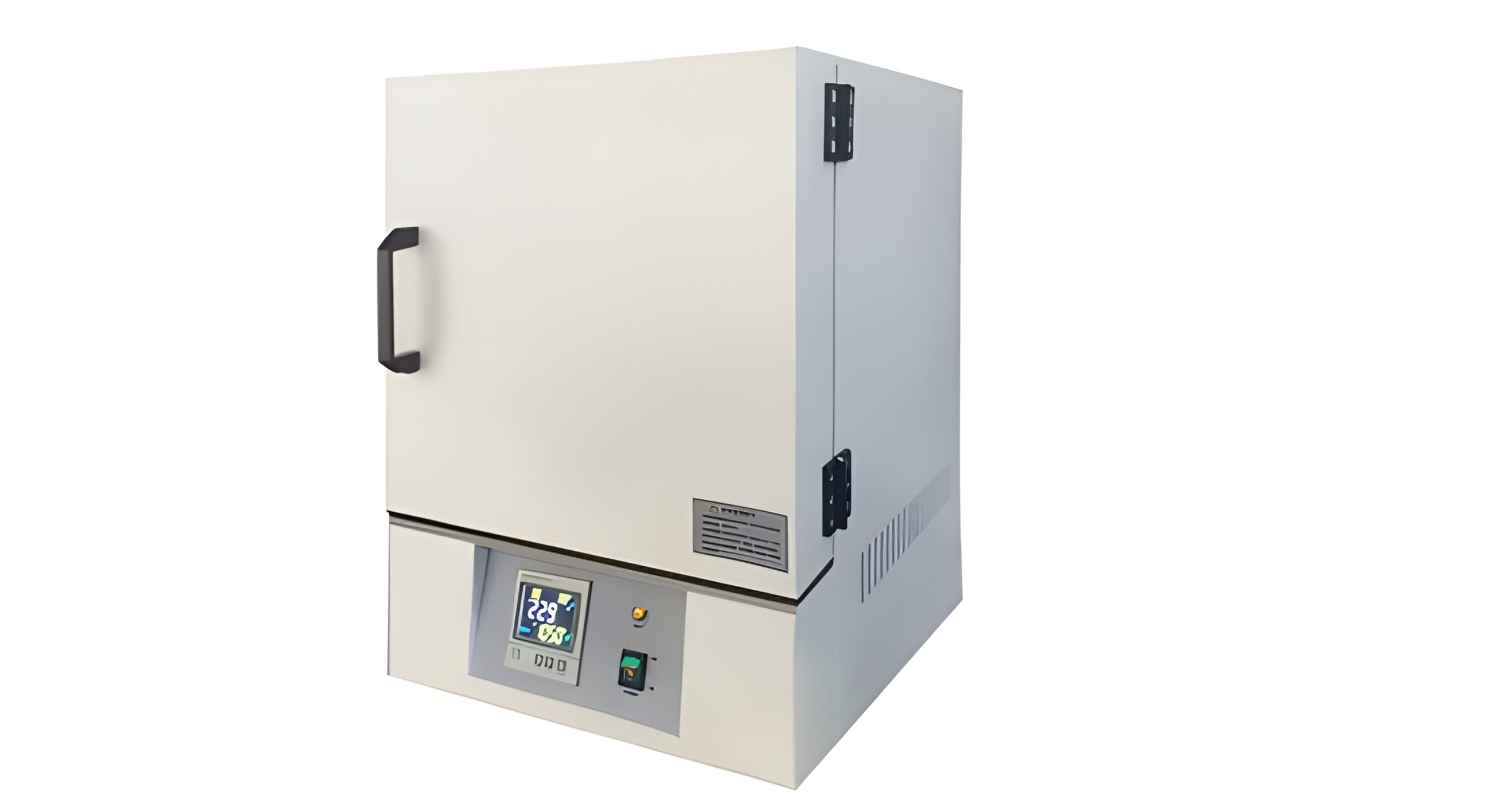
Purpose: For Burning Tests and high-precision material composition analysis
The procedure begins by placing a flooring specimen into the refractory chamber, followed by the technician setting an extreme target temperature—such as the 1050°C shown on the display—via the digital controller. Within the enclosed, uniform heating environment, the furnace completely combusts organic components, leaving only inorganic ash for purity analysis. This result allows to accurately verify the precise ratio of limestone powder to resin, ensuring the floor achieves its structural rigidity and optimal fire resistance in accordance with international fire safety certifications. This rigorous testing process is a core pillar in commitment to ensuring product integrity and providing maximum safety for global customers.
9. Brightness Test
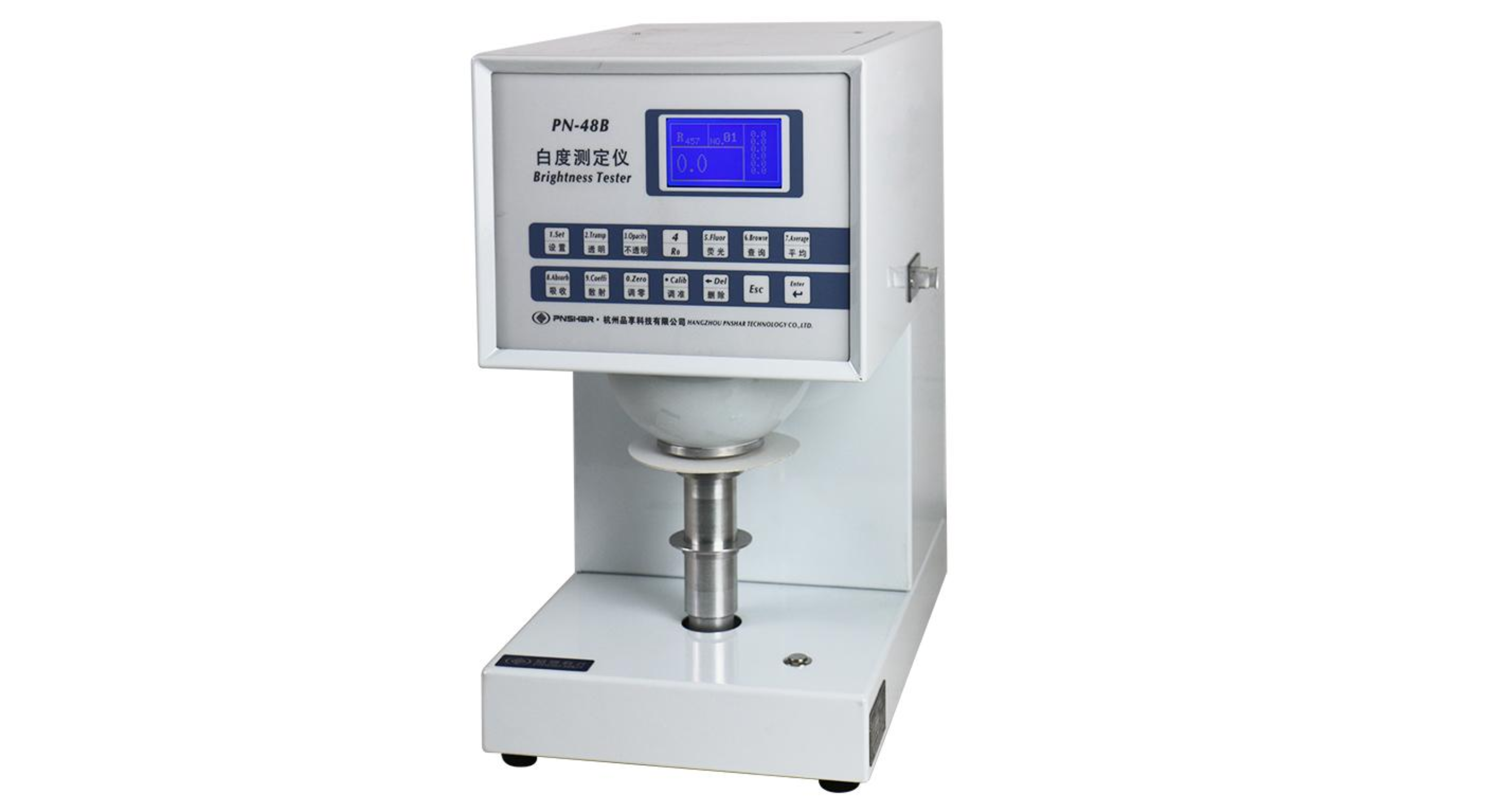
Purpose: To control the brightness and color uniformity of materials.
The process begins with calibrating the device using a standard white plate to ensure absolute measurement accuracy. Next, the flooring sample is placed flat against the machine’s testing port, ensuring no external light interference. Upon pressing the measure button, the internal optical system emits a standard light source and measures the reflectance from the sample’s surface. The results are instantly displayed on the LCD screen as a brightness index, allowing technicians to evaluate the purity of raw materials like limestone powder and resin. This testing ensures that every production batch meets aesthetic standards and maintains color consistency with the original design.
Why VN Ecofloor is Your Trusted Global Partner
Understanding Flooring Quality Standards is only half the battle. The other half is choosing a manufacturer with the experience and scale to deliver those standards consistently.
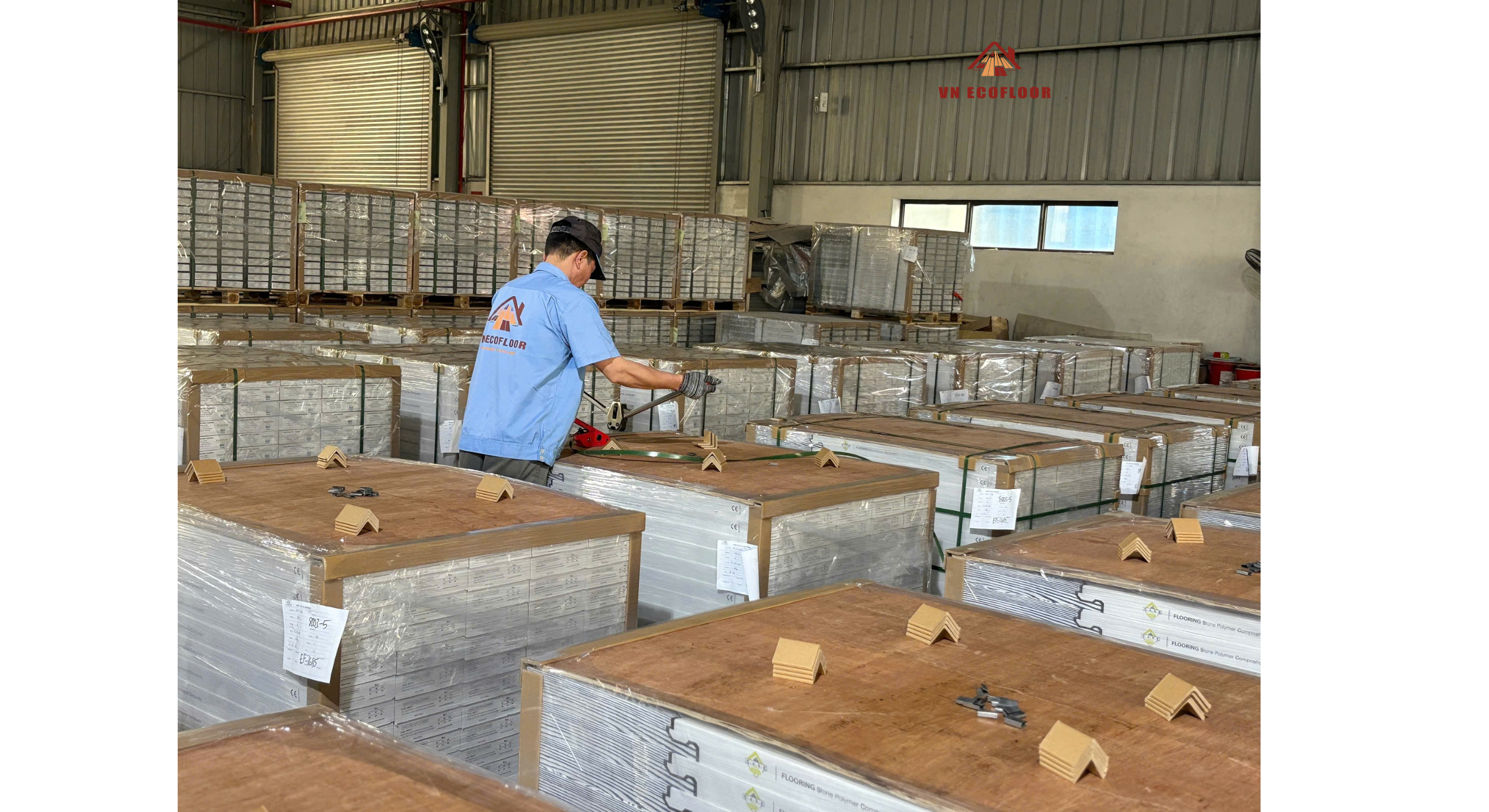
9+ Years of Global Export Excellence
VN Ecofloor is not a newcomer to the industry. For nearly a decade, we have navigated the complex regulatory landscapes of North America, Europe, and Asia. Our deep understanding of international Flooring Quality Standards has allowed us to become a preferred OEM partner for many of the world’s largest distributors.
Massive Production Capacity: Up to 20,000 Square Meters/Year
Scale matters. With an annual production capacity reaching 20,000 square meters, VN Ecofloor offers the supply chain security that global wholesalers demand. Whether you are fulfilling a single luxury residential project or a multi-state commercial rollout, our facility is engineered to deliver high-volume orders without compromising a single millimeter of quality.
Your Stability in an Unstable Market
When you partner with VN Ecofloor, you aren’t just buying LVT or SPC flooring. You are buying a decade of export wisdom, a massive production engine, and a commitment to Flooring Quality Standards that are verified by data, not just promises.
Conclusion
In the B2B flooring world, your reputation is built on the stability of the products you provide. Don’t leave your success to chance. Partner with a manufacturer that explains the science, follows the standards, and delivers at scale.
👉 Ready to elevate your inventory with verified quality?
[CONTACT VN ECOFLOOR] to request our full Technical Testing Reports and discover how our 10 years of experience can help grow your business.
Hotline/Whatsapp: +84 88 801 81 28
Website: vnecofloor.com