


Gaps and buckling are the two most traditional technical mistakes that afflict contractors and dealers in the vinyl flooring business, especially when you are dealing with traditional LVT flooring (luxury vinyl tile). Understanding the “why” and “how” of installation is the only way to ensure a flawless finish.
At VN Ecofloor, we believe a premium product deserves a premium installation. Here are the essential tips to avoid gaps and buckling in LVT flooring and ensure your projects stand the test of time.
What is Gapping and Buckling?
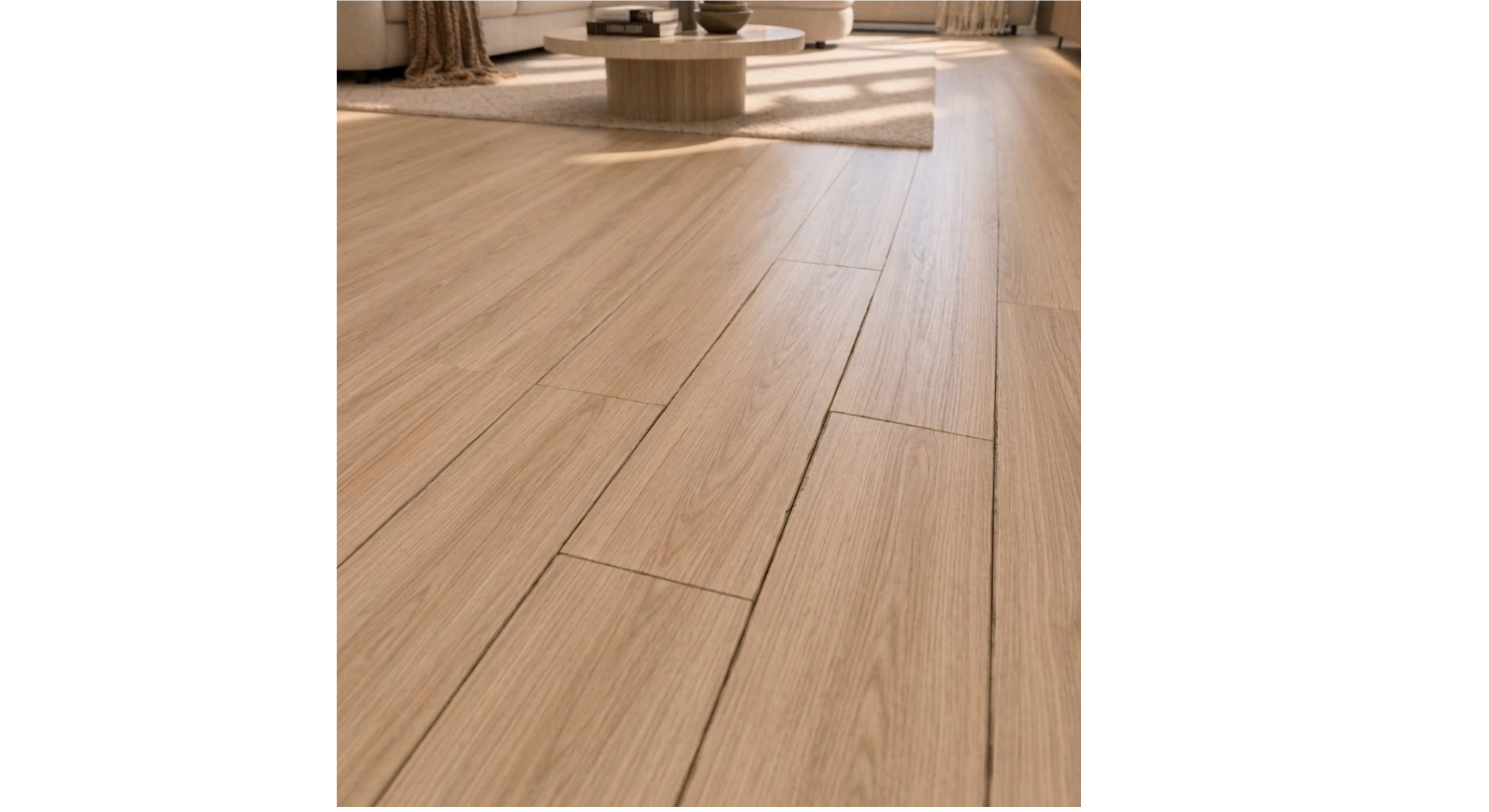
Gapping: This is when floorboards separate, creating unsightly gaps. The floor contracting often occurs due to sudden temperature drops or improper installation.
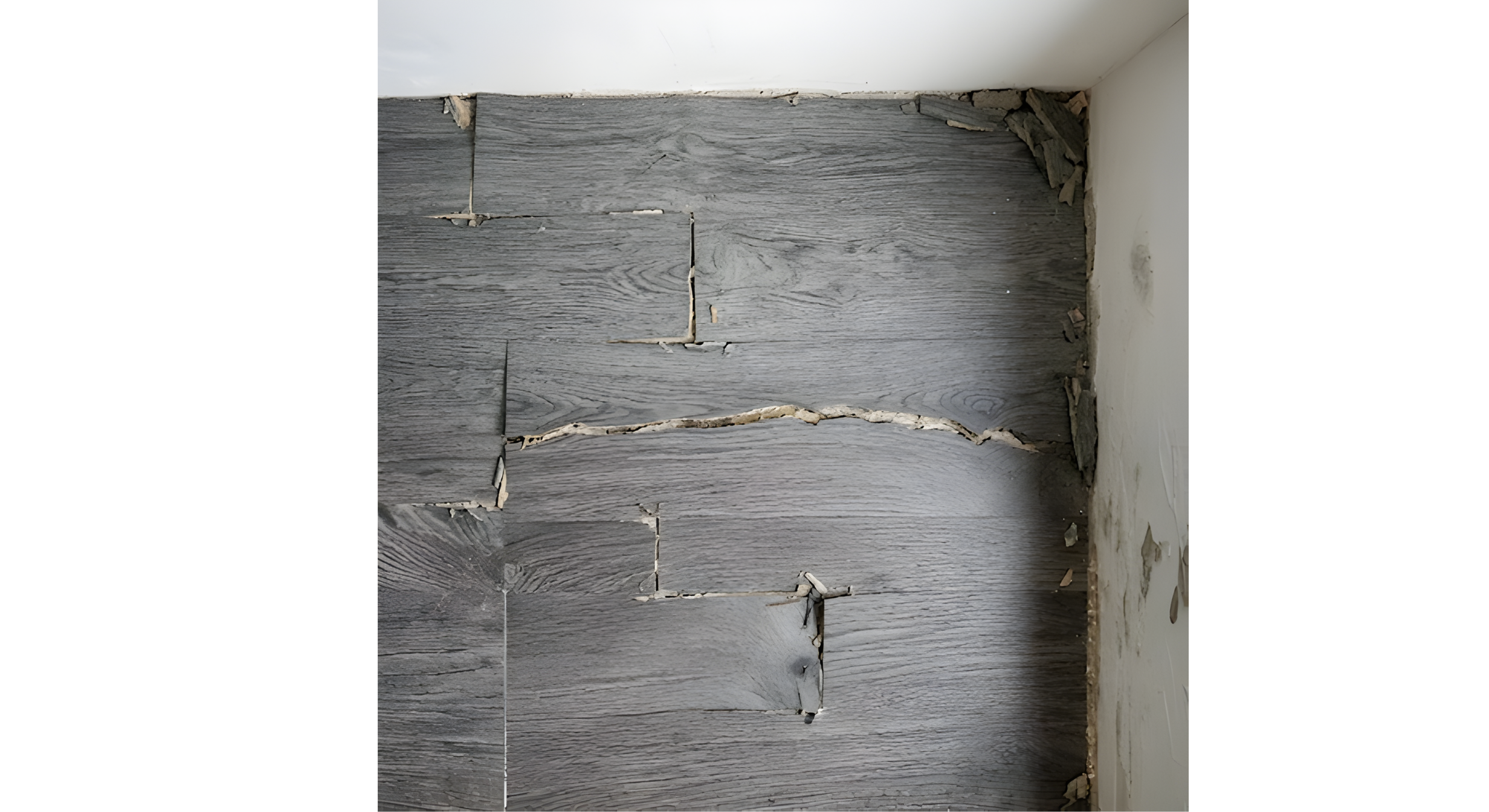
Buckling: This is when the floor is pushed up from the ground, creating uneven areas. This occurs when the floor expands but doesn’t have enough space to “breathe,” causing the floorboards to push against each other.
5 Golden Rules to Installation Errors
1. Temperature Acclimatisation is Obligatory
LVT is a temperature-sensitive material. Before installation, the floor needs to be left in a room for at least 72 hours at a stable temperature (20–25°C or 68–77°F).
Advice for installers: DO NOT install the floor right after unloading it from the container. Acclimatisation assists in stabilising the material in terms of its dimensions, especially to avoid shrinkage after tongue and groove jointing.
2. Subfloor Preparation
LVT flooring is extremely thin and flexible; hence, any unevenness or irregularities in the subfloor may transfer to the surface after installation, potentially causing visible imperfections, deformation, or reduced durability.
-> Standard: Ensure the subfloor is completely flat, clean, and dry before installation.
3. Never Forget Expansion Gaps
It is a primary but the most popular error. LVT must always have a gap (typically 3mm -5mm) to the wall to permit expansion of the floor.
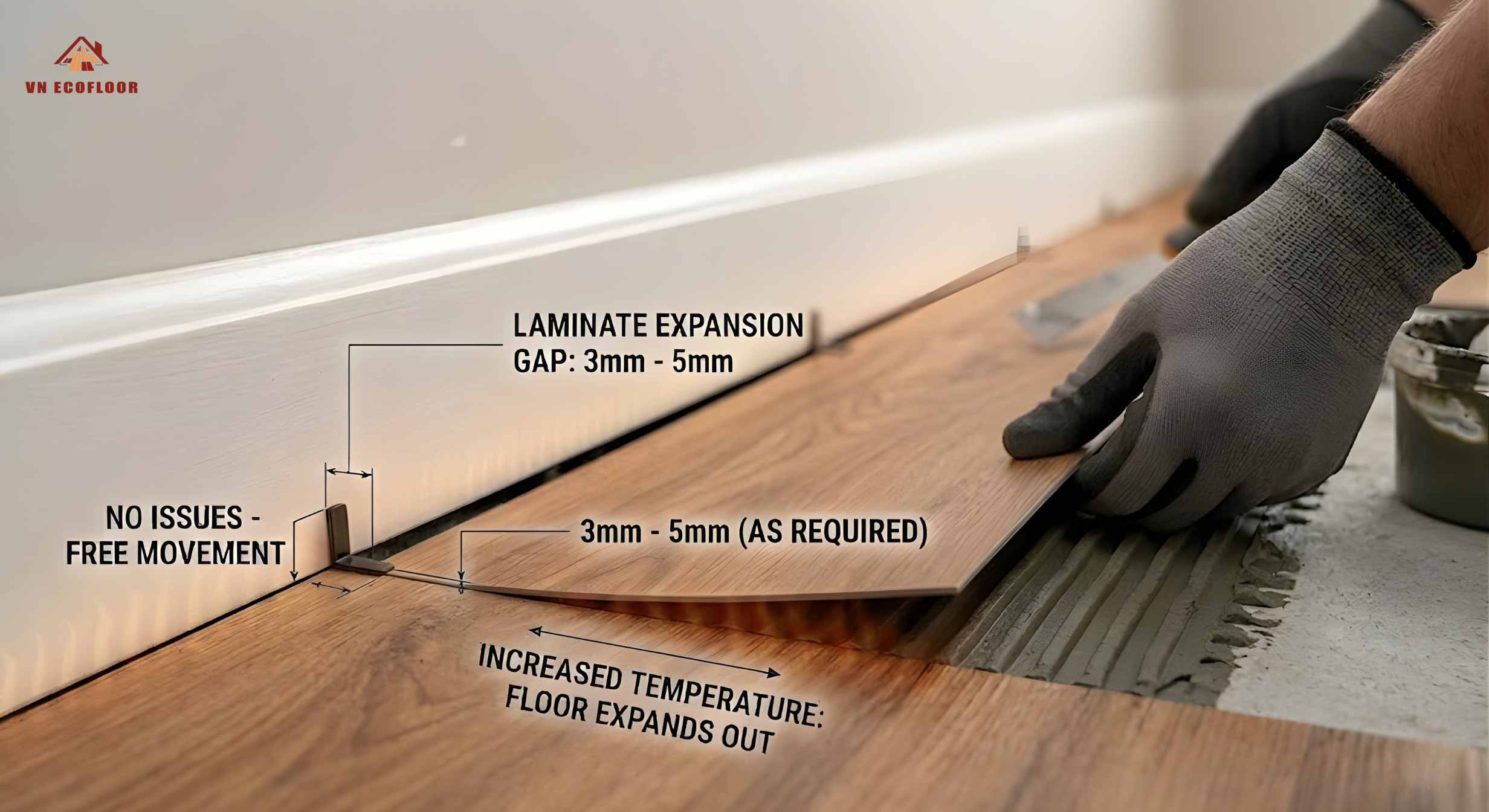
Note: Absolutely do not nail skirting directly through the subfloor to the floor. The subfloor shall also be permitted to flow freely beneath the skirting.
4. Controlling Direct Sunlight
Traditional LVT flooring can deform under the impact of UV rays and high temperatures from large windows.
Solution: Use curtains or heat-insulating film. Or better yet, advise customers to use VN Ecofloor’s LVT flooring, which has a super-hard stone core that provides significantly better heat resistance than conventional LVT.
5. Locking Mechanism
Ensure the locking mechanism is clean of dust and dirt before installation. Use a rubber mallet and a tapping block gently. Using excessive force can crack the internal joints, leading to gaps after a few months of use.
Why is VN Ecofloor LVT Flooring a better sustainable approach to wholesale?
For wholesalers and professional installers, our commitment to high-level testing standards translates directly into fewer warranty claims, higher referral rates, and a rock-solid reputation.

Our in-house testing standards strictly follow ISO, ASTM, and EN protocols, providing a level of reliability that few manufacturers can match.
- Dimensional Stability Test: This is our primary defence against buckling. We simulate extreme temperature shifts to ensure our SPC core maintains its shape, preventing the expansion that causes floors to lift.
- Peeling Strength Test: We verify the bond between the wear layer, film, and core to ensure your floor will never delaminate, even in high-traffic commercial environments.
- The Castor Chair Test (ISO 4918): We subject our locking systems to 25,000 cycles of a 90 kg rolling load. This ensures the locking mechanism remains tight and gap-free, even under constant commercial-grade pressure.
- Scratch & Abrasion Tests: These tests evaluate the surface’s ability to withstand daily wear and tear, maintaining a “new” look for years.
- Chemical & Burning Tests: We assess the floor’s resistance to household chemicals and its fire-retardant properties for maximum safety and longevity.
- Colour Fastness Test: Ensuring that the vibrant tones of your floor stay consistent and do not fade under UV exposure.
By conducting these tests in-house and offering customised testing based on specific customer requests, VN Ecofloor provides the technical certainty you need to grow your business with confidence.
Conclusion
Gaps and buckling are not material issues, but rather technical understanding. By strictly adhering to subfloor preparation procedures and temperature adaptation, you can cut unnecessary warranty calls by 90%.
👉 Wholesalers & Installers: Are you looking for a flooring line that says “no” to warranty failures?
Contact VN Ecofloor now to receive technical documentation and a quote specifically for strategic partners!
Hotline: +84 88 801 81 28
Website: vnecofloor.com
FAQs
- How does LVT flooring develop gaps?
Gapping is mainly a result of thermal contraction. When LVT planks are laid without acclimatisation or when they are subjected to a sharp and drastic temperature change, the material contracts and drifts off the joints. Also, when the subfloor has low areas, it can cause the joints to unzip during foot traffic, resulting in unsightly gaps.
- Why is LVT flooring known to buckle once it is installed?
Buckling (or tenting) occurs as a consequence of thermal expansion when there is insufficient room for movement. LVT planks naturally increase with an increase in temperature. When the installer does not leave an expansive gap on the walls surrounding the room, the flooring collides on the walls, accumulates internal pressure, and has no option but to pull upwards, forming an uneven ridge and giving a bouncy texture.
- Does acclimatisation of LVT flooring need to be carried out before installation?
Absolutely. LVT should be left to stabilise to the environmental equilibrium in a room in which it will be installed for at least 72 hours. The perfect temperature is around 20–25°C or 68–77°F. Omitting this step is the biggest reason for failures after installation, as the material will still change size depending on how it is fixed in place.
- Does an unlevel floor cause cracks or straddling?
Yes, the preparation of the subfloor is the key to quality. The irregular subfloors left cause hollows or protrusions; any weight placed on it causes the planks to bend across the hollows, and the locking will be subjected to unbelievable pressure. In the course of time, such stressful repetition results in the hèm khóa (locking joints) snapping or becoming tired and causing permanent gapping, forming, or even breaking entirely.
- Does SPC flooring have lower chances of gaps and buckling than traditional LVT?
Yes, significantly. Due to the presence of a high-density rigid limestone core it contains, SPC (Stone Plastic Composite) has significantly greater dimensional stability. It is much less temperature sensitive compared to conventional flexible LVT.