


If you look beneath the design film of any vinyl floor, you are looking at a core made of PVC mixed with stabilizers (and limestone powder, in the case of SPC). In today’s global OEM market, factories will offer you two choices for this core material: Recycled Plastic or 100% Virgin Resin.
Choosing the wrong one to save a few pennies upfront can completely ruin your brand’s reputation with severe warping issues, cracking joints, and toxic indoor air quality complaints. Let’s strip away the complex chemical jargon and look at exactly what Virgin Resin is, why it is a critical commercial specification, and how it protects your bottom line.
What Exactly Is Virgin Resin?
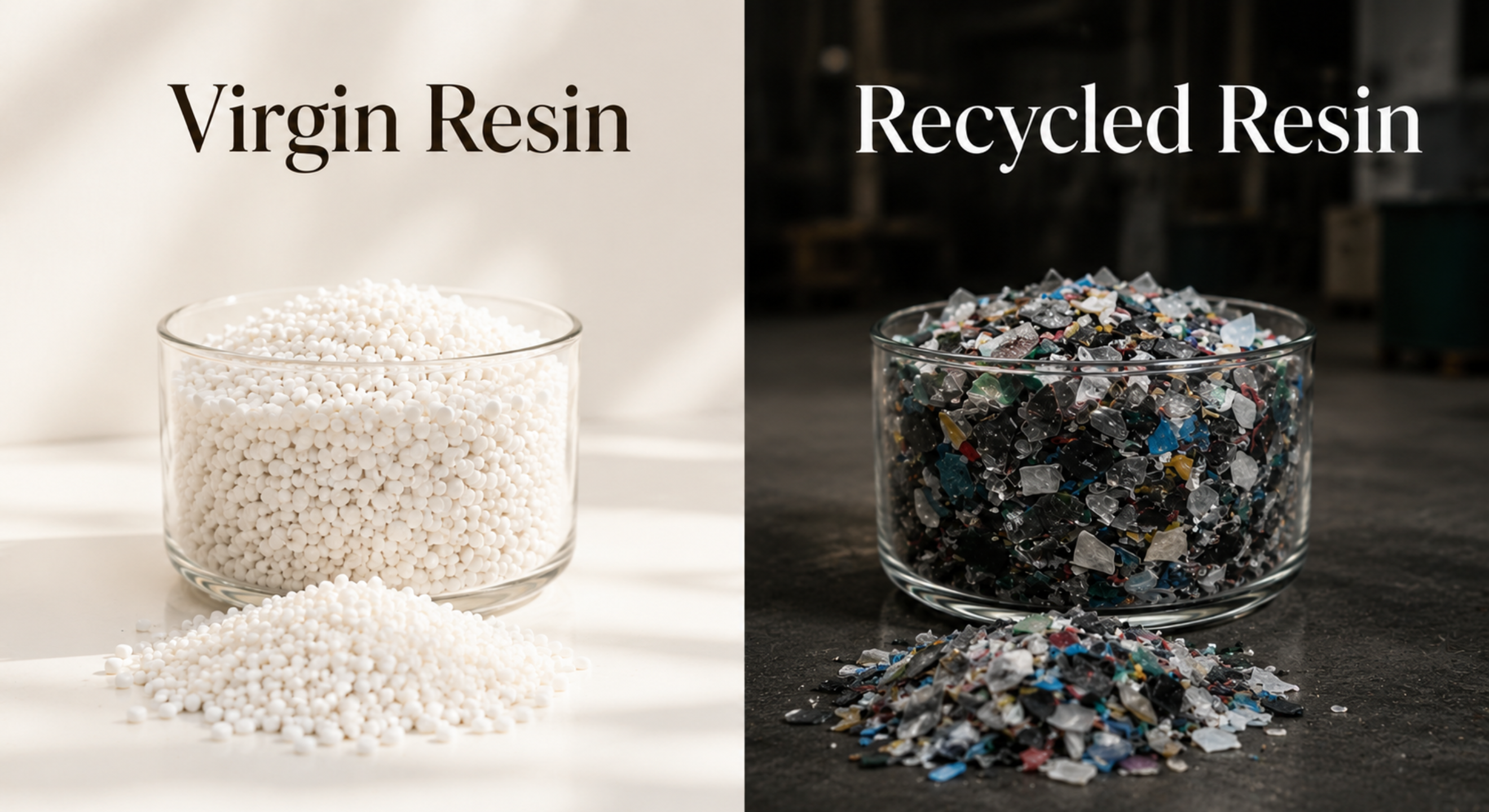
To understand what virgin resin is, it helps to look at the manufacturing definition. Virgin resin is a pure, freshly produced plastic polymer (typically polyvinyl chloride, or PVC, in the flooring industry) that has never been processed, molded, or used in any commercial product before. It comes straight from the petrochemical refinery in its cleanest, most stable raw pellet or powder form.
Think of it as medical-grade, untainted material. It has no history, no contaminants, and its molecular chains are 100% intact and uniform.
The Contrast: What is Recycled Resin?
Recycled resin is made from post-industrial scrap or post-consumer plastic waste—think old piping, discarded plastic bottles, or manufacturing runoff. Because this waste comes from a mix of different sources, it is melted down into a chaotic, unpredictable cocktail. Its molecular bonds have already been broken and weakened through repeated heating cycles, and it often carries hidden structural impurities.
Why Sourcing Managers Must Insist on 100% Virgin Resin Cores
When pitching your private-label collections to big-box retailers, interior designers, or commercial contractors, they need to know your floor can survive real-world environments. Specifying a Virgin Resin core gives your sales team three massive, undeniable arguments:
1. Stable Dimensional Stability
Plastics naturally expand and contract when temperatures fluctuate. Because Virgin Resin features a perfectly uniform molecular structure, it expands and contracts predictably and evenly.
Recycled cores, however, contain a mix of different plastic types that expand at completely different rates. When exposed to intense summer sunlight through a window or high humidity in a kitchen, a recycled core will warp, cup, buckle, and put immense tension on the click-lock system until the joints literally snap under foot traffic.
2. Maximum Click-Lock Tensile Strength
For rigid-core floors like SPC, the locking tongue-and-groove system is carved directly into the core material. Because virgin resin retains its full molecular elasticity and strength, those tiny locking joints are incredibly tough and resilient. They won’t crack or shear off during installation or under the weight of heavy rolling loads, helping reduce after-sales warranty claims.
3. Pristine Indoor Air Quality (No Chemical Odor)
In 2026, international buyers are hyper-aware of indoor environmental health. Recycled plastics often contain legacy additives from decades ago, including hidden heavy metals (like lead or cadmium) and volatile organic compounds (VOCs). When packed tightly inside a shipping container or installed in a home, a recycled core can emit a harsh, toxic chemical smell. Virgin resin is completely pure, non-toxic, and naturally odorless.
The Technical Breakdown: Virgin Resin vs. Recycled Resin
To help you map out your sourcing strategy and justify your material budgets, here is an objective commercial comparison:
| Key Sourcing Criteria | 100% Virgin Resin Core | Recycled Resin Core |
|---|---|---|
| Material Origin | Directly from the polymer refinery; never used before. | Post-consumer waste, industrial scrap, mixed plastics. |
| Molecular Structure | Hyper-uniform, long-chain polymer matrix. | Fractured, weakened, and uneven molecular bonds. |
| Warping & Cupping Risk | Low: Exceptional dimensional stability in all climates. | High: Prone to buckling under temperature spikes. |
| Click-Joint Integrity | Flexible and high-tensile; won't snap under traffic pressure. | Brittle; prone to chipping or cracking during installation. |
| VOCs & Air Safety | Odorless and non-toxic: Easily passes strict global health audits. | Can emit strong chemical odors and trap heavy metals. |
| Sourcing Cost Profile | Higher upfront factory investment. | Lower upfront cost; highly price-competitive. |
| Long-Term ROI | Maximum: Protects brand equity and eliminates claims. | Risky: Higher rate of container-level callbacks. |
When to Pay for Virgin Quality
As a B2B sourcing professional, you don’t want to over-engineer a simple budget line, but you must never under-spec a premium collection.
Choose Recycled Cores Only If: You are supplying temporary, short-term commercial pop-ups, low-traffic areas, or ultra-budget projects where long-term durability and indoor chemical emission regulations are not a driving factor.
Insist on 100% Virgin Resin If: You are building a sustainable, premium private-label brand; bidding on high-traffic commercial projects (hotels, corporate offices, clinics), or selling into international markets with strict environmental mandates like the USA, Europe, and Australia.
Are you looking for a vinyl flooring manufacturer that uses 100% virgin resin?
Contact VN Ecofloor—an OEM flooring manufacturer from Vietnam—via phone/WhatsApp: +84 88 801 81 28 or official website: vnecofloor.com
FAQs
- What does virgin resin mean in vinyl flooring?
Virgin resin refers to newly produced PVC material that has not been used, recycled, or reprocessed before. In vinyl flooring, it helps create a cleaner and more consistent core, which can improve dimensional stability, click-lock strength, and overall product reliability.
- Is virgin resin better than recycled resin for SPC flooring?
For most premium SPC flooring collections, yes. Virgin resin gives manufacturers better control over the core formulation, which helps reduce risks such as warping, brittle click joints, chemical odor, and inconsistent product performance. Recycled resin may be cheaper, but it can carry more variation from batch to batch.
- Does 100% virgin resin mean the entire SPC core is made only from resin?
Not exactly. SPC flooring cores are usually made from PVC resin, limestone powder, stabilizers, and other additives. When suppliers say “100% virgin resin,” they usually mean the PVC resin used in the core is virgin-grade, not recycled. Buyers should always ask for a clear material specification from the manufacturer.
- Why do some flooring factories use recycled resin?
Recycled resin is mainly used to reduce production costs. It can reduce factory-level flooring costs, which may work for low-budget or short-term projects. However, for private-label brands, commercial spaces, or export markets with stricter quality expectations, recycled cores may create higher long-term risks.
- Can recycled resin flooring cause odor problems?
It can, especially if the recycled material comes from mixed or poorly controlled sources. Some recycled plastics may contain unknown additives, contaminants, or older chemical compounds that can create a strong smell after production, shipping, or installation. This is why buyers should request VOC, heavy metal, and indoor air quality test reports.
- How can buyers verify if a flooring core uses virgin resin?
The best way is to ask the manufacturer for raw material documentation, formulation details, production transparency, and third-party test reports. Useful tests may include VOC emission testing, heavy metal testing, phthalate-free reports, REACH, RoHS, FloorScore, or other market-specific certifications.
- Is virgin resin always worth the higher cost?
For premium private-label flooring, export collections, high-traffic commercial projects, and markets like the USA, Europe, or Australia, virgin resin is usually worth the investment. It may cost more upfront, but it helps protect your brand from complaints related to warping, broken click systems, odor, and inconsistent product quality.