


When you are exploring the vinyl flooring market, it is incredibly easy to get swept away by striking wood-grain visuals or deep stone textures. But if you are a new wholesaler, importer, or private-label brand, there is one invisible spec that matters more than any design: the wear layer. So, what exactly is the wear layer, and why does it matter? Let’s break it down.
What Is the Wear Layer?
Vinyl flooring is a layered sandwich. At the bottom, you have the backing and the rigid core (like the ultra-stable limestone-plastic blend in SPC). Above that sits the high-definition decorative film—the color layer with wood/ stone pattern. Above that is the wear layer, which is the clear, heavy-duty layer of pure applied directly over that decorative film. And the top layer is the UV coating, which prevents fading.
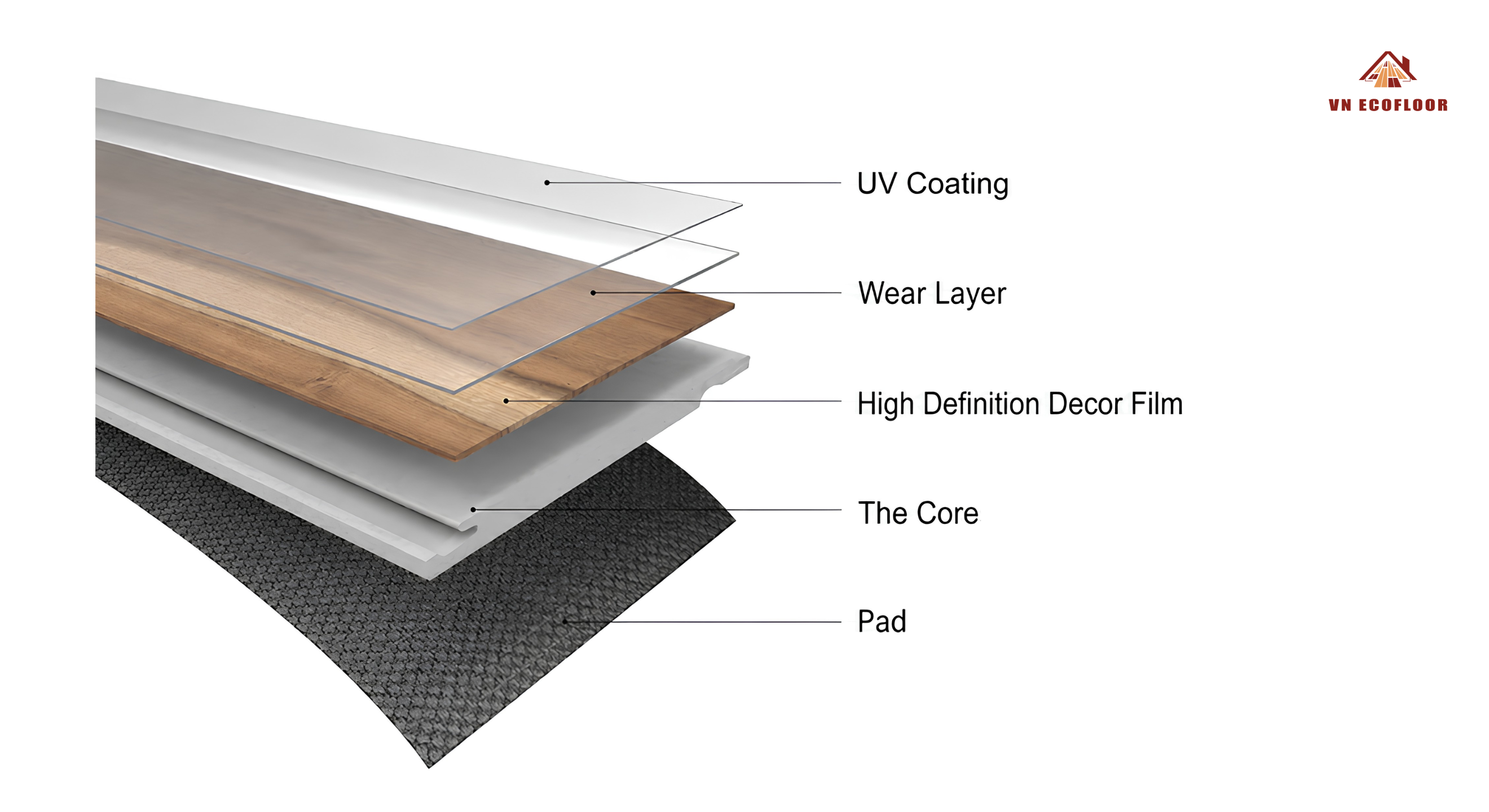
Note: The decorative print film provides the beauty, but the wear layer provides the durability. Without a proper wear layer, the beautiful pattern underneath would literally scratch and wear away within a few months of normal walking traffic.
Mil vs. MM: Understanding Wear Layer Thickness
When dealing with international factories, you will see wear layer thickness measured in two different units: millimeters (mm) and mils. This is where many buyers get confused, but the math is actually quite simple.
- Mil is an imperial measurement equal to 1/1000 of an inch (it is not short for millimeter).
- MM is the standard metric millimeter used by global manufacturing hubs.
To keep your specifications straight when negotiating with your OEM partners, you can use this quick conversion chart:
| Wear Layer Thickness (MM) | Wear Layer Thickness (Mils) | Performance Target / Suitable Use |
|---|---|---|
| 0.3 mm | ~12 mil | Light residential, standard apartments, multi-family housing |
| 0.5 mm | ~20 mil | Heavy residential, active pet-friendly homes, light commercial spaces |
| 0.7 mm | ~28 mil | Heavy commercial, high-traffic retail, hospitality, and public venues |
Why OEM Brands Must Care About Wear Layer Thickness
Why shouldn’t you buy the thinnest, cheapest option available? Because matching the wear layer thickness to the end-user’s environment is the secret to a successful product line.
1. Eliminating the “Wear-Through” Nightmare
Over the years, friction slowly erodes the floor’s surface. If the wear layer is too thin for the environment, traffic will eventually cut straight through to the decorative paper, destroying the floor’s appearance. A thicker wear layer ensures the pattern remains pristine for a decade or more.
2. Protecting Against Micro-Scratches
Imagine the tiny grains of sand and dirt clinging to the soles of our shoes every day. As we walk, our body weight presses these grains of sand down onto the floor, dragging them along. In this case, the grains of sand act like sandpaper, constantly rubbing against the floor surface.
With only a thin protective layer, the floor surface will quickly develop thousands of tiny, blurry scratches. Over time, these scratches accumulate, making the floor dull, losing its original shine, and looking very old.
3. Maximizing Your Private-Label Warranty
If you want to confidently offer a 15-year, 25-year, or lifetime residential warranty on your branded collection, you need the technical backing to support it. Specifying a 0.5 mm (20 mil) or 0.7 mm (28 mil) wear layer gives your sales team a rock-solid, verifiable story to tell your retail clients.
The Secret Sauce: Pairing Your Wear Layer with the Right UV Topcoat
Here is an insider secret from the manufacturing floor: thickness isn’t the only factor in surface resilience. While a thick wear layer stops the floor from wearing out, it is the factory-applied UV topcoat that keeps the surface from scratching and staining.
For a truly premium line, you want to combine a thick wear layer with a specialized finish:
- With Ceramic Bead UV Coating: Introduces microscopic silica spheres (SiO₂) into the topcoat. It creates a smooth, comfortable surface underfoot with a natural matte gloss that is perfect for pet-friendly homes and busy families.
- With Aluminium Oxide UV Coating: Blends hyper-hard minerals (~9 Mohs hardness) into the finish. This creates a slightly textured, commercial-grade powerhouse built for heavy-traffic environments like hotels, corporate offices, and retail stores.
ARE YOU LOOKING FOR A VIETNAMESE OEM VINYL FLOORING MANUFACTURER?
Ready to build a highly durable, premium flooring collection?
👉Head over to our official website at vnecofloor.com to explore our full technical capabilities or connect with our team to request a quotation.
Hotline/WhatsApp: +84 88 801 81 28
Official Website: vnecofloor.com
FAQs
1. What is the wear layer in vinyl flooring?
The wear layer is the clear protective layer placed above the decorative film of a vinyl flooring plank. Its job is to protect the printed wood or stone design from daily foot traffic, light scratches, scuffs, and general surface wear. In simple terms, the decor film gives the floor its look, while the wear layer helps keep that look lasting longer.
2. Why is the wear layer important for vinyl flooring?
The wear layer is important because it directly affects how long the floor can maintain its appearance under real-life use. A proper wear layer helps reduce wear-through, protects the printed design, and gives wholesalers or private-label brands a stronger product story when selling to retailers, contractors, or end customers.
3. What is the difference between mil and mm in wear layer thickness?
Mil and mm are two different units used to measure wear layer thickness. A mil is an imperial unit equal to 1/1000 of an inch, while mm stands for millimeter and is commonly used in international manufacturing. For example, 20 mil is roughly equal to 0.5 mm. Buyers should understand both units to avoid confusion when comparing factory quotes.
4. What wear layer thickness should wholesalers choose?
It depends on the target market and usage environment. Thinner wear layers may be suitable for cost-effective residential flooring, while thicker options such as 0.3 mm, 0.5 mm, or 0.7 mm are often used for busier homes, rental properties, offices, retail stores, and commercial spaces. The key is to match the wear layer thickness with the level of traffic your customers expect.
5. Does a thicker wear layer mean better vinyl flooring?
Not always. A thicker wear layer usually offers better resistance against long-term surface wear, but it is not the only factor that determines flooring quality. Buyers should also check the UV coating, core quality, locking system, dimensional stability, and overall production consistency. A good floor needs the right balance of all layers, not just one thick specification.
6. Is the wear layer the same as UV coating?
No, they are different layers. The wear layer is the clear protective layer that helps protect the decorative film from wearing through. The UV coating is the top surface finish applied above the wear layer to improve stain resistance, cleaning performance, gloss control, and surface scratch resistance. For premium flooring, both layers should work together.
7. How can OEM buyers improve surface durability beyond the wear layer?
OEM buyers can improve surface durability by pairing the right wear layer thickness with an upgraded UV topcoat. For example, Ceramic Bead UV coating can create a smoother, refined surface for residential and pet-friendly flooring. In contrast, Aluminium Oxide UV coating offers stronger abrasion resistance for high-traffic and commercial applications.