

Engineered hardwood flooring has emerged as one of the most popular hardwood floorings among homeowners who desire the comfort as well as the desire to have real wood flooring and the versatility of solid hardwood. It can be perfectly used in a wide variety of interior spaces; its construction and stability make it remarkable, both in modern condos and in traditional family apartments.
Key Takeaways
- Both the top and bottom are made of a genuine wood top surface that gives it a natural look.
- Constructed around a solid base of plywood or HDF to avoid swelling and shrinking.
- Lower risk of bending because of solid hardwood.
- More useful in installation and applicable in places where solid hardwood cannot be installed.
What is Engineered Hardwood?
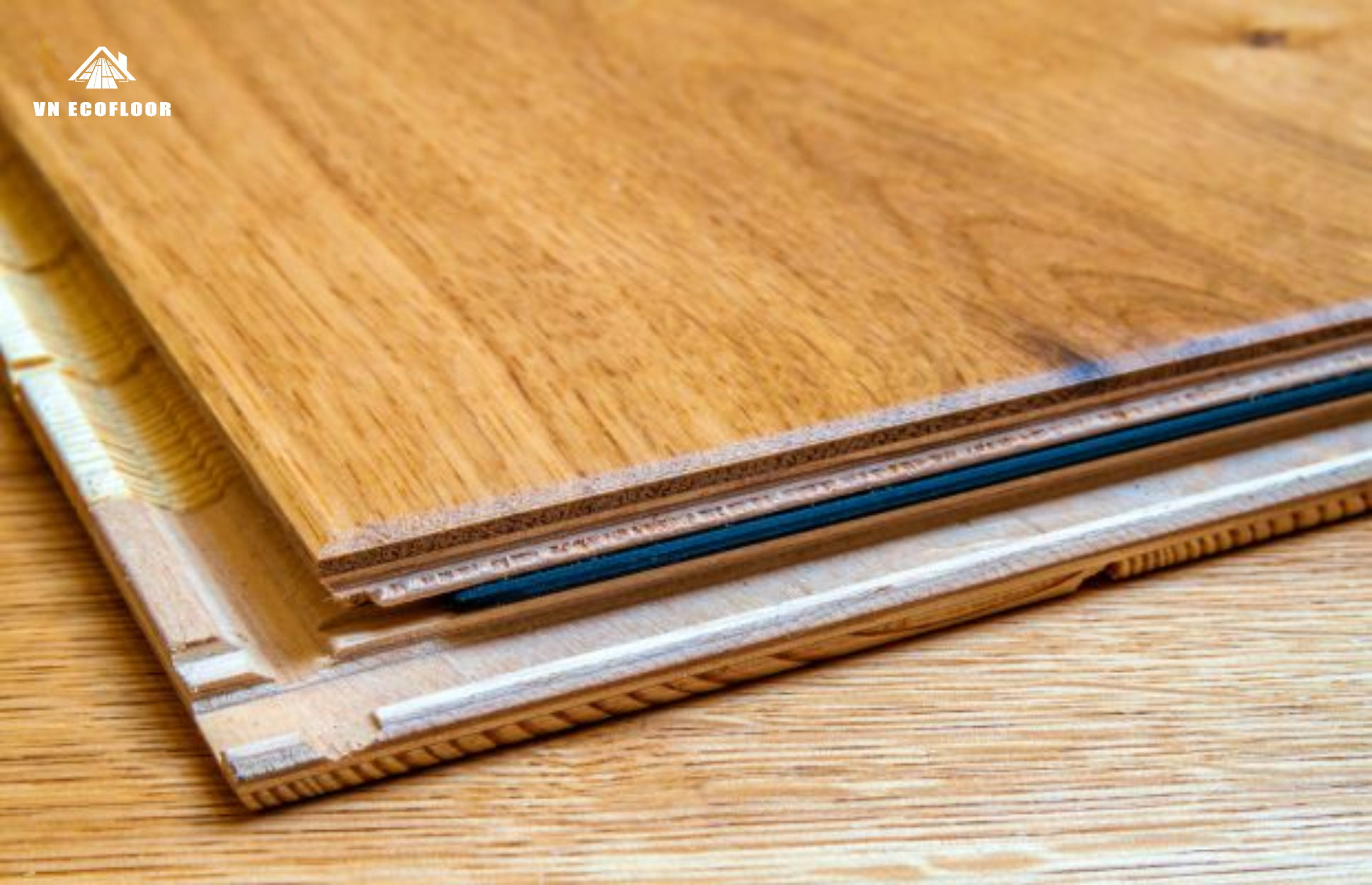
The Top Layer: Real Hardwood Veneer
Real and not counterfeit hardwood is used to manufacture engineered wood flooring. The surface is covered by the top layer, which is a sheet of real wood, but that dictates the color, texture, and species of the floor. Its thickness is between 0.6 mm and 6 mm. A thicker wear layer makes the floor more refinishable and extends its lifespan.
The Core: Stability—Plywood or HDF
The structural core, which is composed of several layers of plywood or high-density fiberboard (HDF), receives a coating. These layers are positioned alternatively; this enhances the plank and reduces the movement due to an increase or decrease in temperature or humidity.
How It’s Made: The Engineering Hardwood Process
Engineered hardwood is a type of flooring that is produced by combining a real wood veneer with a stable core through heat and pressure. The layered structure provides increased stability and resistance to wear and tear; thus, it can be appreciated in the case of a setting whereby conventional solid wood would tend to over-expand or over-contract.
Engineered Wood vs. Solid Hardwood
Even though the two are almost the same when installed, the internal build and the functioning differ greatly. Planned wood is stronger against moisture and can be built under grade or over concrete, whereas solid hardwood can only be used in stable and dry conditions.

The Main Advantages Of Engineered Hardwood Flooring
Engineered hardwood flooring is a blend of art and technology that would make you experience the naturalness of hardwood in every room. This is why it is becoming a leading favorite of homeowners and designers:
-
Authentic Wood Appearance
Engineered flooring has a veneer of actual hardwood, which means that every plank is ready to demonstrate natural grain, tone, and texture. When it is installed, it is impossible to distinguish it aesthetically from solid hardwood.
-
Dimensional Stability
The engineered flooring can withstand changes in the level of humidity due to its layered construction. It does not grow or shrink like solid wood; thus, it can be used in basements, condos, and homes where there is radiant heat.
-
Wide Design Variety
It comes in dozens of species, finishes, and plank sizes—from Scandinavian filled white oak to deep walnut. The choices are suitable for both contemporary minimalism and traditional interiors.
-
Eco-Friendly Composition
Engineered hardwood is made with a thin layer of slow-growing hardwood on top of a composite core, which helps use materials efficiently and reduces deforestation. It is an environmentally friendly substitute for standard flooring.
-
Ease of Installation
It is compatible with various installations, including floating, glue-down, or nail-down. Numerous products have click-lock designs for simple and hygienic installations.
-
Cost Advantage
How much is engineered hardwood flooring? Prices are generally between 4$ and 10$ per square foot based on wood species, thickness of veneers, and quality of finishing. This also renders it cheaper as compared to solid hardwood, which usually begins at about $8 a square foot and needs more manpower to install.
Are There Any Downsides?
No flooring type is without a trade-off, and it is important to know the drawbacks of engineered hardwood flooring to be realistic about it.
- Limited Refinishing: The only floors that can be refinished once or twice are those with a thick wear layer (3 mm or more). Before the thinner versions can be sanded.
- Quality Variation: Not every engineered floor would be manufactured the same. Poor performance in the long run may be caused by low-quality cores or adhesives.
- Moisture Sensitivity: Engineered hardwood flooring is not waterproof, but is more resistant in comparison to solid hardwood. Swelling or delamination may still occur even in standing water or in high humidity.
Best Areas To Install Engineered Hardwood Flooring
Engineered wood can be used in most parts of the house:
- Bedrooms and living rooms: Add coziness and classic style.
- Basements: More stable than solid hardwood in under-grade areas.
- Kitchens: Acceptable with maintenance and prompt removal of spills. It should not be used in washrooms or washing machines where the humidity is always considerable.
What To Look For When Buying Engineered Hardwood Flooring
Thickness of the Wear Layer
A thicker wear layer (4 mm or greater) offers great duration and capacity to polish the surface in the case of a worn-out surface.
Core Material
Plywood cores have better dimensional stability and the HDF cores have density and a smooth finish surface.
Finish and Warranty
Select a floor that has a high-quality finish and is made of UV-cured polyurethane, which is more resistant to scratches and fading. Expect to see both structural integrity and surface wear warranties.
Learnings of Flooring Professionals _ VN Ecofloor
The senior installation staff at VN Ecofloor argues that before deciding on the engineered wood flooring solution, one needs to know more about their home environment and lifestyle.
The principle behind a long-lasting engineered floor is to select the right construction for the right space, asserts a specialist in the installation. Multi-ply cores and a durable surface finish are best for homes with different humidity or concrete subfloors. It is always important to check the wear layer thickness and bonding procedure. The two factors will determine the performance of your floor in the long run.
This industry experience shows that an elegantly selected engineered hardwood floor provides not just the natural beauty of real wood but also stability and long-term usefulness.
Frequently Asked Questions (FAQs)
- Do you have engineered flooring that is real wood?
Yes. It is a dead solid with an authentic appearance that has been made of genuine hardwood veneer.
- What is the maximum number of times engineered hardwood can be refinished?
It can generally be refinished once or twice, although this depends on wear layer thickness.
- Is wood flooring that has been engineered waterproof?
No. It is water-resistant but not waterproof. The de-spill should be cleaned up quickly to avoid damage.
- Is it cheaper than solid hardwood?
Yes. Engineered hardwood flooring is equally beautiful and of the same quality, and the total cost, less the installation cost, is saved.
Engineered wood flooring is an advanced solution for people who want the beauty of real wood with added convenience. It has a layered design that is strong, stable, and flexible in design, enabling it to be beautiful in various environments. When chosen wisely and properly fitted, engineered wood flooring will provide you with comfort and longevity, ensuring that you are always satisfied with your flooring decision, which will be one of the most intelligent choices for any modern house.