


OEM flooring production has been a key strategic decision by distributors and importers, and the use of their own labels in the fast-expanding interior material industry. The businesses can grow fast without having to struggle with heavy machinery since they collaborate with a factory.
Nevertheless, one of the frequent nightmares of many purchasers is that the quality of the products will change if the batches are mixed, the colors will not correspond to the approved samples, or the flooring may not last according to the international requirements once installed.
Your reputation and the investment that you have made cannot afford to be put into grave danger due to any lax attitude towards the quality checklist of the OEM flooring. This guide presents the best 5 aspects that a buyer should consult with his or her supplier about through OEM.
1. What Is OEM Flooring Manufacturing?
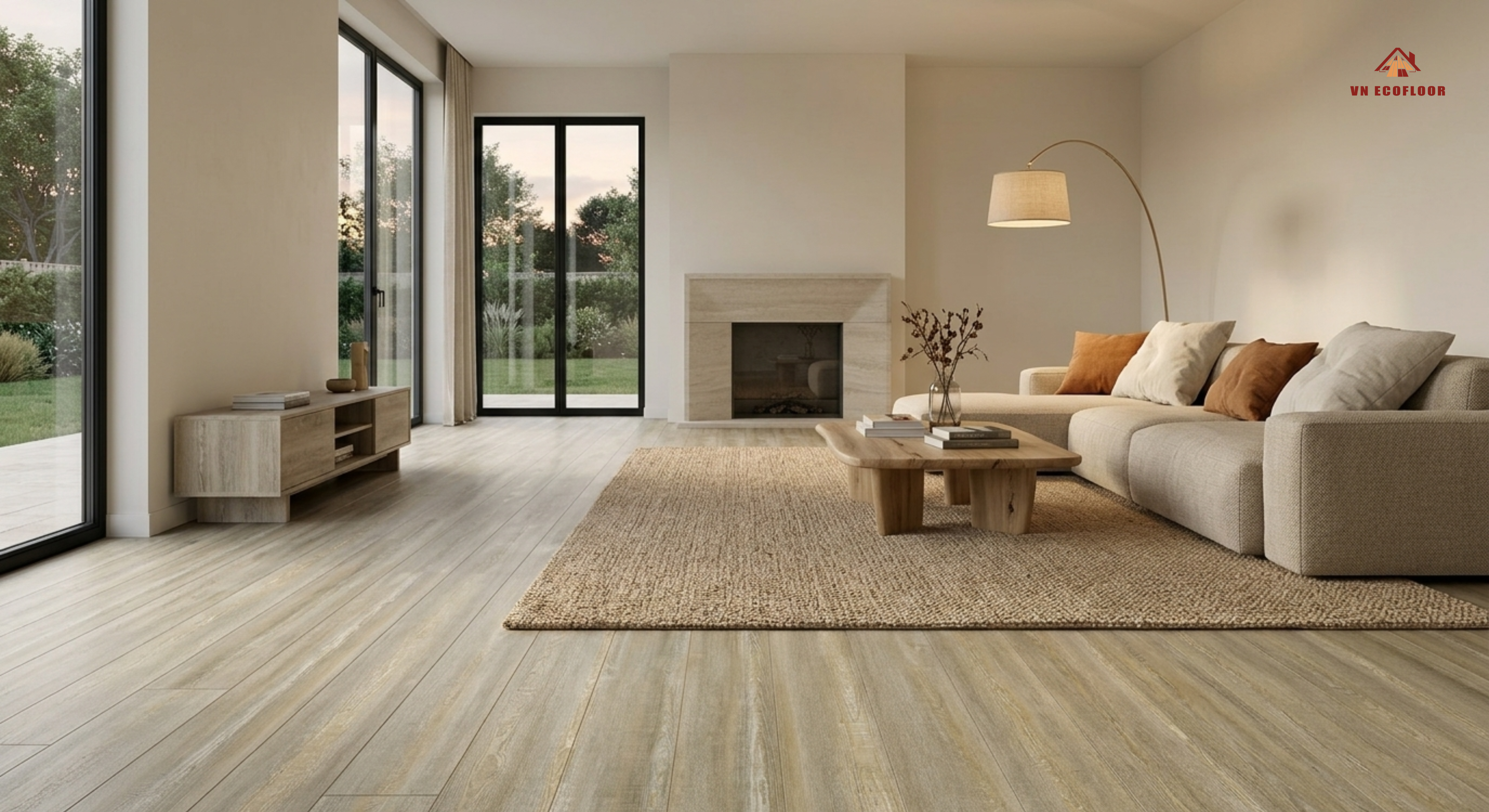
An OEM flooring manufacturer produces flooring products according to the buyer’s specific requirements and brand specifications. Instead of selling generic products, the manufacturer customises the flooring so that it can be marketed under the buyer’s own brand:
- Branding: Using the buyer’s logo and brand name.
- Custom Design: Tailoring color films (wood grain, stone, or marble patterns) and textures.
- Custom Packaging: Designing boxes and labels specifically for the buyer’s market.
This OEM model allows flooring brands, distributors, and importers to focus on marketing, sales, and distribution, while relying on the manufacturer’s technical expertise, production capacity, and quality control systems to deliver high-quality flooring products.
2. Why Buyers Need an OEM Flooring Quality Checklist
Lack of a strict flooring quality control process also means that buyers usually experience the following:
- Durability Failures: Floors shift or delaminate on a monthly basis.
- Wrong Wear Layer: May be thinner than specified (for example, 0.3mm instead of the advertised 0.5mm).
- Batch Variation: Varying clicking systems make it impossible to install.
- Logistics Problems: Destroyed packaging or lack of timely delivery.
A business checklist reduces risk in a large order, ensures global standards adherence, and is the basis upon which a long-term brand equity can be created.
3. Top 5 OEM Flooring Quality Checklist for Buyers
3.1 Raw Material Quality
The foundation of a high-quality floor is its “DNA”—the raw materials. Check the following when auditing an OEM manufacturer of flooring:
- Virgin PVC vs. Recycled Plastic: To be more stable and health-safe (Free of formaldehyde), make sure the SPC core comprises virgin resin.
- Calcium Powder Ratio: Ratio of limestone and stabilizer to determine the density of the core.
- Wear Layer: 0.3 mm-0.7 mm (residential-heavy commercial).
3.2 Product Structure and Thickness
Accuracy is important in the SPC flooring structures. The checklist must confirm:
- Total Thickness: Be it 4 mm, 5 mm, or 6 mm, its tolerance must be one of the smallest ones (usually, it should be within the range of 0.1 mm).
- Click-Lock Strength: The profile (Uniclin or Valinge) should be sharp and strong so as not to create a gap once installed.
- Integrated Underlayment: When IXPE padding or EVA padding is needed, make sure that it is glued or bonded to the plank.
3.3 Surface Durability and Scratch Resistance
Surface performance is most important in commercial flooring or high-traffic residential flooring. An effective supplier must deliver the results of the following:
- Abrasion Test: This test measures the number of cycles that the wear layer can take to wear through.
- Scratch Hardness: Evaluating how the UV coating can withstand day-to-day scratches and pet claws.
- Stain Resistance: Making sure that everyday household chemicals do not clean the print effectively, which ensures that the flooring maintains its appearance and durability over time.
- Castor Chair Test: A specialized machine mimics the constant rolling of office chairs to ensure the surface doesn’t crack or wear down under localized pressure.
- Fire Resistance Test: Verifies fire-retardant properties, ensuring the floor is self-extinguishing and meets safety codes (typically Bfl-S1).
3.4 Waterproof & Stability Test
While “waterproof” SPC flooring is a standard claim, “Stability” is the real challenge. Your checklist must include:
- Water Immersion Test: Immersion of samples in water to examine whether they are swollen.
- Temperature Stability: Evaluating the expansion and contraction of the plank in hot and cold environments (up to 60°C). The dimensional stability should have high-quality SPC at a rate of not more than 0.1%.
- Chemical Test: This checks the floor’s reaction to common household agents (oil, vinegar, bleach). A quality floor must be stain-resistant and easy to clean.
3.5 Certification and Quality Control Process
Take care never to believe a supplier at his word. An expert flooring quality certification package must contain:
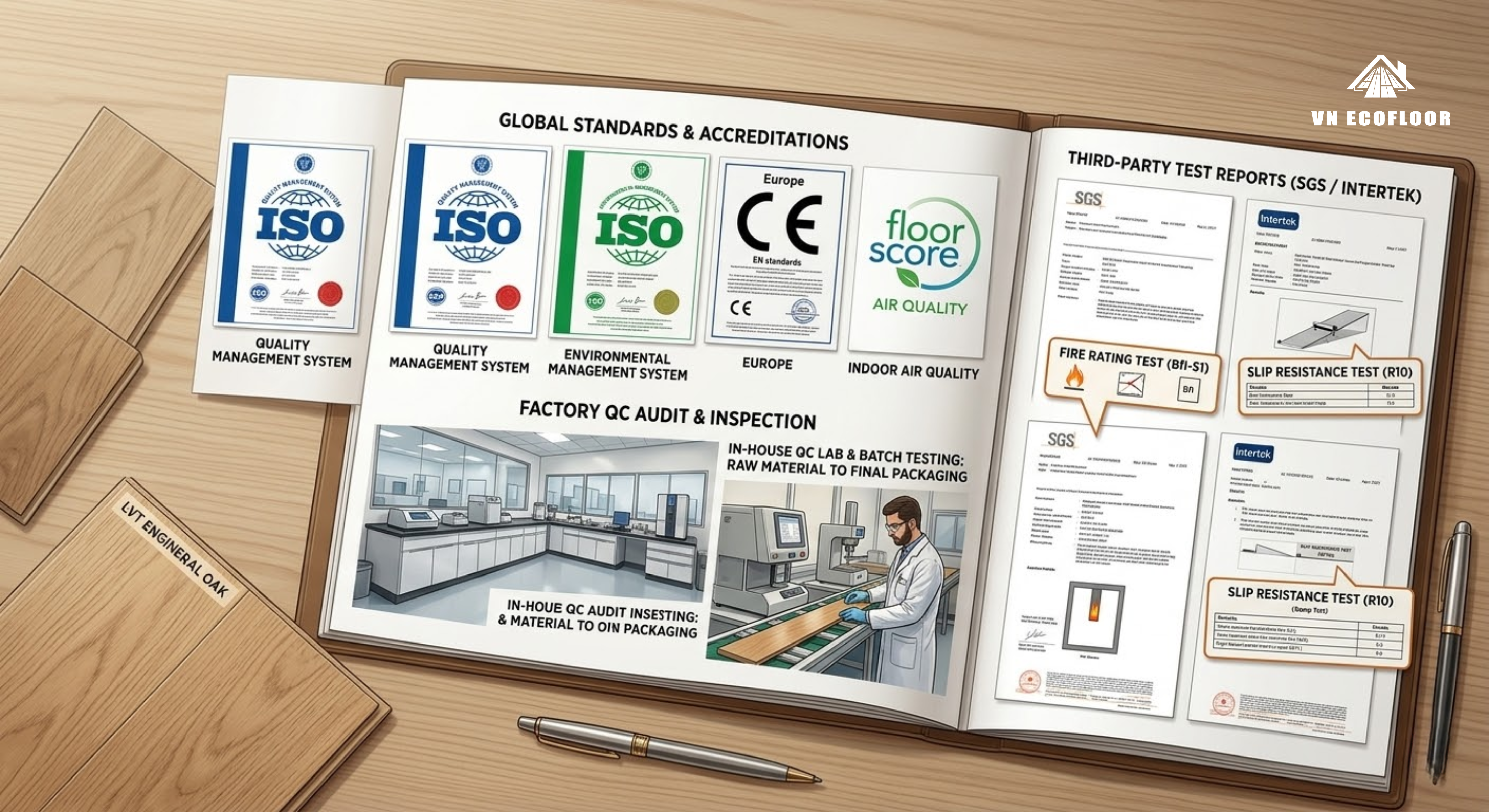
- International Standards: ISO 9001, ISO 14001, CE (Europe), and FloorScore (air quality of the US).
- Inspection of the factory: Does the factory maintain an in-house QC lab? Do they conduct QC on each batch (raw material to final packaging)?
- SGS/Intertek Reports: Recent third-party tests (fire rating Bfl-S1 and slip resistance R10).
4. Additional Tips When Choosing an OEM Flooring Supplier
Assess the business relationships other than the product:
- Capacity: Are they capable of dealing with your delivery in case you increase your orders again in the coming year?
- Experience in Export: Knowledge of international export papers and international freight packaging.
- Customization: The capability to adjust the thickness for your projects.
5. Why Choose VN Ecofloor as Your OEM Flooring Partner?
At VN Ecofloor, we not only make flooring but also help you build your own brands. We are a major manufacturer and exporter in Vietnam, and we provide the following:
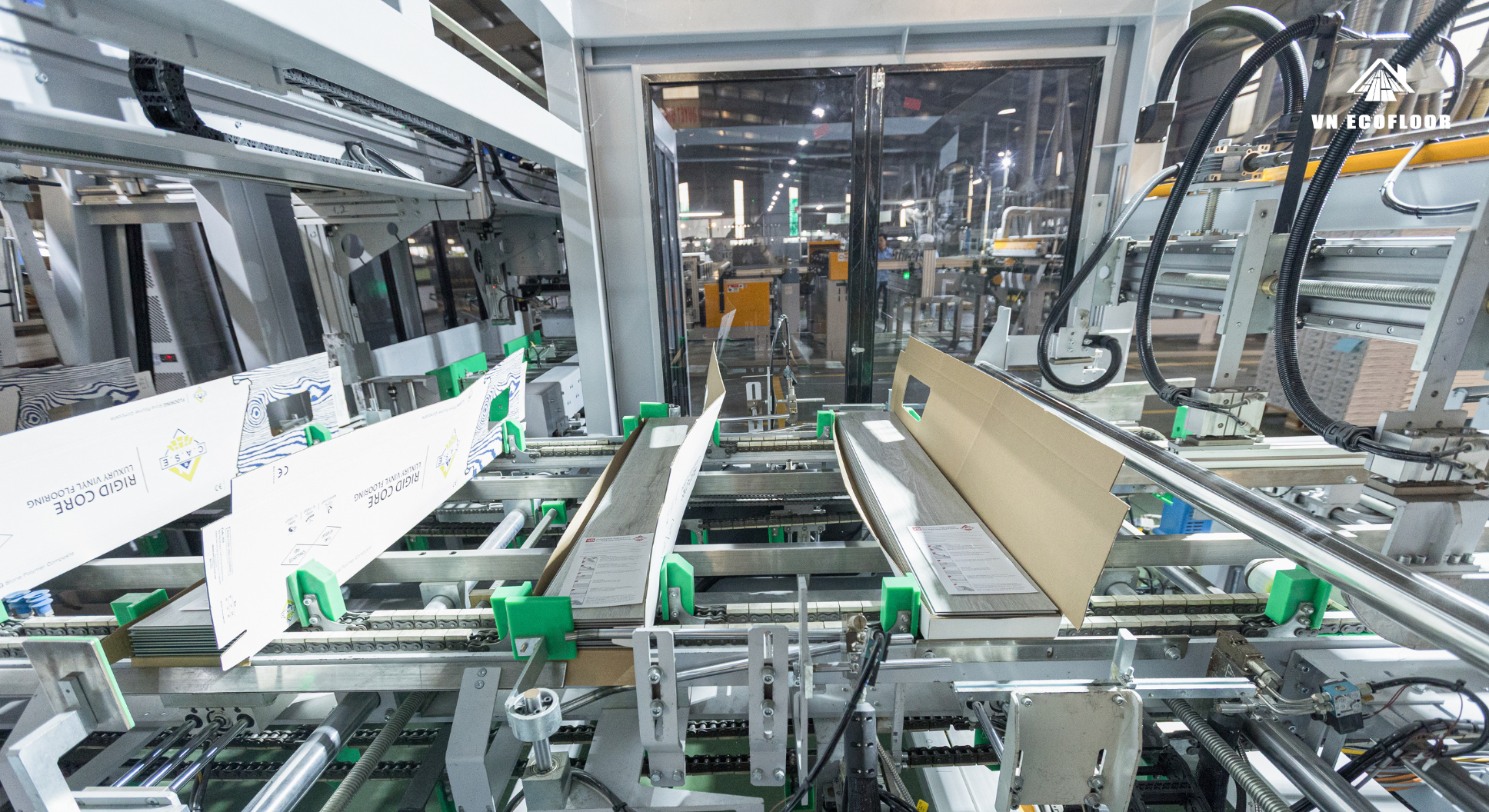
- Advanced Production: High-tech SPC lines ensuring precision in every plank.
- Strict QC System: A dedicated team overseeing every step from limestone mixing to click-milling.
- Comprehensive OEM Services: From customized thickness to private label packaging design.
- Global Compliance: Products tested and certified for the most demanding international markets.
- Competitive Pricing: Direct-from-factory rates with optimized supply chain costs.
Ready to launch your own flooring brand? > Contact VN Ecofloor today to get your OEM flooring quotation and sample kit. Hotline/ WhatsApp: +84 88 801 81 28
6. Conclusion
A detailed OEM flooring quality checklist is the best insurance policy for your business. By focusing on raw material quality, product structure, surface durability, stability, and certifications, you can avoid the common pitfalls of international sourcing.
Choosing the right OEM flooring manufacturer is the most critical step toward long-term success. Partner with a factory that values quality as much as you do.
FAQs
- What is OEM flooring manufacturing?
OEM flooring manufacturing refers to a type of business model whereby a manufacturing facility would manufacture flooring products to the specifications of a buyer and sell them under the brand name of the buyer. One participant is the producer, who has the responsibility of production and the other is the consumer, who is interested in marketing, branding, and distribution.
- What are the most popular types of flooring manufactured using OEM?
The SPC flooring, vinyl flooring (LVT) and laminate flooring are the most popular products in the OEM flooring industry. They are popular materials for residential and commercial purposes, as they are very durable, waterproof and simple to install.
- What are the ways that buyers would confirm the quality of OEM flooring prior to making a bulk purchase?
Buyers are supposed to demand samples of the products, third-party and factory testing reports, and certifications. It is also recommended to check key factors such as raw material quality, wear layer thickness, click-lock system, and dimensional stability before confirming a large order.
- What qualifications is a reliable OEM flooring manufacturer supposed to have?
A professional flooring manufacturer is supposed to offer internationally recognized standards, including, but not limited to, ISO 9001 (quality management) and ISO 14001 (environmental management), CE certification, and indoor air quality FloorScore. International buyers also usually demand the third-party testing reports prepared by SGS or Intertek.
- What is the significance of the wear layer thickness of vinyl or SPC flooring?
The wear layer cushions the decorative surface of the flooring against scratches, stains and day-to-day wear. A heavier wear layer (say 0.5mm or 0.7mm) is more durable and so is appropriate to commercial space or a heavy-traffic area.
- What steps do buyers take to identify a suitable OEM flooring manufacturer?
Some of the aspects that buyers should consider include manufacturing capacity, quality control systems, experience in exportation, customization, and product certifications. Collaborating with a stable manufacturer can be used to guarantee the quality of products and a brand’s success in the long run.