

Introduction
Flooring technology has changed fast over the last few decades to make vinyl a low-end substitute and a leading candidate in residential and commercial building works. The popularity of vinyl flooring in the modern day has been attributed to its flexibility, durability, and impressive capacity for imitating such natural products as hardwood and stone. Nevertheless, the number of products available in the market in terms of variety is overwhelming to consumers with regard to vinyl products.
Two terms frequently encountered in the current landscape are “Traditional Vinyl” (often referred to as standard LVT or LVP) and the newer, more advanced “SPC Vinyl“. Although they have a similar base material—polyvinyl chloride (PVC)—the structural make-up and the performance traits are very different. When deciding between them, you have to know what you need in your particular space, your available fixed budget, and your long-term life. This article provides an in-depth comparison to help buyers navigate the choice between SPC and traditional vinyl flooring.
Understanding Vinyl Flooring
In essence, any kind of vinyl flooring is a synthetic product with a goal of providing durability and water resistance at a fairly affordable cost. It cannot be easily distorted with water like natural wood, nor is it as unkind as ceramic tile and provides a certain share of warmth and softness underfoot.
The sheet vinyl used in manufacturing way back in the past is long gone. The engineers of the floors make multi-layered structures today that help in making them more stable, wear-resistant, and realistic. The sole significant distinction between factors of different kinds of modern vinyl is virtually all within the layer of the core—the core of the plank or tile.
What is SPC Vinyl?
SPC is an acronym for Stone Plastic Composite (or, in some cases, Stone Polymer Composite). They are the newest manufacturing technology of vinyl flooring, frequently classified under the umbrella of rigid core. The purpose of developing SPC was to overcome the shortcomings of other traditional vinyls, especially dimensional stability and dent resistance.
The Structure of SPC Vinyl
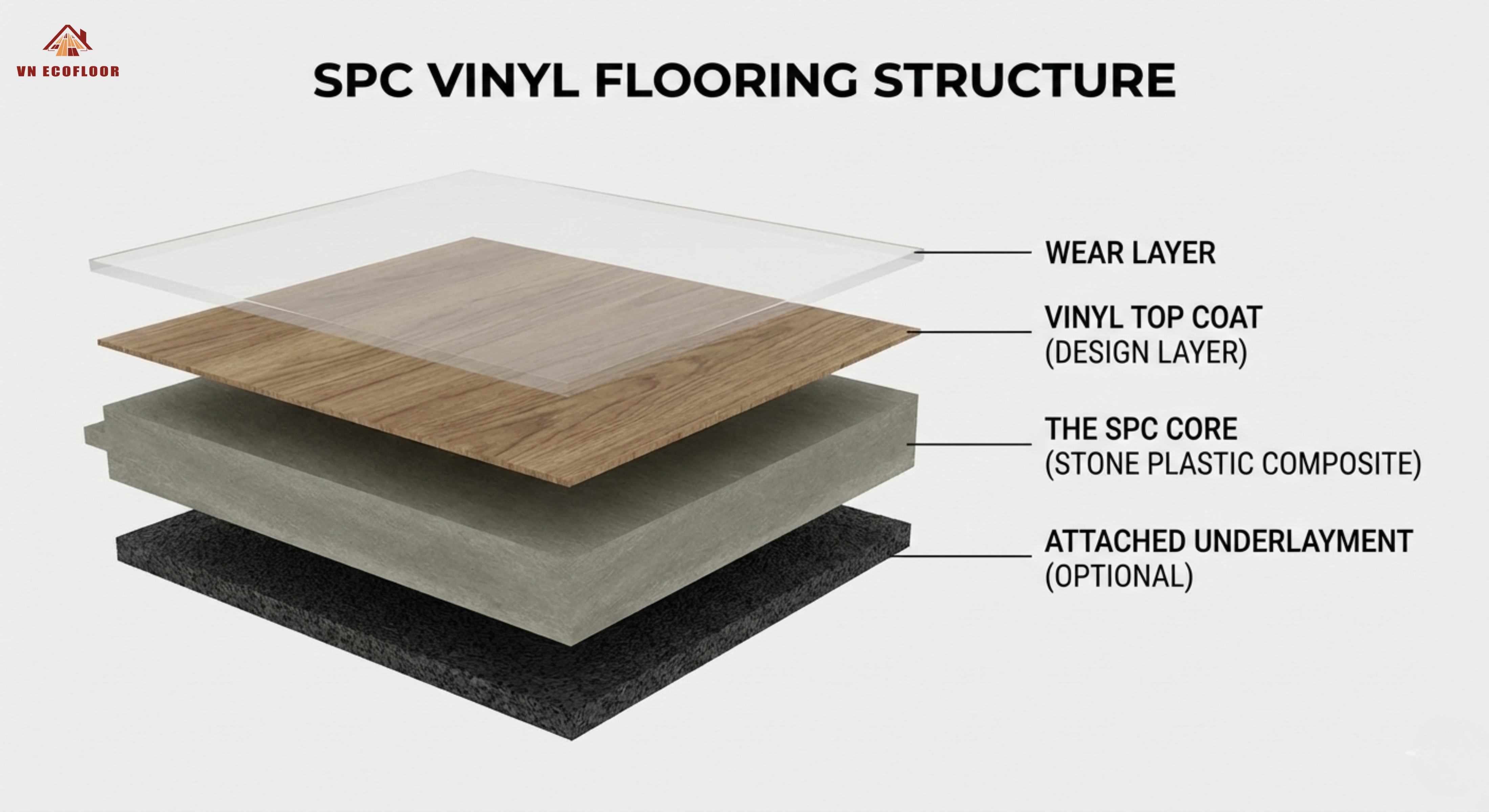
SPC flooring typically consists of four to five distinct layers engineered for maximum performance:
- Wear Layer: The topmost, transparent coating that resists scratches, stains, and fading. High-quality SPC usually features a thick commercial-grade wear layer.
- Vinyl Top Coat (Design Layer): A thin layer of vinyl featuring a high-definition photographic print of wood grain, stone, or ceramic patterns.
- The SPC Core: This is the key characteristic. It is a thick and solid compound composed of mixing the powder of limestone, polyvinyl chloride, and stabilizers. This is a very rigid, heavy, and waterproof core.
- Attached Underlayment (Optional but common): Many premium SPC products come with a pre-attached foam or cork backing to improve sound insulation and add slight cushioning underfoot.
What is Traditional Vinyl?
When we refer to “Traditional Vinyl” in the context of modern planks and tiles, we are generally referring to standard Luxury Vinyl Tiles (LVT) or Luxury Vinyl Planks (LVP) that predate rigid core technology. While still a multi-layered product, its core construction makes it fundamentally different from SPC.
The Structure of Traditional Vinyl
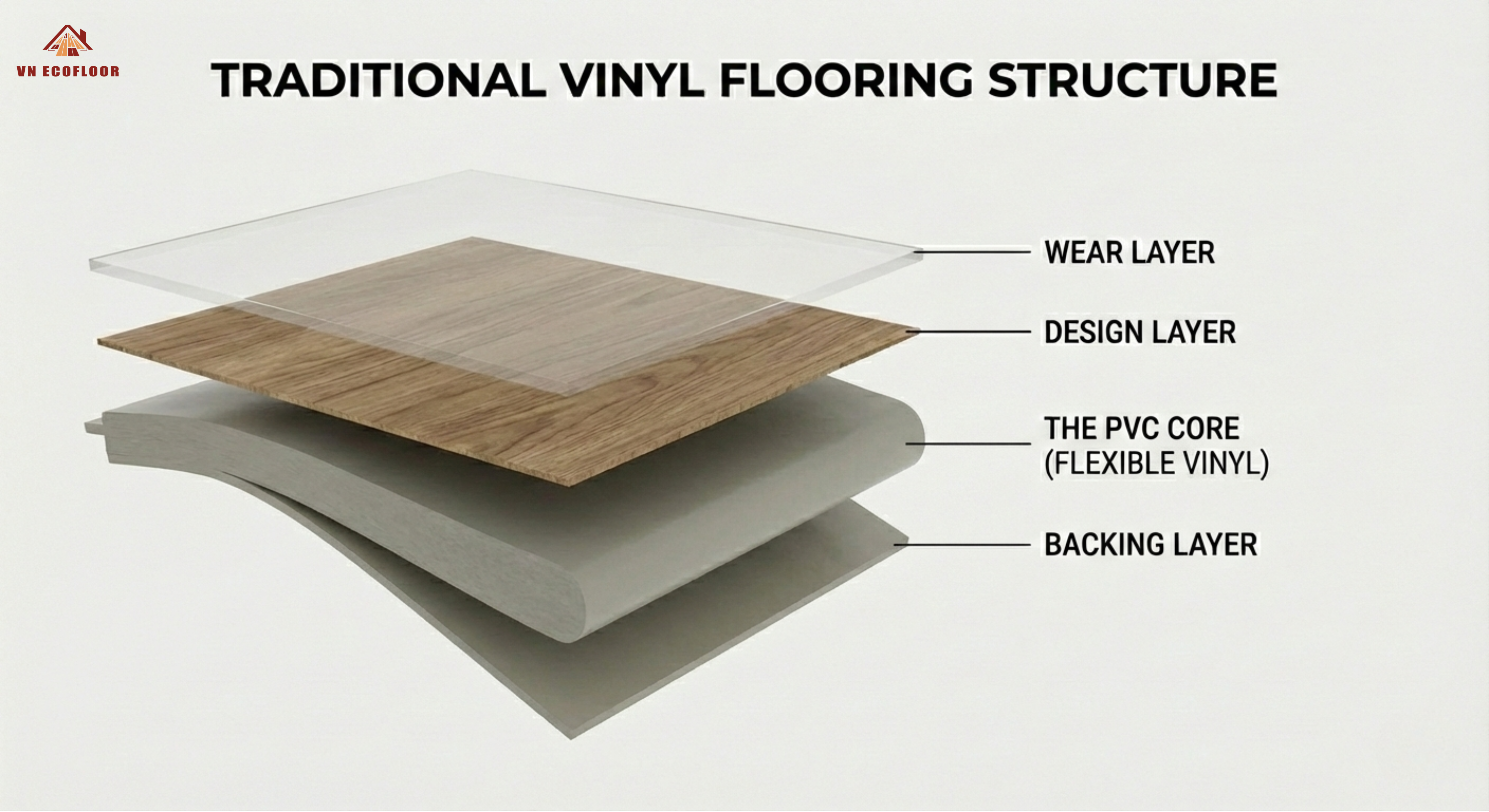
Traditional vinyl is characterized by its flexibility. Its layers generally include:
- Wear Layer: Similar to SPC, a protective top coating against daily wear and tear.
- Design Layer: The photographic image provides the aesthetic.
- The PVC Core: Unlike the rigid limestone core of SPC, traditional vinyl utilizes a 100% vinyl core, sometimes reinforced with a fiberglass mesh for added stability. This core is softer, lighter, and pliable. You can easily bend a traditional vinyl plank in your hands.
- Backing Layer: A final vinyl layer that adds structure and serves as the foundation for the adhesive.
Installation Methods
The dissimilarities in the structures between SPC and traditional vinyl are what determine the major forms of their installation, which affect the cost and the complexity of the undertaking.
Installation Techniques SPC vinyl
It is practically only engineered as a floating floor. Since the core is hard, designers are able to design stable and accurate click-lock systems on the plank edges.
- Click-Lock System: Planks fit to each other and do not require glue or nail stabbing. This renders SPC a very appealing choice with regard to DIY tools, as it can be assembled in a comparatively shorter period of time.
- Subfloor Forgiveness: SPC is a sturdier product that is also more tolerant of small defect fixations in the subfloor as compared to traditional vinyl. It will bridge small gaps or waves rather than conforming to them.
Conventional Vinyl Installation Systems
Although certain traditional LVT has click-lock systems, it is less strong because the material is flexible. The most common methods are:
- Glue-Down: Most of the conventional vinyl planks use a complete subfloor pressure-sensitive adhesive to the subfloor. This forms an everlasting connection and is usually used in a heavy commercial environment to avoid any movement.
- Loose-Lay: There are thicker traditional vinyl products that use friction and weight, thus requiring glue only around the perimeter of the room.
- Subfloor Preparation: Glue-down installation must be applied to a smooth and clean subfloor. Since traditional vinyl is flexible, any debris, bumps, or dips underneath will eventually “telegraph” (show through) to the surface.
Durability and Maintenance
When evaluating longevity, the core construction is the deciding factor.
Comparing Durability: SPC vs. Traditional
The following table outlines how these two types stack up against common stressors:
| Feature | SPC Vinyl Flooring (Rigid Core) | Traditional Vinyl Flooring (Flexible Core) |
|---|---|---|
| Dent Resistance | Superior. The dense limestone core is highly resistant to impact and heavy furniture loads. | Moderate. The softer PVC core can compress under heavy objects, leaving permanent indentations. |
| Water Resistance | Excellent. The product itself is 100% waterproof. | Excellent. The product itself is 100% waterproof. (Note: Glue bonds can sometimes be affected by standing water). |
| Dimensional Stability | Superior. Minimal expansion/contraction due to temperature or humidity changes. | Moderate. More susceptible to expansion and contraction in environments with varying temperatures. |
| Scratch Resistance | Equal. Dependent entirely on the quality and thickness of the wear layer (measured in mils), not the core type. | Equal. Dependent entirely on the quality and thickness of the wear layer. |
| Comfort Underfoot | Firm. Feels harder, similar to tile or real hardwood. | Softer. The flexible core provides more cushion and warmth underfoot. |
Maintenance Requirements for Both Types
You’ll keep either floor looking new by sweeping daily, vacuuming without a beater bar, and damp-mopping weekly with a pH-neutral cleaner; avoid abrasive pads and oil-based soaps. For high-traffic homes, use 18-20 mil wear layers and place mats at entries to limit grit. Clean spills within minutes to prevent staining at seams if installed loosely, and follow manufacturer guidance on steam mops and harsh chemicals to preserve the wear layer.
Maintenance At-a-Glance
| Cleaning Frequency | Daily sweeping; weekly damp-mop; deep clean 6-12 months. |
|---|---|
| Recommended Tools | Soft-bristle broom, vacuum without beater bar, microfiber mop. |
| Cleaners to Avoid | Abraders, ammonia-based or oil soaps; steer clear of harsh solvents. |
| Spill Response | Wipe up liquids immediately; for oils, use manufacturer cleaner to avoid residue. |
| Protective Measures | Use mats, chair pads, and felt under furniture; trim pet nails regularly. |
For more practical guidance, if you have pets or rolling chairs, choose at least a 12-20 mil wear layer and use a chair mat under casters; a 2019 multi-family housing study showed floors with 20 mil wear layers lasted noticeably longer under heavy traffic. You should avoid steam mops on glued installations and replace entry mats every 2-3 years if they trap sand. Routine preventive steps cut repair needs and help warranties remain valid.
Maintenance Details for Specific Needs
| Pet Owners | Use 20 mil wear layer, trim nails, clean urine quickly to avoid odor traps. |
|---|---|
| High-Traffic Zones | Choose SPC or high-grade LVT with 12-20 mil and add entrance runners. |
| Rolling Furniture | Use heavy-duty casters, chair mats, and regular inspections for wear. |
| Installation Impact | Click-lock SPC tolerates subfloor imperfections; glued LVT may require more prep. |
| Long-Term Care | Follow manufacturer cleaning intervals and avoid steam mops unless certified. |
Aesthetics and Design Options
Due to the high level of digital printing technology, both forms of flooring have amazing aesthetic opportunities.
Design Versatility of SPC
SPC will usually be the upper end of the market, and its graphics will tend to match that. Manufacturers frequently utilize “Embossed-in-Register” (EIR) technology on SPC planks. This method bonds the surface texture in line with the wood grain pattern beneath the surface to produce a hyper-realistic appearance and feel. Furthermore, the rigidity of the plank itself makes it feel more substantial, akin to real hardwood, when walked upon.
Visual Appeal of Traditional Vinyl
Traditional vinyl is of an immense variety, with colors, patterns, and styles; rustic wood of the barn; and marble tiles that are smooth and white. Although alternatives are available at higher quality, it is possible to find more affordable traditional vinyl with less deep textural embossing on the products compared to higher-quality SPC, which can occasionally give the materials a flatter or more plastic look when closely examined.
Suitability for Different Environments
Choosing the right floor depends heavily on where it will be installed.
Optimal Applications to SPC Vinyl
SPC is suitable for applications because of its high levels of durability, dent resistance, and temperature insensitivity:
- High-Traffic Areas: Entryways, living rooms, and busy commercial spaces.
- Homes with Pets and Kids: Resists dropped toys and pet claws effectively.
- Areas with Temperature Fluctuation: Sunrooms or cabins where temperature changes might cause traditional vinyl to buckle or gap.
- Kitchens and Bathrooms: Its superior waterproof nature and resistance to dropped pots or pans make it ideal.
Best Applications for Traditional Vinyl
Traditional vinyl remains a viable option, particularly where budget and comfort are paramount:
- Budget-Conscious Renovations: Tends to be less expensive to use in terms of the material than SPC.
- Low-Traffic Areas: bedrooms, guest rooms, or home offices.
- Areas that need comfort: In any case requiring you to stand on the floor long enough, the softer the floor is, the better. This is as long as there are no heavy items in that area.
- Perfect Subfloor Projects: When the subfloor is already perfect, then it becomes rather easy to install glue-down projects.
Conclusion
The struggle between SPC vinyl and traditional vinyl is not one aiming at discovering an ultimate winner but the discovery of the tools of the trade.
Provided that you prioritize maximum durability, hard furniture dent resistance, the naturalistic feel of hardwood, and an easy do-it-yourself installation, the additional spending on SPC Vinyl is nearly justified. It is the modern standard for resilient flooring.
Nevertheless, when you have a smaller budget, are in a low foot traffic place, or just want something softer to walk on and can afford to accommodate only glue-down installation, the Traditional Vinyl remains a respectable choice.
VN Ecofloor is one of the most successful manufacturers in Vietnam, which is known to export high-quality flooring products in the market. We are leaders in the manufacture of state-of-the-art SPC rigid core flooring that meets high standards in respect of durability, safety, and beauty across international standards. Through an investment in high technology development in manufacturing and an emphasis on quality raw materials, VN Ecofloor offers durable and beautiful solutions for flooring to international markets.
To make an inquiry on our lines of products and our exporting capabilities, contact:
Website: https://vnecofloor.com/
Email: sales@ecofloor.asia
Phone/Whatsapp: +84 88 801 81 28