


Introduction
In the realm of modern home renovation, few materials have experienced a surge in popularity quite like vinyl flooring. Vinyl has become a household item in both homes and businesses due to its adaptable skillfulness, outstanding endurance, and ability to look like natural materials such as wood and rocks. In most cases, the cost is the major attraction to the majority of homeowners; the cost of the vinyl is usually cheaper than the natural substances that it is used to imitate.
Nevertheless, this is especially true when speaking about the flooring market, wherein the proverb of getting what you pay for applies. The market is saturated with bins of luxury products that cost very little. While the allure of a bargain is powerful, opting for dirt-cheap vinyl flooring without understanding the underlying specifications can lead to disappointment, premature replacement costs, and potential safety headaches. This comprehensive guide will examine what vinyl flooring is, weigh its pros and cons, and, crucially, provide the knowledge needed to distinguish between a value-driven investment and a cheap product that is best avoided.
What is Vinyl Flooring?
At its core, vinyl flooring is a synthetic flooring product composed primarily of polyvinyl chloride (PVC). In contrast to natural flooring products such as solid wood or ceramic tile, vinyl is multi-layered to offer certain performance features.
The modern method of manufacturing is much different, and it is not the patterned linoleum of old times. Today’s vinyl flooring is multi-layered, typically consisting of a base layer for stability, a core layer for structure (and sometimes waterproofing), a photographic design layer that provides the realistic visual, and a protective top “wear layer” that guards against scratches and stains. This multifaceted construction enables one to have a product that is firm when standing on, very resistant to water, and can be flexible to nearly any house room.
All types of vinyl flooring
The first step towards making an informed choice is knowing the various types of vinyl.
Vinyl Sheet Flooring
This is vinyl flooring that comes in large, continuous, flexible rolls. It is also the best choice in the bathrooms and the laundry rooms, as it can be used to cover an entire room with minimum (or no) seams, thus offering maximum resistance to moisture. It can be the most affordable alternative.

Vinyl Tile Flooring
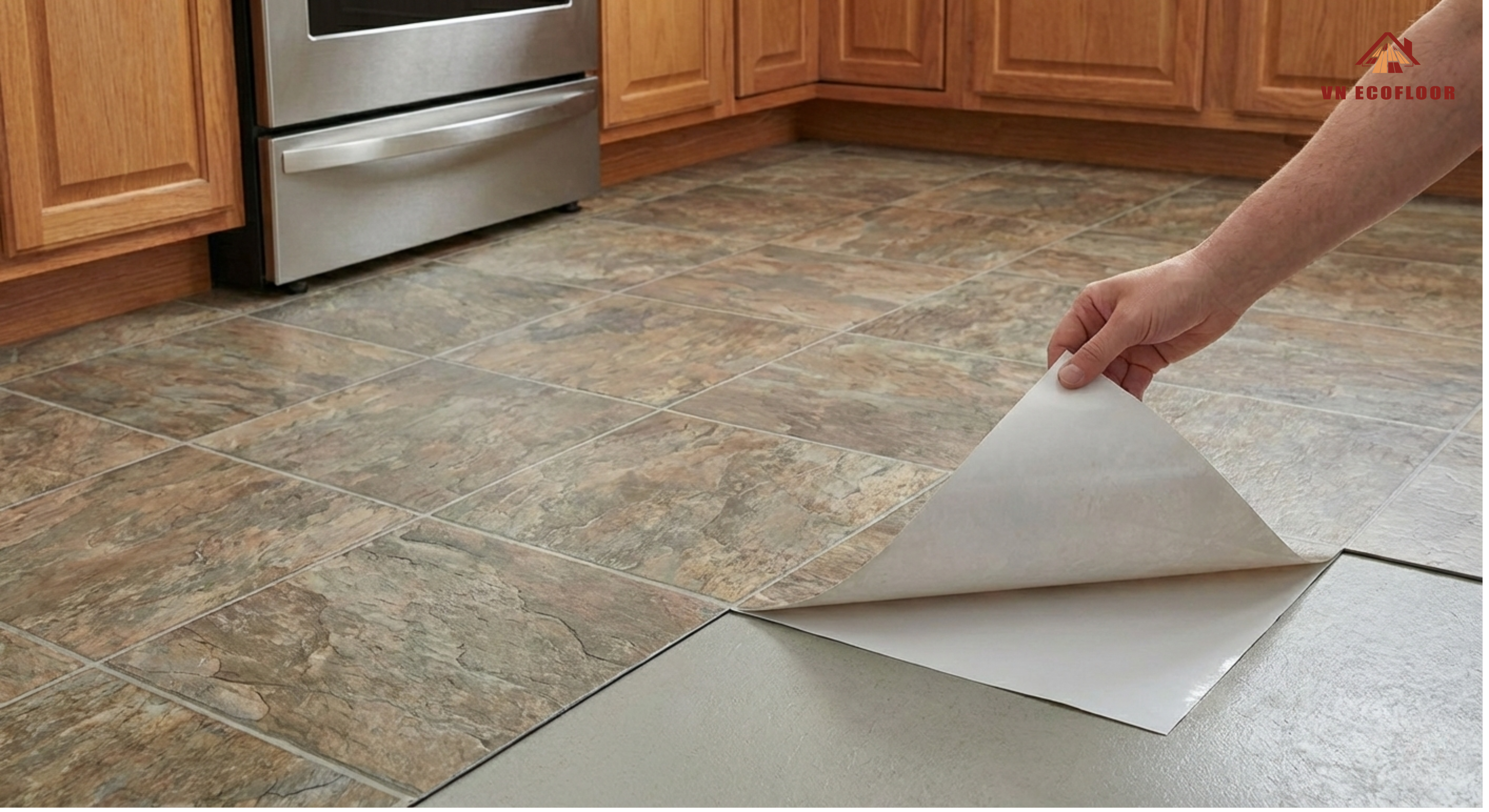
These consist of separate ceramic or rock tile representations but are made of vinyl, which is easy to install and clean. They are either glued up or sometimes peel-and-stick. They can be patterned creatively, but they contain more seams than sheet vinyl.
Vinyl Plank Flooring
This one resembles the hardwood flooring and is made up of long planks. Common vinyl planks are thinner and softer, and they typically need to be laid by gluing them down.
Luxury Vinyl Planks (LVP) and Tiles (LVT)
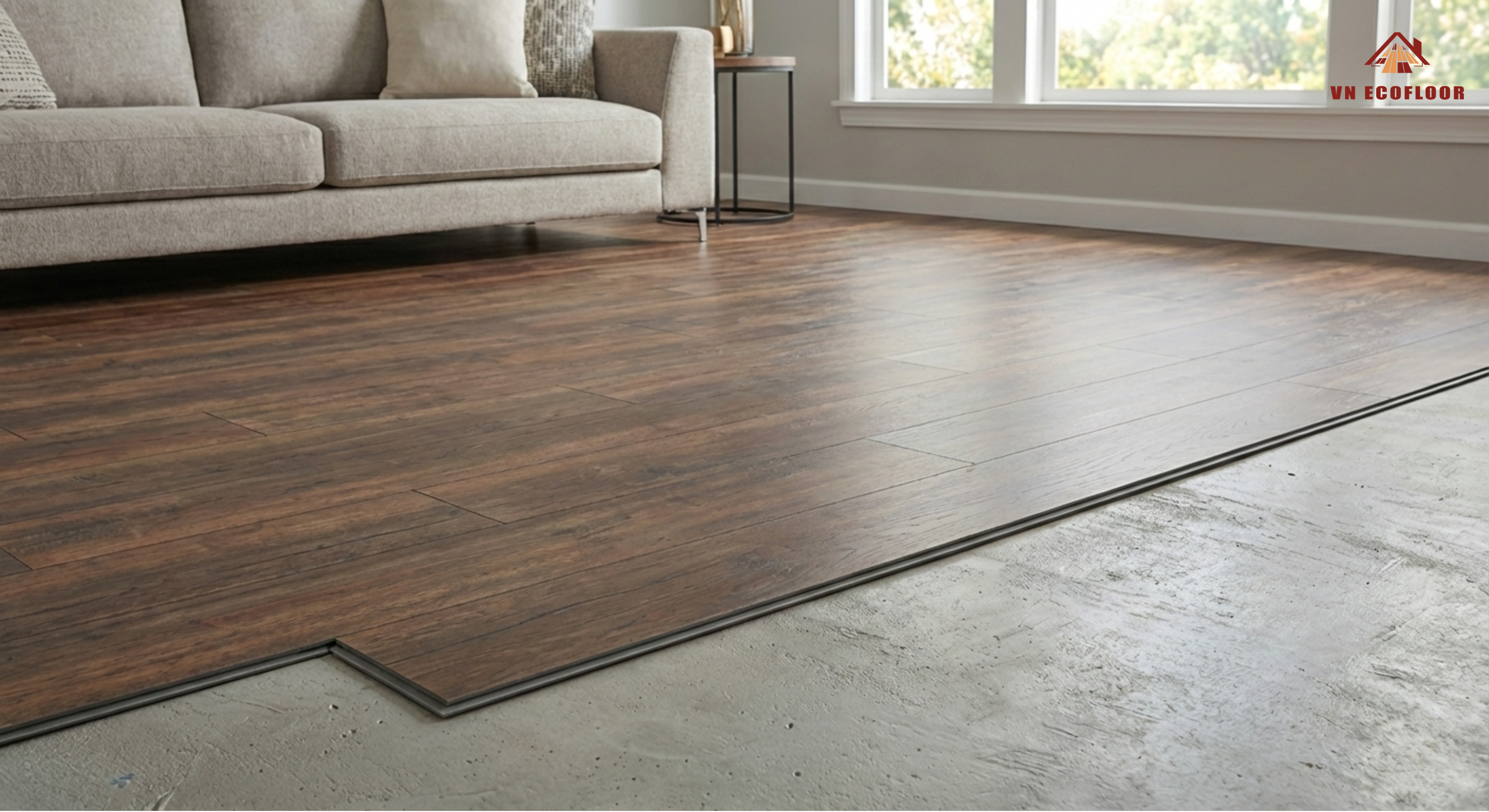
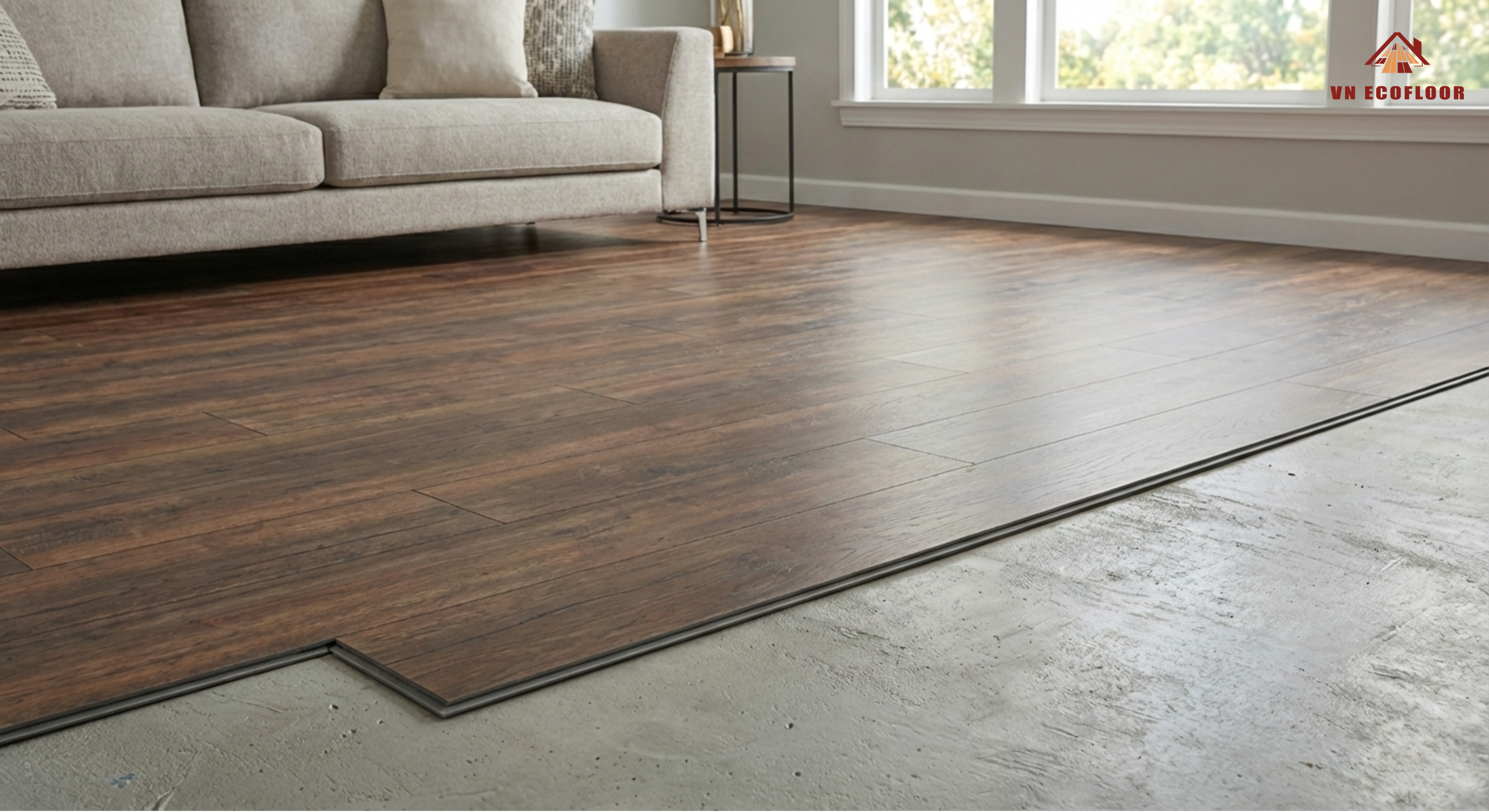
This is the standard of the industry of the moment in terms of quality. The word “luxury” can be characterized as a thicker product that is more rigidly built and embossed deeper as a way of getting a realistic texture and better wear layers. They have frequent click-lock installation systems (floating floors) and highly developed waterproof cores.
Weighing Up the Pros and Cons of Vinyl Flooring
Like any building material, vinyl flooring presents a balance of benefits and drawbacks.
Advantages:
- Water resistant: The majority of vinyl, especially LVT and sheet vinyl, is virtually waterproof; hence, this type of material can be used in a kitchen, bathroom, or basement.
- Durability: Vinyl floor of high quality will be one that can withstand heavy foot traffic, and it does not form dents and scratches as easily as real wood.
- Affordability: As a rule, the price of vinyl is much lower than that of hardwood, ceramic, or stone.
- Feel and Sound: Vinyl is so much lower and softer than tile and is generally quieter than laminate flooring.
Disadvantages:
- Subfloor Sensitivity Standard vinyl is pliable, and, therefore, any subfloor (construct or debris) imperfections (bumps, dips, or debris) will ultimately telegraph through and surface.
- Exposure to sharp surfaces: though tough, heavy furniture that drags on the floor or falls, and sharp objects can carve or scratch the vinyl cover.
- Environmental Issues: Since it is a product made of PVC, its manufacturing and disposal have environmental effects, although some manufacturers are becoming more sustainable.
How to Install Vinyl Flooring – DIY or Call in the Pros?
The installation will mostly be easy, depending on the kind of vinyl that will be used.
Luxury Vinyl Planks (LVP) that use click-lock systems are aimed at the DIY market. They do not glue to the existing subfloor, and only a moderate skill set and a few tools are needed by the handyman.
On the other hand, sheet vinyl is known in its own reputation not to be easily installed by laymen. It takes accuracy in cutting such a huge and heavy roll to fit exactly around cabinets and door trims. Additionally, there are glue-down installations of sheet or normal thin planks, which demand careful preparation of the subfloor and special methods of adhesive troweling. In such formats, it is usually the best decision to hire a professional installer so as to have a perfect, durable finish.
How Long Will It Last? The Truth About Durability
The lifespan of vinyl flooring is directly tied to its quality. This distinction is the initial significant distinction between cheap and quality vinyl.
A cheap vinyl sheet and stick peel-on tiles can easily exhibit massive wear, insignificant marking, or the release of folds within 5/10 years. On a completely different note, though, a good-quality, Luxury Vinyl Plank, which has a thick layer of wear and a hard core, can easily last 20 to 25 years even in busy houses. As one calculates the actual cost of flooring, it should also be noted that the life cycle of the flooring is calculated; cheap flooring may be bought twice.
Cleaning and Maintenance—The Easy Life
The most powerful selling point of vinyl is that it needs little maintenance. Sweeping or vacuuming every day to take off abrasive grit, followed by damp mopping with a pH-neutral cleaner, is normally enough to maintain it in a squeaky-clean appearance. It does not need refurbishing or re-waxing.
Is Vinyl Flooring Really Waterproof?
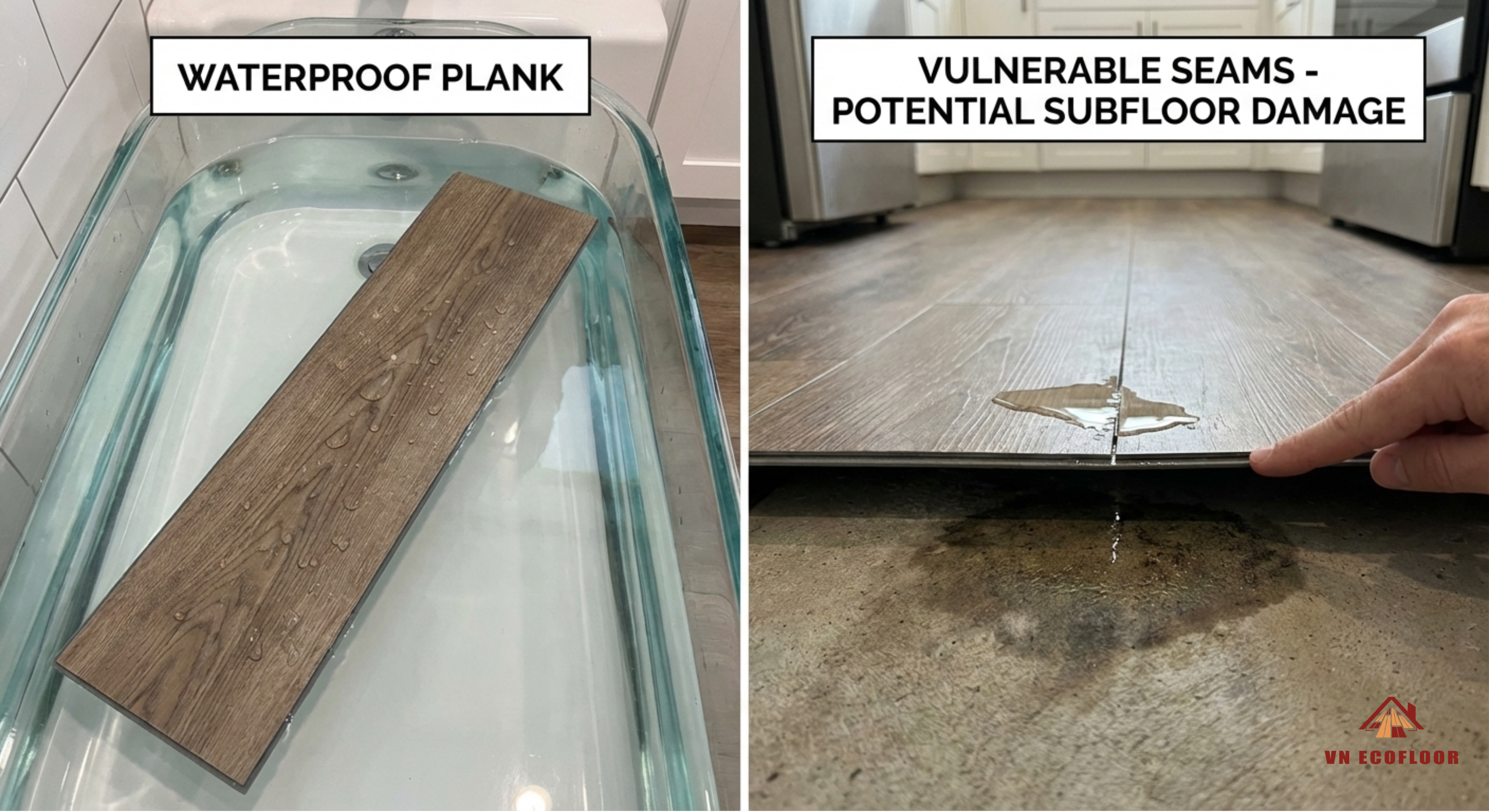
Yes, the substance is waterproof. A plank of vinyl will not swell and decay in a bathtub like a laminate or a wooden plank. Nevertheless, only when installed properly can the floor system be waterproof. In case of gapping seams, it can allow water to pass into the subfloor below, and this may result in mold or a damaged subfloor. As such, tight water seals forming quality lock mechanisms are needed.
Is Vinyl Flooring Eco-Friendly?
Formal honesty is required here: traditional vinyl flooring is not considered an environmentally friendly product due to its reliance on PVC and plasticizers.
Nevertheless, the industry is changing. There are quite a number of reputable manufacturers that produce low-emission VOCs to improve indoor air quality in flooring nowadays. Others use recycled material in their inner layers. When purchasing, consider such certifications as @FloorScore. Look out for very cheap, non-branded vinyl imported to other areas where environmental standards are not so stringent, because these could be higher in phthalates that are also harmful and may have a stronger chemical smell.
Not All Vinyl Flooring is Created Equal: What to Know Before You Buy
This is the most sensitive part for potential buyers. There is a difference between a deck that you would love for over 10 years and a deck that you regret after 1 year; it is in terms of specifications.
What Makes One Vinyl Flooring Better Than Another?
To assess quality, you would need to go beyond the pattern and study the construction spec sheet:
The Wear Layer: This is the thin top layer over the photographic design, which secures the product. This is expressed in mils (one-thousandth of an inch).
Cheap Vinyl: 6 mils or less. Would be appropriate in the very low traffic areas.
Standard Residential:
- 12 mils. Good for average homes.
- 20 mils to 27 mils, high-quality/commercial. Very vital in homes where pets or children, or very high traffic is involved. This is where you desire to invest.
Core Construction: The core determines the dent resistance and stability.
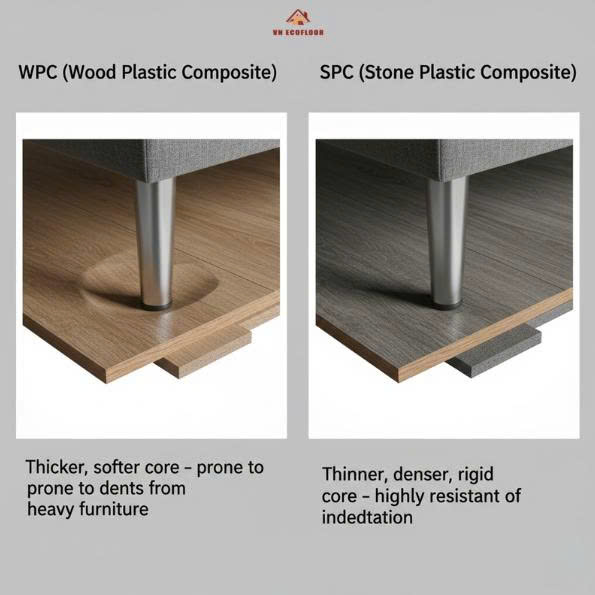
- WPC (Wood Plastic Composite): A thicker and softer core, which is quiet and comfortable but a little bit prone to deep dents.
- SPC (Stone Plastic Composite): It is also referred to as rigid core. It is slicker, denser, and so much harder. It is very tough against being indented by heavy pieces of furniture. Generally, SPC is better in durability.
Realistic Appearance and Texture: The high-end vinyl is registered embossing, in which the appearance of the surface is perfectly aligned with the wood grain or stone pattern that the surface covers. There is a tendency to apply the generic texture to the image randomly on cheap vinyl, and it is very evident that it is fake.
Cheap Vinyl Flooring: What to Know Before You Buy
Budget-friendly flooring does have a viable market; however, there is a fine line between a sensible cost and a cheap and nasty product.
The requirements of a good vinyl floor: A good vinyl floor must have a wear layer of at least 8 mil, a stable core (ideally SPC in planking), low VOC status, and a trustworthy warranty package.
Vinyl: How to know—and not to buy cheaply?
Vinyl priced low will be cut in corners. Look suspiciously at those products that display the following:
- Lack of Sufficient Layering: A wear layer that is paper-thin (e.g., 4 mils) will scratch through to the design pattern in months.
- Wrong or Weak Core Structure: Inexpensive cores are not dense. They also weld because they can withstand minimal temperature conditions, and also bend easily since they are used to handling minimal furniture loads.
- Poor Quality Raw Materials: Low-cost, or more so, recycled plastics cannot possibly have the intended stability and may produce undesirable byproducts or off-gassing chemicals.
- Ineffective Locking Systems: The locks on the cheap click-lock can easily be broken during installation or can come apart later, leaving holes that water and dirt can gather in.
FAQs
- Is it possible to lay heavy appliances on floating flooring using vinyl planks?
Yes, provided that it is a good-quality stiff core (SPC) product. But you must make sure not to clutter the living floor with huge furniture; the floor must be allowed to swell and to shrink according to temperature variations.
- Does vinyl flooring need an underlayment?
Modern luxury vinyl planks have many of them stocked with a pad (underlayment) to absorb sound and provide comfort. When yours fails to do so, you might have to buy a suitable, specific vinyl underlay. Do not apply thick foam that is to be used with laminate.
- Does radiant heat allow the installation of vinyl?
The vast majority of vinyl floors are graded to be used over hydronic radiant floors, although the surface temperature may not have a maximum (typically, it is about 85 degrees Fahrenheit or 29 degrees Celsius). There are specific guidelines that the manufacturer always checks.
- Is vinyl flooring good for the whole house?
Yes, vinyl flooring works well in just about every room. It is waterproof, good to walk on, and sturdy, but at the same time durable, making it ideal for high-traffic places in the kitchen, hallway, bathroom floor, and even the basement. It is also often used by many homeowners in bedrooms and living rooms since it is seen in stunning designs that resemble hardwood and tile. The trick here is to select good-quality vinyl with an appropriate wear layer and core strength, particularly when it would be over large or hectic areas.
- How does LVP differ from LVT?
LVP is the abbreviation of luxury vinyl plank, and LVT is luxury vinyl tile. The first distinction is appearance and shape—LVP is designed to resemble hardwood planks, whereas LVT resembles tile or stone. They are both constructed using the same material and present the same advantages of being water-resistant, durable, and easy to maintain. There is no more than that; it depends on what style you prefer in your space. Desire the Cornishness of wood without the labor? Go with LVP. Like a tile that is modern or vintage? LVT is your winner.
- How do I know if vinyl flooring is good quality?
Look for a few key features. The thicker the wear layer (12 mil or greater), the greater the protection against scratches and wear. The floor is provided with rigidity through cores, such as SPC (stone plastic composite) or WPC (wood plastic composite). In addition to this, scrutinize realistic texture and appearance. The sophisticated vinyl has even better printing that enables it to resemble actual wood or rock. And also, never overlook underlayment, which may be built in or which may be added when the installation is done; it makes a great difference in comfort and sound.
Conclusion
Vinyl flooring offers an exceptional balance of aesthetics, durability, and practicality, making it a premier choice for modern living. It is waterproof and easy to maintain; these are some of the most remarkable characteristics one can ever have to prove its popularity.
While the initial cost savings of dirt-cheap vinyl flooring can be tempting, consumers must remain vigilant. Low cost does not always mean low specification, which may be poor wear layers, weak cores, and materials of doubtful quality, which are sure to fail early, necessitating replacement. When selecting vinyl flooring, prioritize a substantial wear layer and a rigid core construction from a reputable supplier. When you spend a little more initially to get a given quality product, you can be sure that your floor is going to be a beautiful, functional addition to your place of residence for several years, not a hasty, painful, temporary solution.