


When global importers, wholesalers, or retailers source vinyl flooring, they often look closely at the wear layer thickness, design prints, or textures. But experienced industry professionals know that the real magic—and the actual longevity of the floor—happens hidden in the middle. Understanding the core helps you choose the right flooring line, reduce customer complaints, avoid warranty risks, and build a product portfolio that truly fits your market. So, what exactly is the core in vinyl flooring? Why does it matter? And how can you choose the right core for your business?
Let’s break it down simply and practically.
What is the Core in Vinyl Flooring?
Let’s look at a vinyl plank as a sandwich. On top, you have the protective UV Coating and Wear Layer. Right beneath is the High-Definition Decor Film (the face of the floor). But the thickest, most substantial part that holds everything together is the Core Layer.
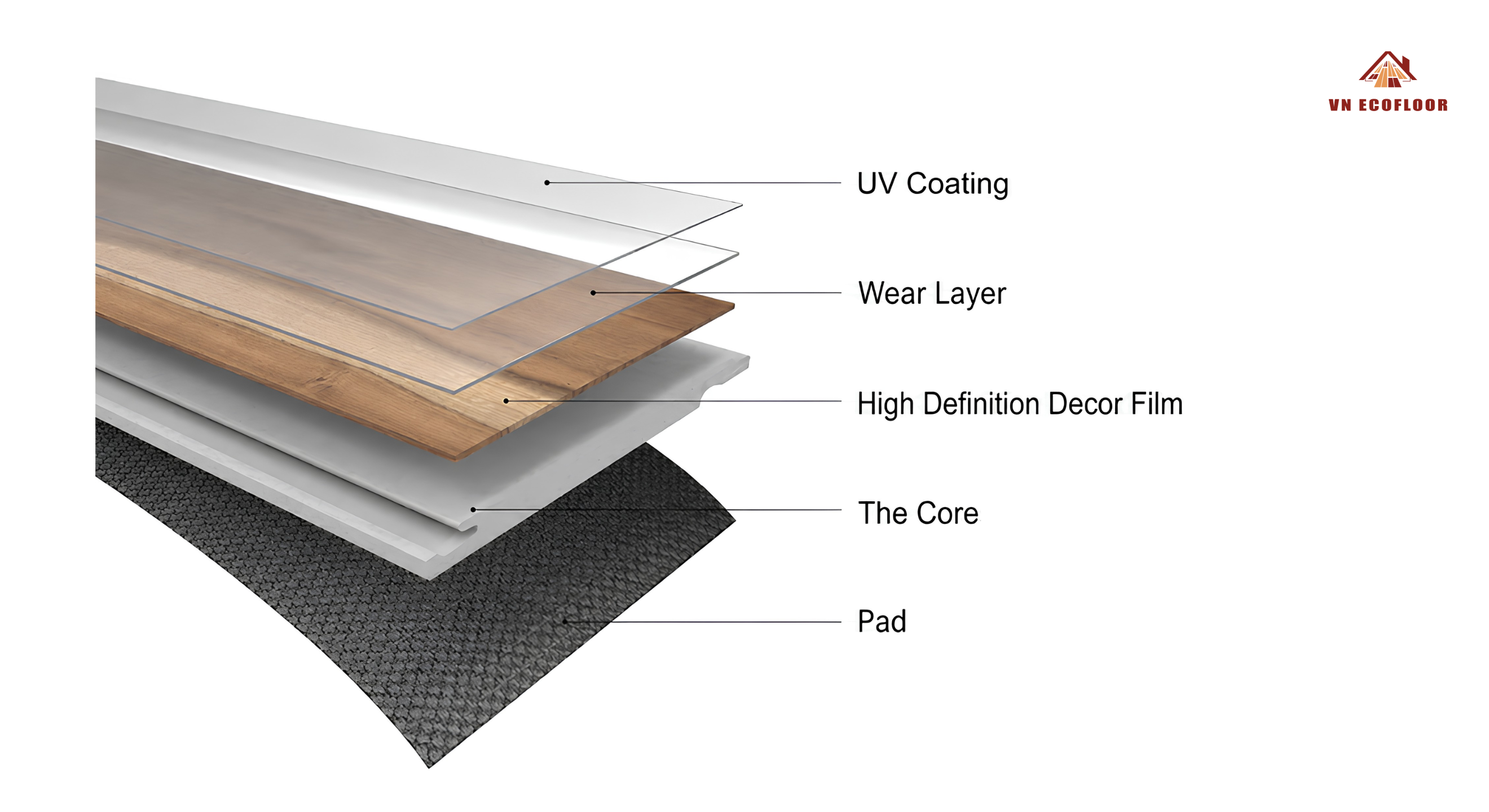
A good core helps the plank stay stable, resist movement, support the locking system, and perform well after installation. A weak core, on the other hand, can lead to common problems such as warping, shrinking, brittleness, weak click joints, or poor dimensional stability.
Why is the Core Important in Vinyl Flooring?
The core affects almost everything about how a vinyl floor behaves after installation.
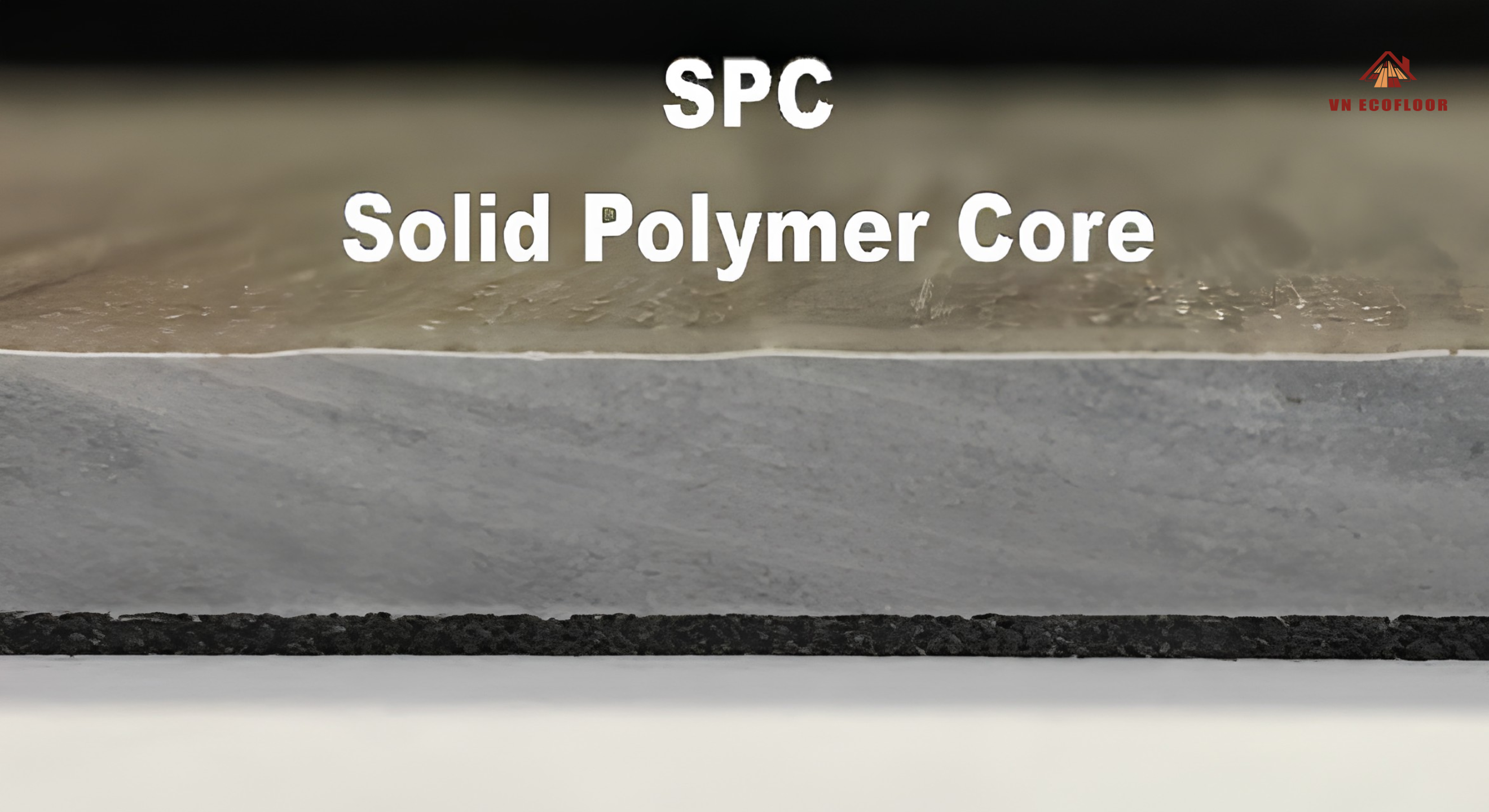
1. It Determines Dimensional Stability
Dimensional stability means how well the floor resists expansion, contraction, shrinking, or warping when temperature or humidity changes. This is especially important for markets with great seasonal changes, high humidity, or large indoor temperature differences.
2. It Supports the Click-Lock System
For click-lock SPC flooring, the locking system is milled directly into the core.
That means the strength of the click system depends heavily on the quality of the core material. If the core is too brittle, too weak, or inconsistent in density, the click edges may break, chip, or fail during installation.
3. It Affects Installation Quality
A stable core makes installation easier and more reliable. Planks with consistent density and precise structure are easier to cut, connect, and lay flat.
If the core quality is inconsistent, installers may face problems such as uneven joints, weak locking, excessive plank movement, or visible gaps after installation.
4. It Impacts Product Durability
The core helps determine how well the floor can handle daily use. A strong core supports the overall structure of the plank and helps the flooring resist pressure, movement, and general wear.
While the wear layer protects the surface, the core protects the structure. That is why both layers matter. A thick wear layer on a weak core may still lead to performance issues over time.
5. It Influences Product Positioning and Price
Different core types are suitable for different market segments. Some cores are designed for cost-effective residential flooring. Others are built for higher stability, commercial use, or premium positioning.
For wholesalers and retailers, understanding core differences helps you build a smarter product line instead of competing only on price.
Virgin Resin vs Recycled Material: Why Core Composition Matters
When you are comparing quotes from different manufacturers, you might notice a significant price gap for products that look identical on the surface. More often than not, the secret lies in the purity of the raw materials inside the core.
To create the PVC stabilizer blend for the core, factories generally take one of two paths: 100% Virgin Resin or Recycled Material.
As a business owner, understanding this choice is crucial because what saves money on paper today could cost you your reputation tomorrow.
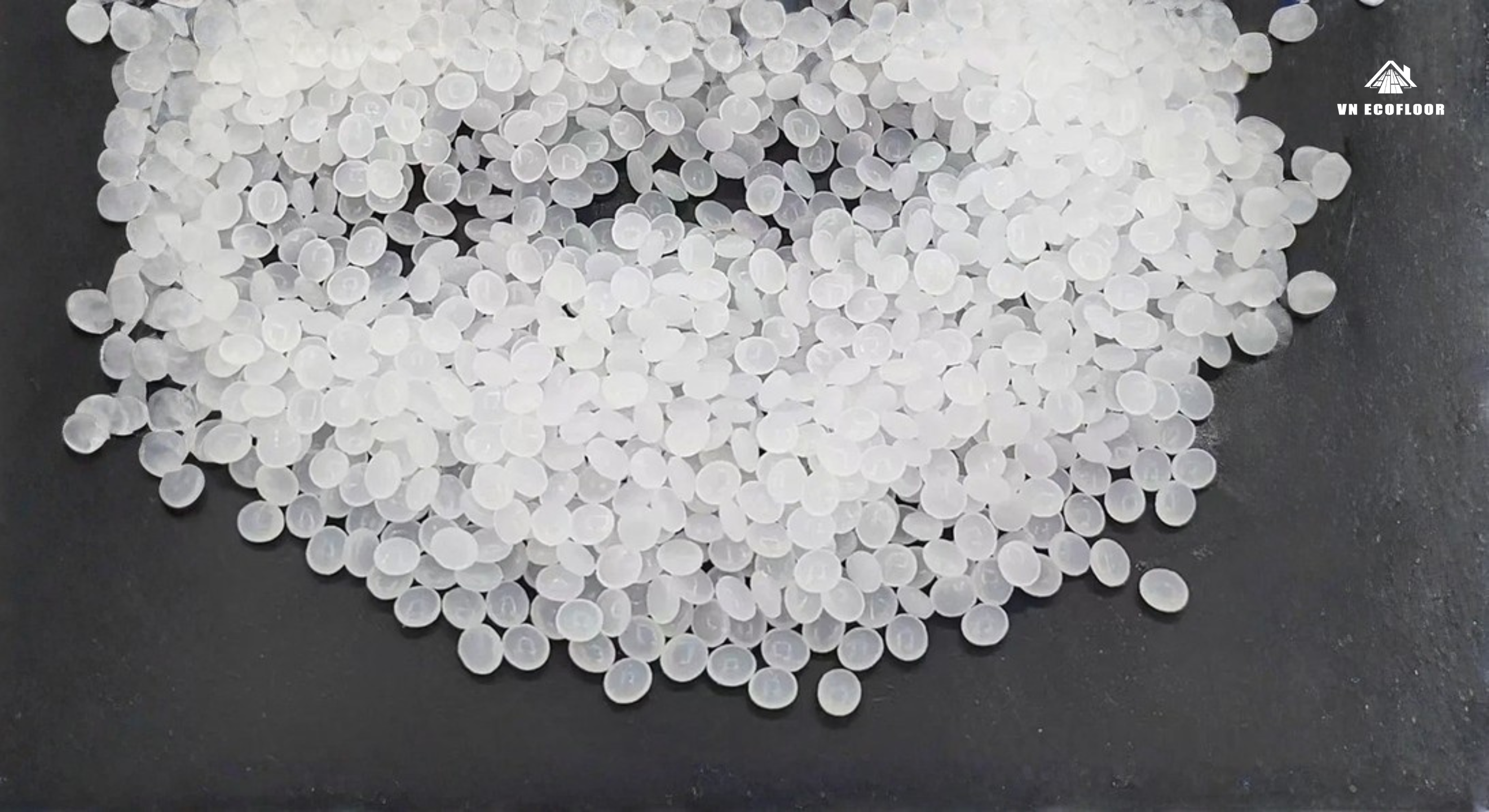
1. 100% Virgin Resin Core: The Premium Standard
Think of virgin resin as cooking with fresh, high-quality ingredients. A core made from 100% new, uncompromised PVC resin delivers unmatched structural consistency.
For global wholesalers and private-label brands, this is the gold standard because it guarantees:
- The planks react uniformly to temperature changes, drastically reducing the risk of warping after installation.
- Because the material is pure and flexible, the interlocking click tracks are resilient and won’t snap during shipping or installation.
- No hidden chemicals or impurities. This is vital for meeting strict international indoor air quality standards (like FloorScore®).
2. Recycled Material Core
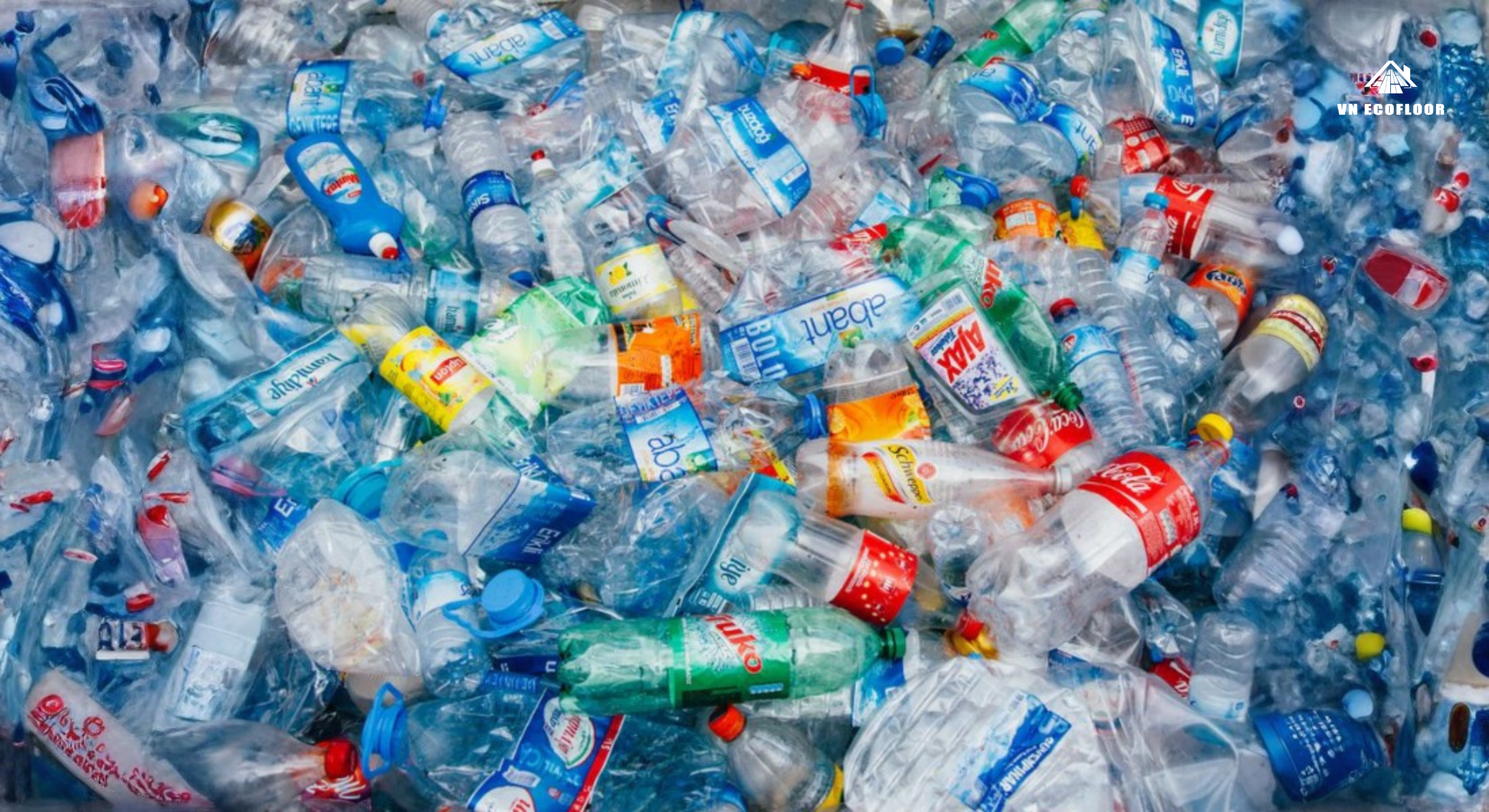
On the flip side, using recycled material is a common way to lower production costs. While eco-friendly in theory, the reality of post-industrial or post-consumer recycled plastic is unpredictable.
If the recycling source isn’t meticulously controlled, the core ends up with mixed densities, hidden impurities, or unstable chemical compositions. For your business, this translates directly into hidden risks:
- The core becomes rigid but fragile, making the click profiles prone to chipping.
- Batch Inconsistency: Container A might be perfect, but Container B might face severe dimension stability issues because the recycled plastic source changed.
- Higher warranty claims
Looking for a Vinyl Flooring Manufacturer with Strong Core Technology?
If you are looking for an OEM/ODM manufacturing partner who values core engineering as much as you do, VN Ecofloor is here to help you scale. We support customized vinyl flooring solutions for wholesalers, retailers, and private-label brands who want to build their own product line. Instead of offering only one fixed specification, we help buyers adjust different parts of the flooring structure based on their target market, budget, and product positioning.
This includes:
- 100% Virgin Resin: We utilize 100% virgin resin to eliminate the risks of brittle planks, unstable cores, or unexpected warping. This ensures your collection delivers the premium, reliable performance your brand stands for.
- Thickness Customization: From cost-effective residential options to heavy-duty commercial profiles, we adjust the plank thickness to match your target price segment, desired underfoot comfort, and specific stability requirements.
- Wear Layer & Surface Coatings: You can select the ideal wear layer thickness based on daily foot-traffic expectations, and then pair it with our advanced surface coatings. Whether your market demands standard UV protection or upgraded Ceramic Bead and Aluminium Oxide coatings, we optimize the gloss and scratch resistance to match your exact needs.
- Click-Lock Systems: To ensure fast installation and long-term joint stability, we help you pair your custom core with the right interlocking click system, reducing the risk of gaps or broken edges over time.
- OEM & Private-Label Packaging: VN Ecofloor supports fully customized packaging featuring your brand name, logo, technical specs, and local-language instructions—allowing you to launch a retail-ready flooring collection without the overhead of running a factory.
Ready to develop a vinyl flooring line with a stronger core?
Contact VN Ecofloor today to request samples and discuss OEM production options.
Hotline/WhatsApp: +84 88 801 81 28
Website: vnecofloor.com
FAQs
- What is the core in vinyl flooring?
The core is the main structural layer inside a vinyl flooring plank. It sits beneath the decor film and wear layer, helping the plank stay stable, strong, and reliable after installation. In simple terms, the surface gives the floor its look, while the core gives the floor its strength.
- Why is the core important in SPC and LVT flooring?
The core affects dimensional stability, click-lock strength, installation quality, and long-term durability. A strong core helps reduce common flooring issues such as warping, shrinking, broken click joints, visible gaps, and warranty claims.
- What is the difference between an SPC core and an LVT core?
An SPC core is usually rigid and made from limestone powder, PVC resin, and stabilizers, making it more dimensionally stable and suitable for click-lock flooring. LVT flooring is usually more flexible and is commonly used for glue-down installation, especially in residential or project-based applications.
- Why does 100% virgin resin matter in the SPC flooring core?
A 100% virgin resin core offers better material purity, more consistent density, and stronger dimensional stability. This helps reduce the risk of brittle planks, weak click profiles, warping, and batch inconsistency, making it a better option for export-grade and private-label flooring lines.
- Is recycled material core bad for vinyl flooring?
Not always, but it carries more risk if the recycled material source is not strictly controlled. Recycled cores may contain mixed plastics, impurities, or inconsistent density, which can lead to weaker click joints, unstable dimensions, and higher warranty risks.
- How does the core affect the click-lock system?
In SPC click flooring, the locking profile is milled directly into the core. If the core is strong and consistent, the click system is more likely to stay stable during installation and daily use. If the core is brittle or uneven, the click edges may chip, break, or fail over time.
- What should wholesalers check when evaluating vinyl flooring core quality?
Wholesalers should check the core composition, whether virgin or recycled resin is used, dimensional stability test results, click-lock strength, plank density, sample quality, and batch consistency. These factors help determine whether the product is suitable for long-term sales and brand reputation.