

Introduction
Wooden flooring is the gold standard of interior decoration that has been used for centuries. It is incredibly made of classic beauty, is warm to the feet, and adds sensational value to a house. The beauty of grains in natural form and the abundance of feel and touch in oak, maple, or walnut cannot be refused, and hardwood is the dream flooring of most homeowners all over the world.
Nevertheless, there is a major caveat to this natural beauty, and that is, wood is an organic material. It was once alive, breathing, and making responses to its environment, unlike its synthetic substitutes. This very property implies that even though a wooden floor seems to be rather strong in the beginning, it is actually quite resilient to damage. There is no doubt that many house owners are willing to spend a lot of money on hardwood until these products start to wear out at a rate that is much higher than believed, thereby resulting in frustration and a huge expenditure.
Understanding why wooden flooring fails is the first step toward preserving it—or knowing when it’s time to choose a more resilient alternative.
Common Signs Your Wooden Flooring is Damaged
Wooden flooring does not get damaged in a short time span; they tend to display signs of damage gradually. These early identifications would help save your floor from complete replacement.
- Scratches and Gouges: The most frequent scratches can be superficial hairline scratches to deep gouges that penetrate the finish and expose the raw wood.
- Cupping and Crowning: This is the stage at which the planks bend. The plank edges elevating themselves above the middle is known as cupping. The converse is named crowning, in which the center of the plank floor is elevated above the perimeter. The two suggest an imbalance of moisture.
- Discoloration and Staining: Dark spots typically show deep water damage or pet urine, which has penetrated the wood. Brown spots around the windows are evidence of UV damage.
- Buckling and Warping: In extreme cases, the floorboards can entirely separate from the subfloor by several inches.
- Squeaking and Cracking: Some amount of noise is normal in an old house, but a lot of squeaking is indicative of loose boards, and cracks indicate that the wood is overly dry.
What Causes Wooden Flooring Damage?
Why does such a seemingly tough material deteriorate so quickly? The primary culprits fall into three categories: moisture, environment, and physical abuse.
The Enemy No. 1: Moisture and Humidity
Wood is hygroscopic; therefore, it captures and sheds moisture in its environment.
- High Humidity/Spill: Exposing the cell to excessive amounts of water (spills, leaks, or excess humidity) causes the wood cells to swell, resulting in cupping and buckling.
- Low Humidity: When it is dry in winter, the wood dries up and shrinks, leaving cracks and spaces between planks.
Physical Wear and Tear
- Foot Traffic: The continuous walking will destroy the protective finish, hence ultimately leaving the bare wood vulnerable and liable to dirt and damage.
- Pets: Dog claws are notorious for creating deep scratches.
- Furniture: Dragging heavy tables or sofas without protection can instantly gouge the floor.
Environmental Factors
- Sunlight: Prolonged exposure to UV rays acts like bleach, fading vibrant wood colors and making the finish brittle.
- Temperature Fluctuations: Rapid changes in temperature can accelerate expansion and contraction cycles, stressing the wood structure.
How to Fix Different Types of Wooden Flooring Damage
The solution depends entirely on the symptom. Here is how to address common issues:
Fixing Surface Scratches
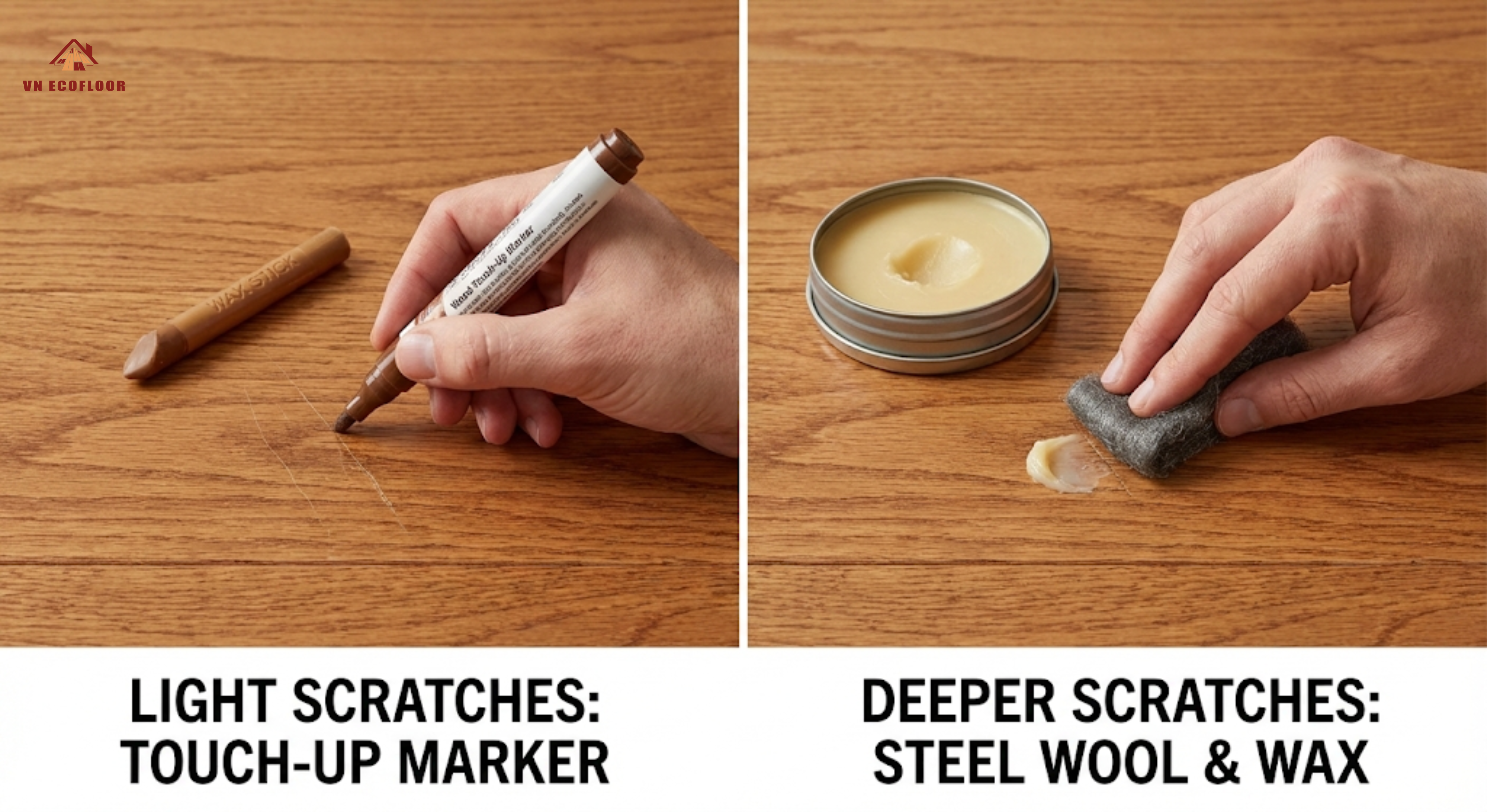
Solution: For scratches on the clear coat that are light, you can cover the damage with a wax stick or a wood touch-up marker that is the same color as the floor. On slightly deeper scratches, it is possible to buff them with fine steel wool and wood floor wax to buff them out.
Fixing Dark Water Stains
Solution: Dark spots indicate that water has reached the fibers of the wood. This can hardly be rectified through DIY. Normally, it involves rubbing the surface down to bare wood, which may be bleached with oxalic acid, and then giving the whole section a uniform finish.

Fixing Cupping (Edges Raised)
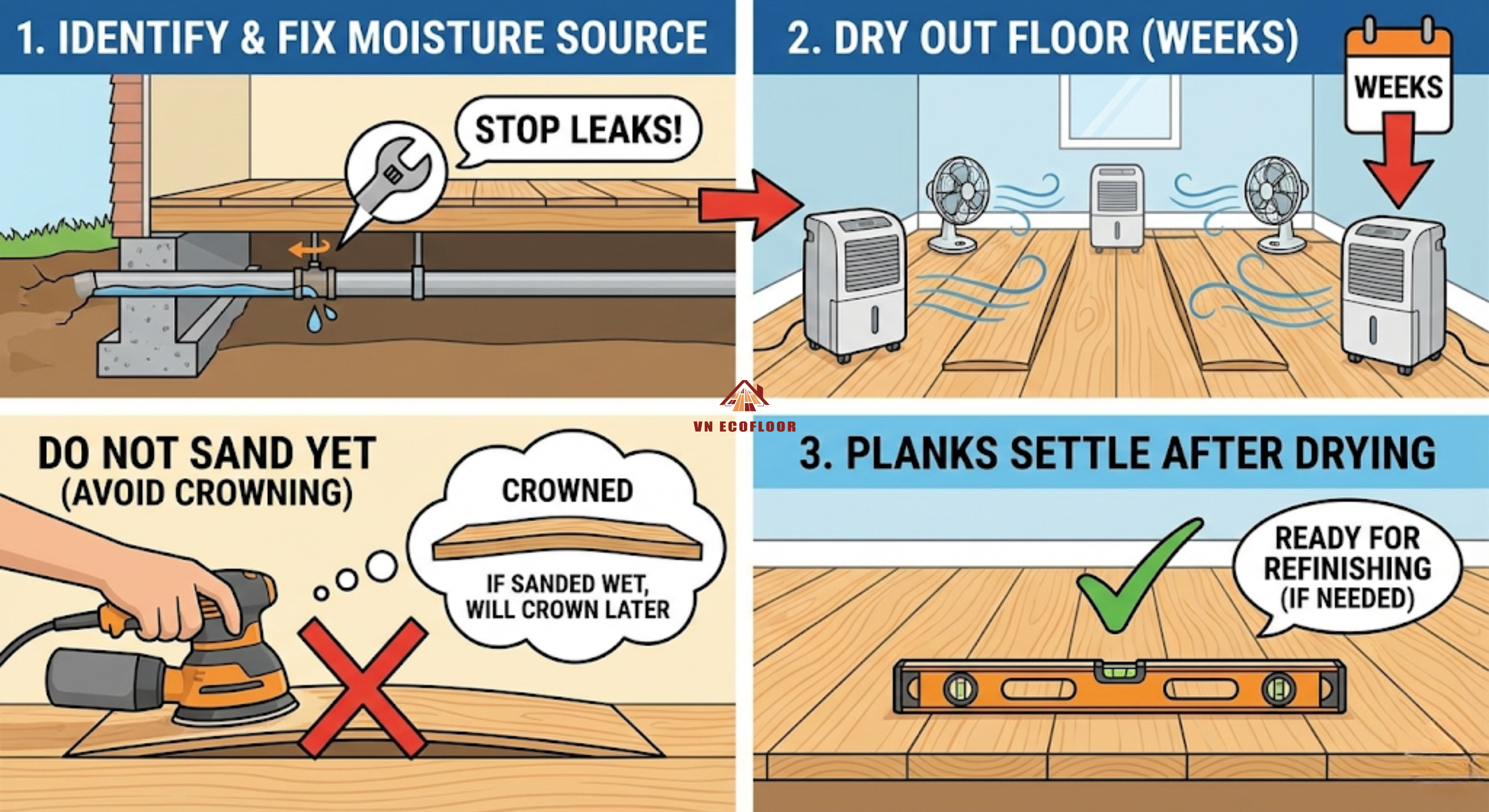
Solution: Underfloor moisture is the cause of cupping. Do not sand a cupped floor immediately. On the one hand, it is crucial to establish and eliminate the source of moisture (e.g., a damaged pipe or wet basement). Dry out the floor using dehumidifiers and fans for a number of weeks. Many times the planks will sit down after drying. If they are sanded while cupped, they will eventually “crown” when they dry.
Fixing Squeaky Floors
Solution: Squeaks usually mean movement between the wood plank and the subfloor. For a quick fix, sprinkling talcum powder or powdered graphite into the joints can temporarily lubricate the friction. The permanent fix involves securing the loose planks to the subfloor using specialized screws designed to snap off below the wood surface so they are invisible.

Tips to Prevent Future Wooden Flooring Damage
Preserving a wooden floor requires proactive diligence.
- Control the Climate: Maintain the humidity indoors between 30 and 50 percent. Humidify during the winter and dehumidify during the summer.
- Welcome mats are necessary: interior and exterior mats at each entrance to trap grit and stones smaller than the rest before they scratch the floor.
- Furniture Pads: Coat the legs of all individual pieces of furniture with felt protectors, particularly those that are relocated regularly, like chairs.
- Instant Spill Cleanup: Do not allow the water to sit on hardwood. Wipe spills instantly.
- Correct cleaning: Never use a soaking wet mop or steam cleaners on wood floors. Use only damp microfiber mops and specialized hardwood floor cleaners.
SPC Flooring – The Superior, Durable Alternative
The upkeep that is needed to ensure the beauty of real wood is high, and in cases where the family is busy with a child or pets, it is not very realistic. The result of this has been the tremendous popularity of the SPC (Stone Plastic Composite) flooring.
SPC is perceived to be the upcoming generation of vinyl flooring. It is designed in such a way that it fixes the flaws of wood. It has a hard core with a mixture of limestone powder and stabilizers.
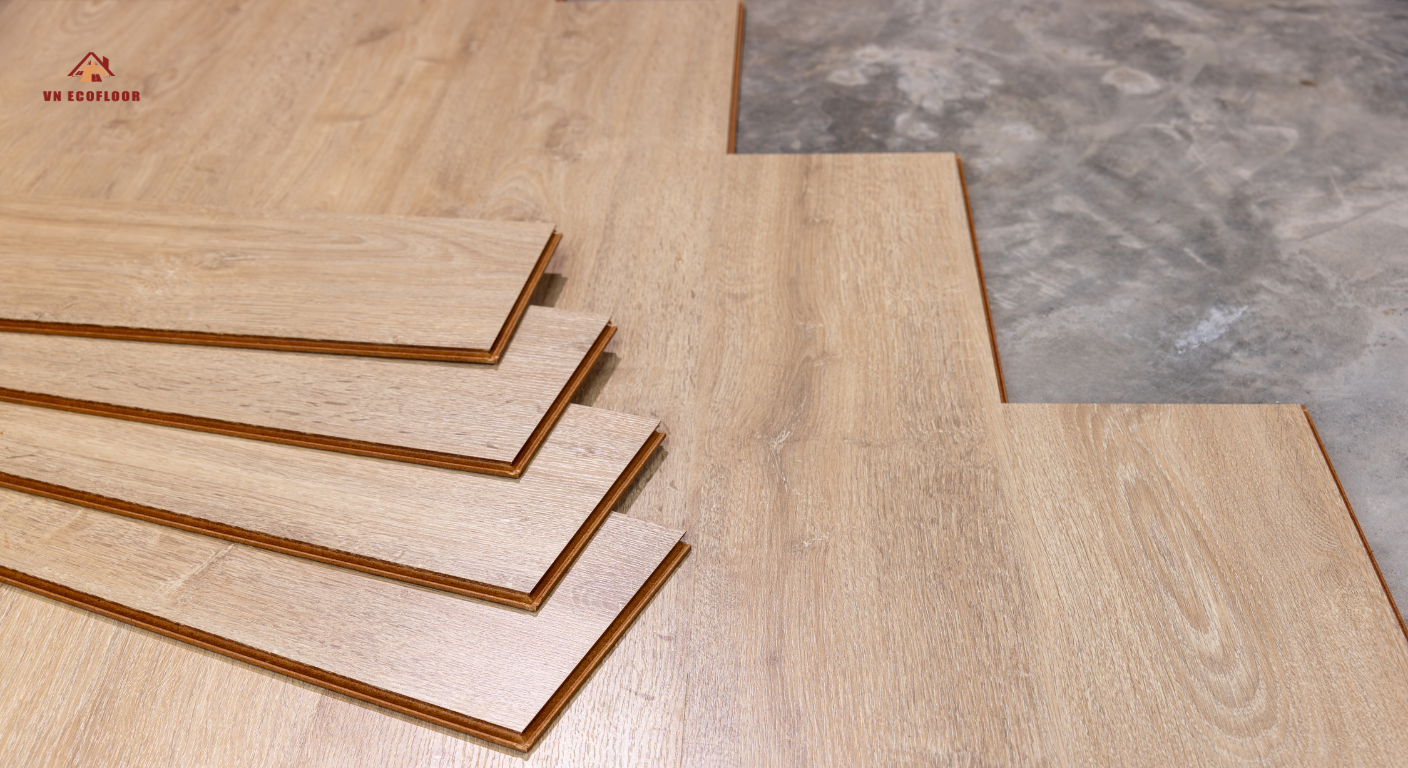
What makes SPC stand where wood falls:
- 100% Waterproof: This is the largest mental game. The SPC, in contrast to wood, is non-reactive to water. It will not swell, buckle, or cup despite being in the bathrooms, kitchen, and even the laundry rooms.
- Superior Durability: The limestone core is used to make SPC compact and immune to the effects of falling objects. Moreover, it has a wear layer of a commercial grade existing to be very resistant to scratches caused by pets and heavy passing traffic.
- Aesthetics without the Price Tag: The high-tech printing technology of Advanced SPC means that it can replicate the appearance and feel of the highest quality of hardwood (or stone) with an extremely high degree of realism, and an inventory of virtually unlimited colors is made available to the homeowner at a fraction of the price of treated wood.
- Strong and Stable: It manages heavy pieces of furniture without difficulty and is much more resistant to changes in temperature than wood.
- Safe and Environmentally Friendly: Quality SPC is frequently recyclable and contains no bad phthalates or formaldehyde, and is therefore safe for children and pets.
- Simple Click-lock System: It is easy to install, especially compared to wood, and cleaning up does not require more than mere sweeping and damp mopping.
VN Ecofloor: SPC Manufacturing Leader
When you are thinking about changing the flooring solution to something that will last longer, it is necessary to find a high-quality product.
VN Ecofloor is one of the leading producers of SPC flooring with its base in Vietnam. It was also considered one of the leading manufacturers, and VN Ecofloor exports its products to different countries, exporting the flooring with high quality and rigorously tested in respect to standards. They have been in the business of developing SPC products that are suitably matched in terms of both beauty and, at once, toughness, giving the house owners the appearance of wood with no concern that it will begin to wear out after several days.
Contact
Website: https://vnecofloor.com/
Email: sales@ecofloor.asia
Hotline/WhatsApp: +84 88 801 81 28
Conclusion
Wooden flooring is certainly beautiful, but it is organic and therefore is a weak option in present-day active and modern living. Realization that moisture and wear are the greatest enemies of upkeep assists in the fight, but the battle against deterioration is constant. For those seeking the warm aesthetic of wood without the stress of maintenance, scratches, and water damage, SPC flooring is the clear, modern alternative. It offers peace of mind, ensuring your floor remains beautiful not just on day one, but for years to come.